

The news that the United States Armed Forces have entered Caracas and captured Nicolás Maduro and his wife, Cilia Flores, has sent shockwaves around the world and has placed Aruba on maximum alert. As a result, and following advice from the Kingdom of the Netherlands, the airspace was closed on Saturday, 3 January 2026, and it will be evaluated on which day it can be reopened.
Naturally, this decision has an economic impact on our island. In addition, we hope that the geopolitical situation will improve so that our operations can return to normal.
As early as September 2025, the PPA parliamentary faction sent a letter via the President of Parliament calling for an urgent meeting to address this situation, which has continued to escalate up to the capture of Mr. Maduro and his wife.
Why was and remains the PPA faction insistent on dialogue with the government? Because over the past ten years Aruba has worked hard on a crisis management system to mitigate or eliminate any negative consequences that an imminent threat—whether related to public health, the environment, cyber security, geopolitics, or war—could have on our island.
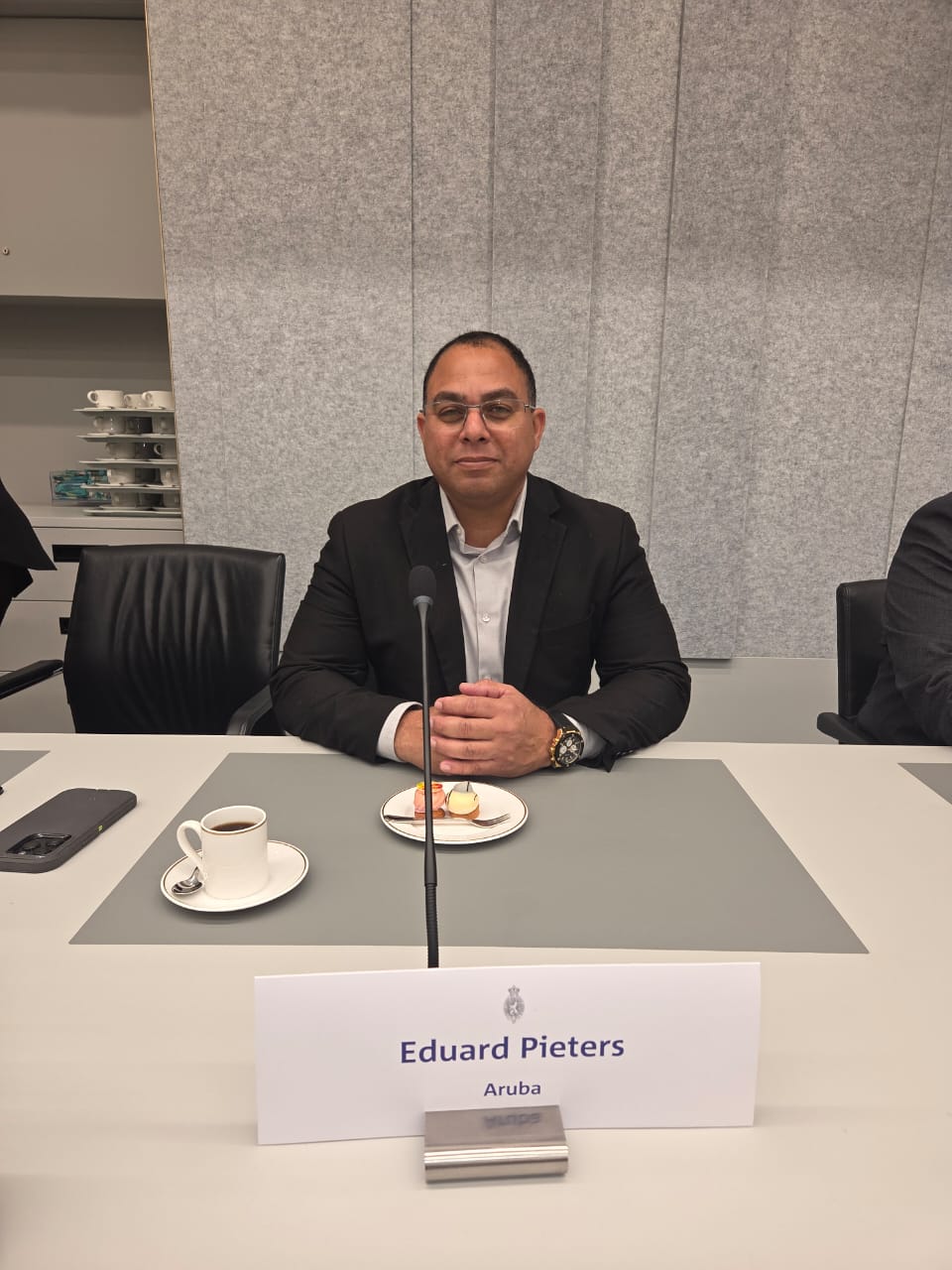
Eduard elaborated:
“The Crisis Management Office (CMO) has structurally coordinated efforts to make our island more resilient. The CMO is an institution run by our own local professionals who have worked to professionalize the system and sought guidance from international experts so that Aruba can be more resilient and recover as quickly as possible in the event of a threat or disaster. Aruba has demonstrated that this crisis management system worked during the COVID-19 pandemic. Aruba was able to recover and managed to mitigate large-scale loss of life and ensure solid economic and financial management after being severely affected by the consequences during and after the COVID-19 pandemic.”
Aruba is now facing another threat. Eduard continued:
“In December, after the PPA faction attended a public meeting in the Netherlands where Dutch ministers presented four different scenarios as consequences of the conflict between the United States and Venezuela, the faction met again in the Senioren Convent with the government and urged the government to continue using coordinated crisis management through the CMO to prevent the situation from escalating.”
Concrete examples include how relevant institutions (ATA, AHATA, DEHZI, etc.) can mitigate severe economic impact. Another important step is the inventory of various institutions to determine what resources (logistics) Aruba has to survive the absence of imports of food, fuel, and other essentials. We noted that on Saturday the Prime Minister finally declared part of this inventory conducted by our own professionals under the coordination of the crisis team.
“Aruba has gone through a global public health crisis. We have learned from it, and surely we can apply successful interventions from the past to the current situation. We must show leadership and allow our local experts, in collaboration with international experts, to do their work,” Eduard of the PPA faction continued.
“We do not need to reinvent the wheel. Our professionals within the crisis management system know what to do. As good leaders, we must trust them and allow them to do their work with the common goal— in this case, not to harm Aruba’s economy or security, and above all, not to spread panic on the island. This is a serious situation, but we must not panic. We must take clear action based on the advice of our professionals who form Aruba’s crisis team. God bless our island and may the Holy Spirit guide our leaders and professionals,” Eduard concluded.