

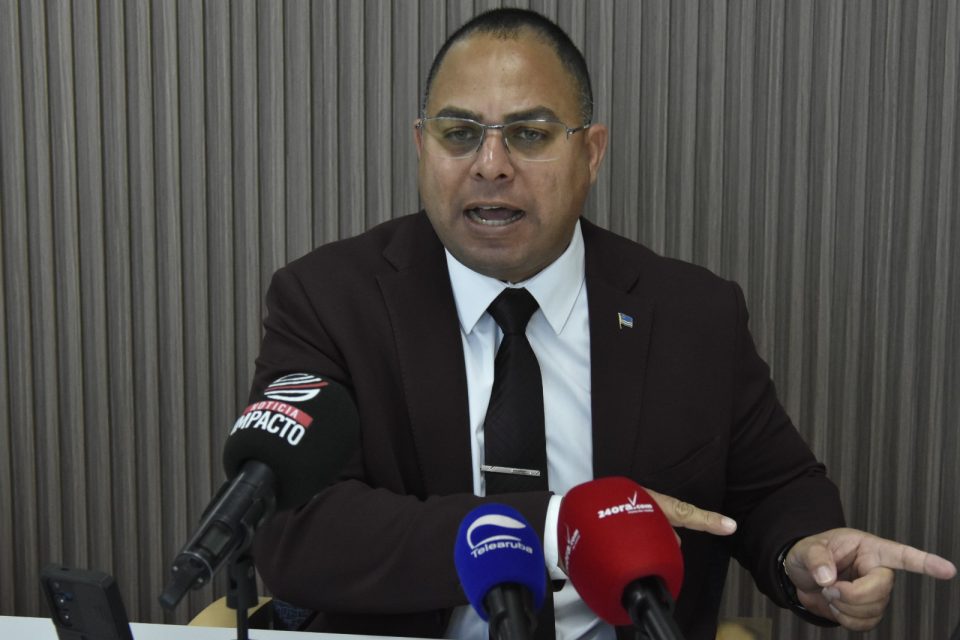
Parliamentarian Eduard Pieters (PPA) questions why the Government has not executed a decision from Parliament.
For parliamentarian Eduard Pieters of the Patriotic Party of Aruba (PPA), the lack of bodycams for the police force is not just an operational problem. According to Pieters, the matter reveals a much more serious issue: the Government is not executing the instructions that Parliament itself approved unanimously. During the program Enfoke, Pieters recalled that since March 2025, Parliament passed a unanimous motion requesting the Government to make funds available so the police force could implement bodycams and dashcams. The motion received support from all factions in Parliament. However, more than a year later, the project has still not been implemented.
Parliament spoke, but the government simply did not act According to Pieters, the PPA did not just criticize. When the national budget did not include the necessary funds, the party sought a concrete solution. During the budget debate, the PPA presented an amendment proposing that the extra income generated by the legalization process (pardonregeling) be reserved specifically to fund bodycams and dashcams for the police force. For Pieters, the idea was simple: use extraordinary income to strengthen public security. “The money was there. The solution was there. What was missing, once again, was political will.”
Visit to the Police Force The parliamentarian reported that after the unanimous motion, the PPA visited the police force and had the opportunity to see personally how the bodycam and dashcam system works. According to the officers they spoke with, the technology not only protects the citizen but also the police officer. The bodycams can document interventions, avoid conflicts regarding the use of force, and increase confidence in investigations. The dashcams, on the other hand, record pursuits, accidents, and other operational situations that can subsequently serve as evidence and for drafting more reliable reports. Pieters said the benefit is clear, but the Government did not follow through with implementation.
One year later, still nothing! According to the parliamentarian, the PPA continued to ask the Government questions about the status of the project. The answer they received was that the pilot project would start in July 2025 and the police force would get the cameras. But the date passed, and according to Pieters, the police force still hasn’t received anything. For the PPA faction leader, this is an example of a much larger problem: unanimously approved motions remain unexecuted.
“If Parliament makes a decision and the Government simply does nothing, the question is: Does the minister deserve to remain as minister?” Pieters said the situation is not limited to the bodycams. According to Pieters, various decisions approved in Parliament remain unimplemented, weakening the constitutional role of the legislative branch. The parliamentarian emphasized that Parliament cannot limit its function to just passing motions; the Government must also execute them. For Pieters, implementing the bodycams is not just an investment in technology; it is an investment in transparency, safety, and trust between the police and the citizen. But, more importantly, this case raises a political question that the Government has yet to answer: If a unanimous decision of Parliament is not executed, how does the Government demonstrate respect for the institution that represents the people of Aruba?