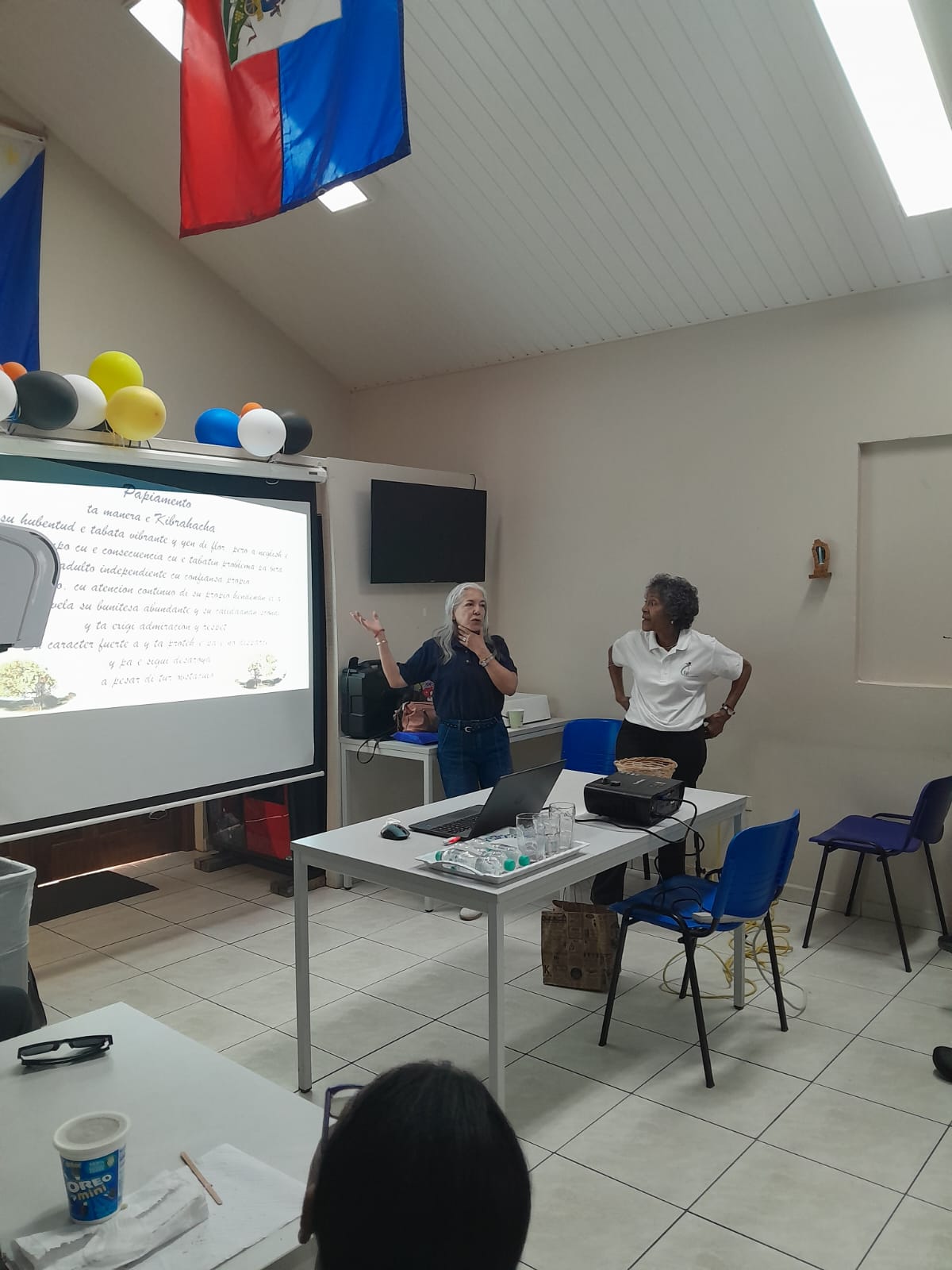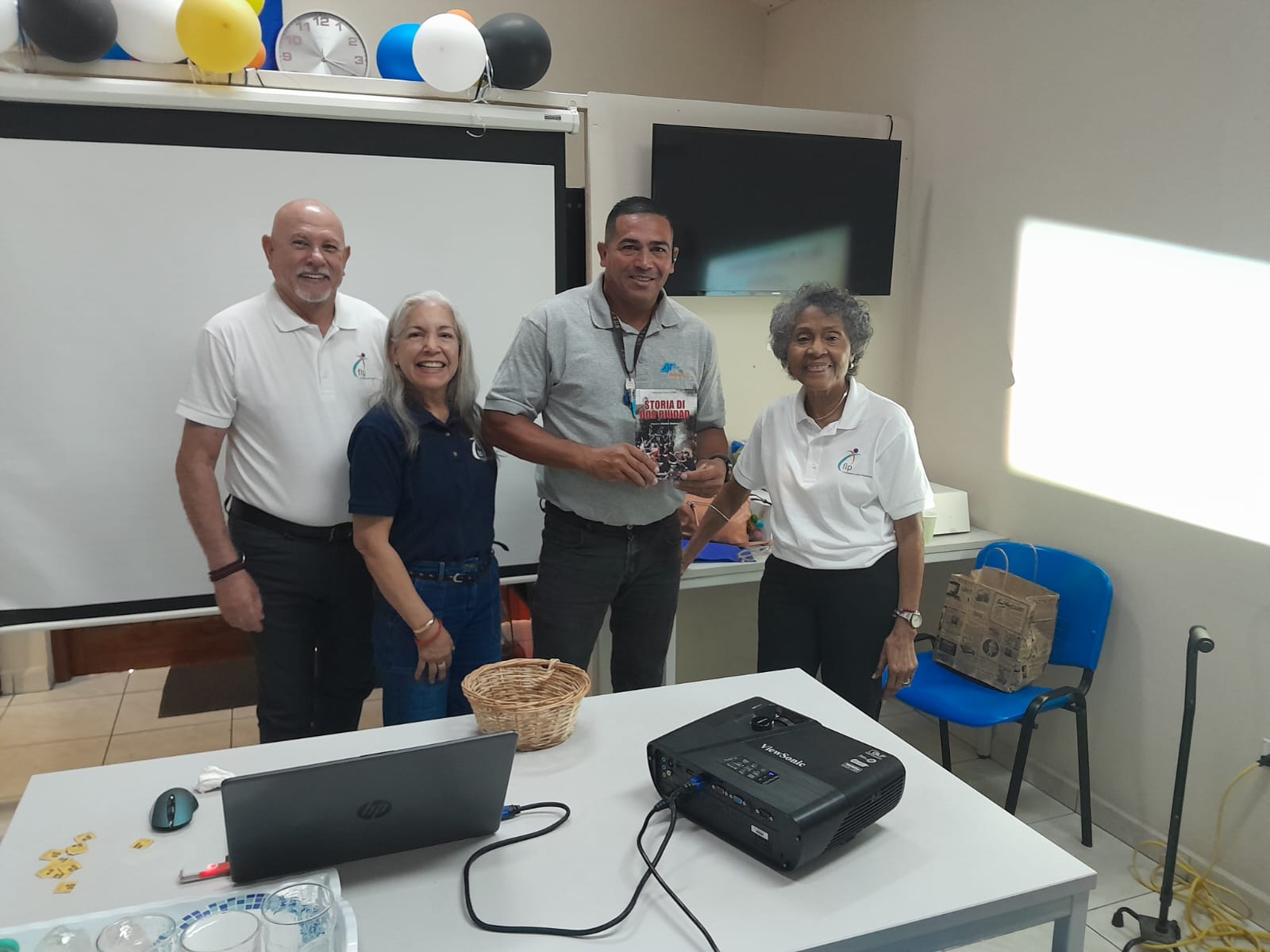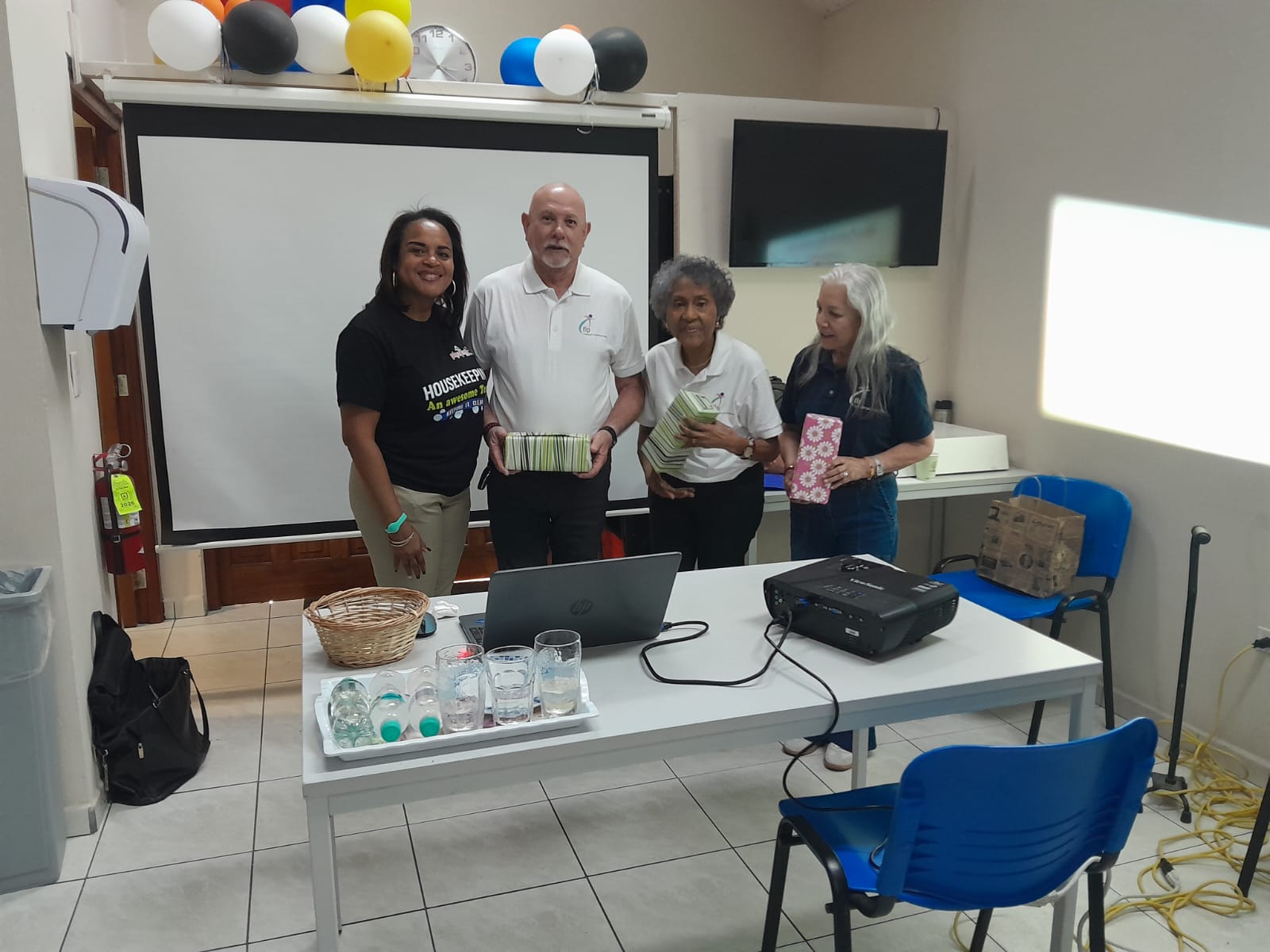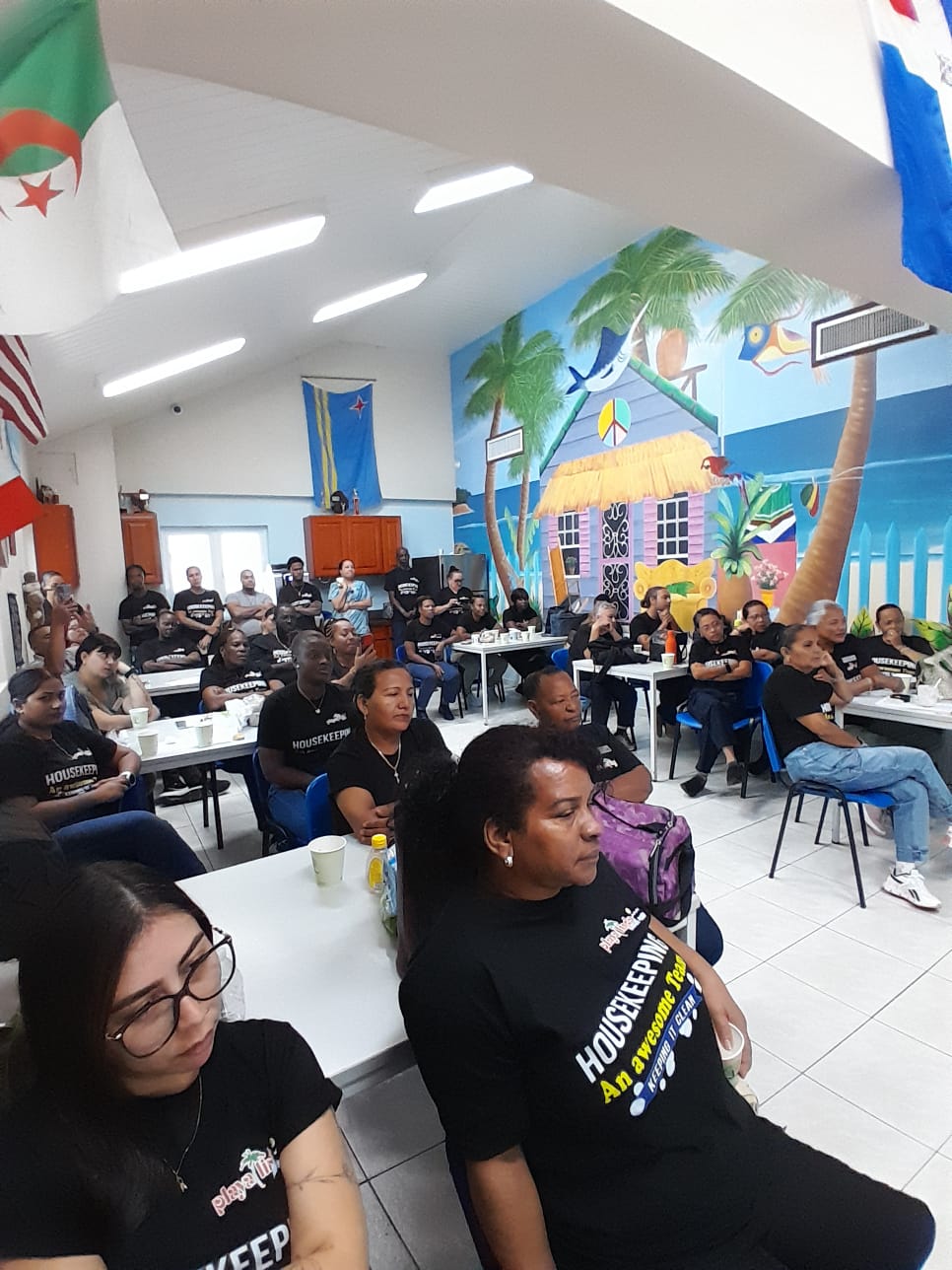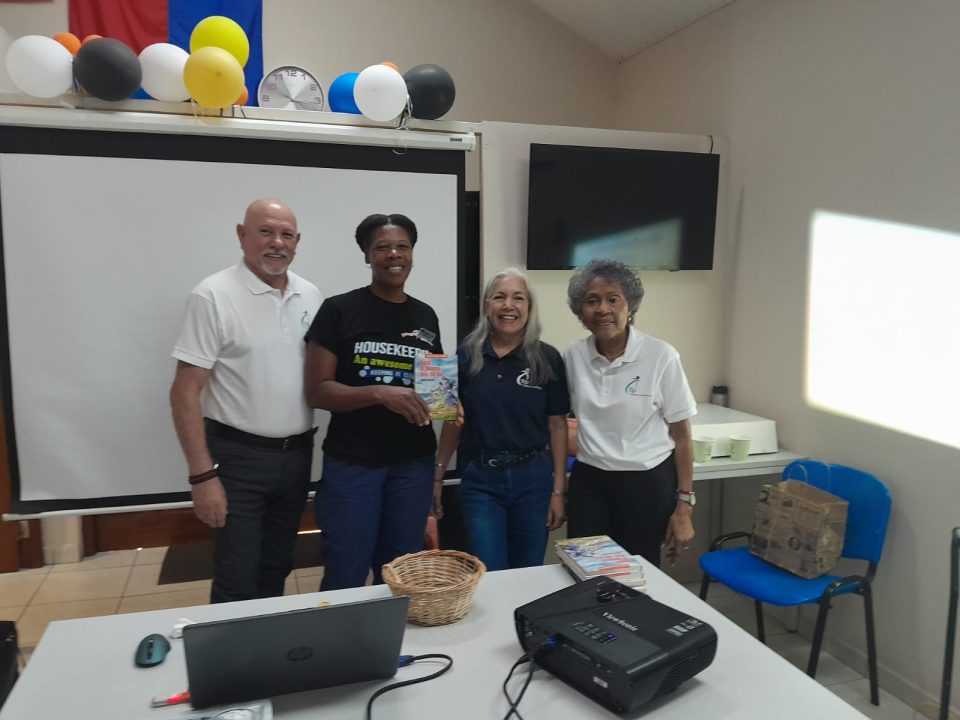
Fundacion Lanta Papiamento (FLP) continues to promote Papiamento. On this occasion, the housekeeping staff at Playa Linda received information about the history of Papiamento, its origins based on research, the development of the language, and its current standing.
During the introduction, the goal of FLP was explained, along with the foundation’s efforts to raise awareness in the community about the importance of our native and official language.
At the beginning of the visual presentation, it was emphasized that the loss of a language is equivalent to the disappearance of a culture, and therefore, we must make every effort to ensure Papiamento remains alive in our community.
An image of the Slave Trade Triangle illustrated the tragic human trafficking from which our Creole language, Papiamento, originated. It was then explained how Papiamento—and not Dutch—became the language of enslaved people, eventually spreading to become the language of the entire population.
The employees were shown concrete proof of how long the Papiamento language has existed. The first texts in Papiamento were presented, in the form of two letters written in Curaçao in 1775 and 1783, as well as an official document in Papiamento from the year 1803 in Aruba.
It was briefly explained how the colonial geopolitical situation between 1815 and 1954 influenced and hindered the development of Papiamento. Some of the prejudices used to keep Papiamento out of education were also mentioned, noting that changes began to occur after 1954.
Emphasis was placed on Article 1.1 of our Constitution, which clearly states that discrimination based on language is not permitted—certainly not against Papiamento, the principal language of the Aruban people.
Following this, some of the achievements were highlighted: Papiamento has had its official orthography since 1976, Papiamento has been an official language since 2003, and as of 2024, grades 1, 2, and 3 are receiving literacy instruction in Papiamento. In connection with this, it was shown that books are available in Papiamento and that words can be looked up on papiamento.aw. Some grammatical and orthographical rules were explained interactively and then applied in sentences.
To conclude, FLP raffled off some books in Papiamento, which generated a great deal of interest.
FLP thanks Playa Linda for the invitation and extends a special thank you to the housekeeping employees for their participation and enthusiasm during the presentation.