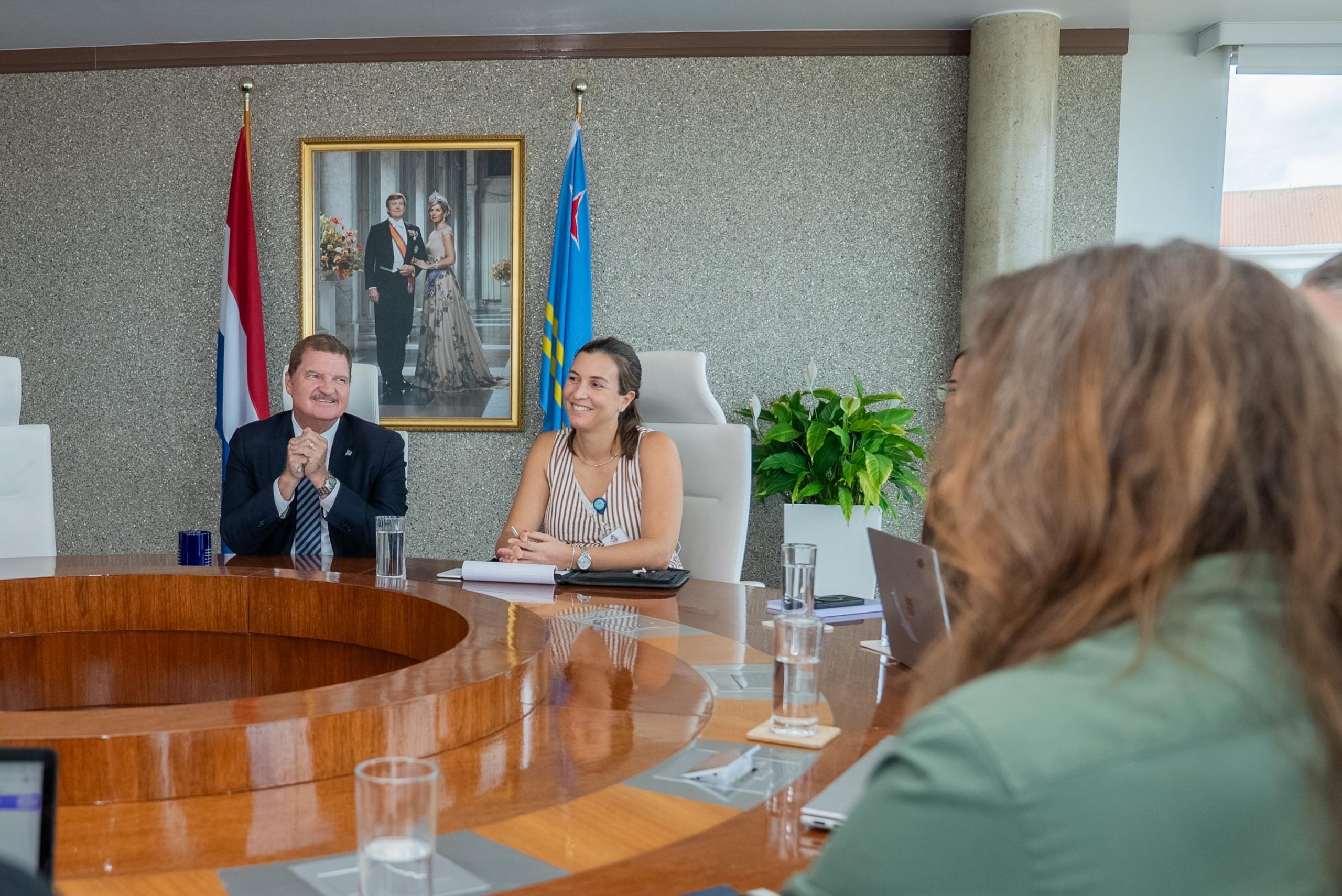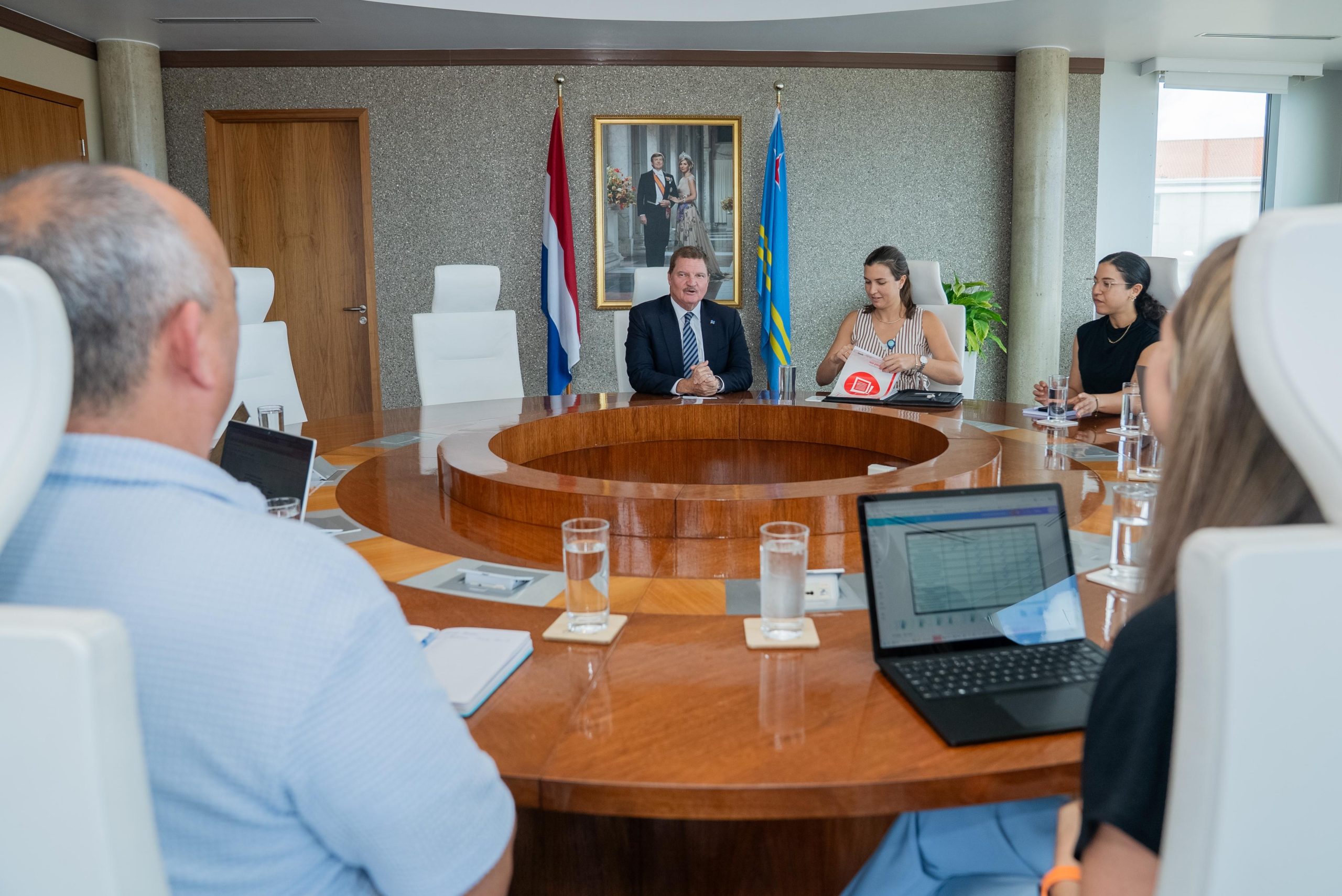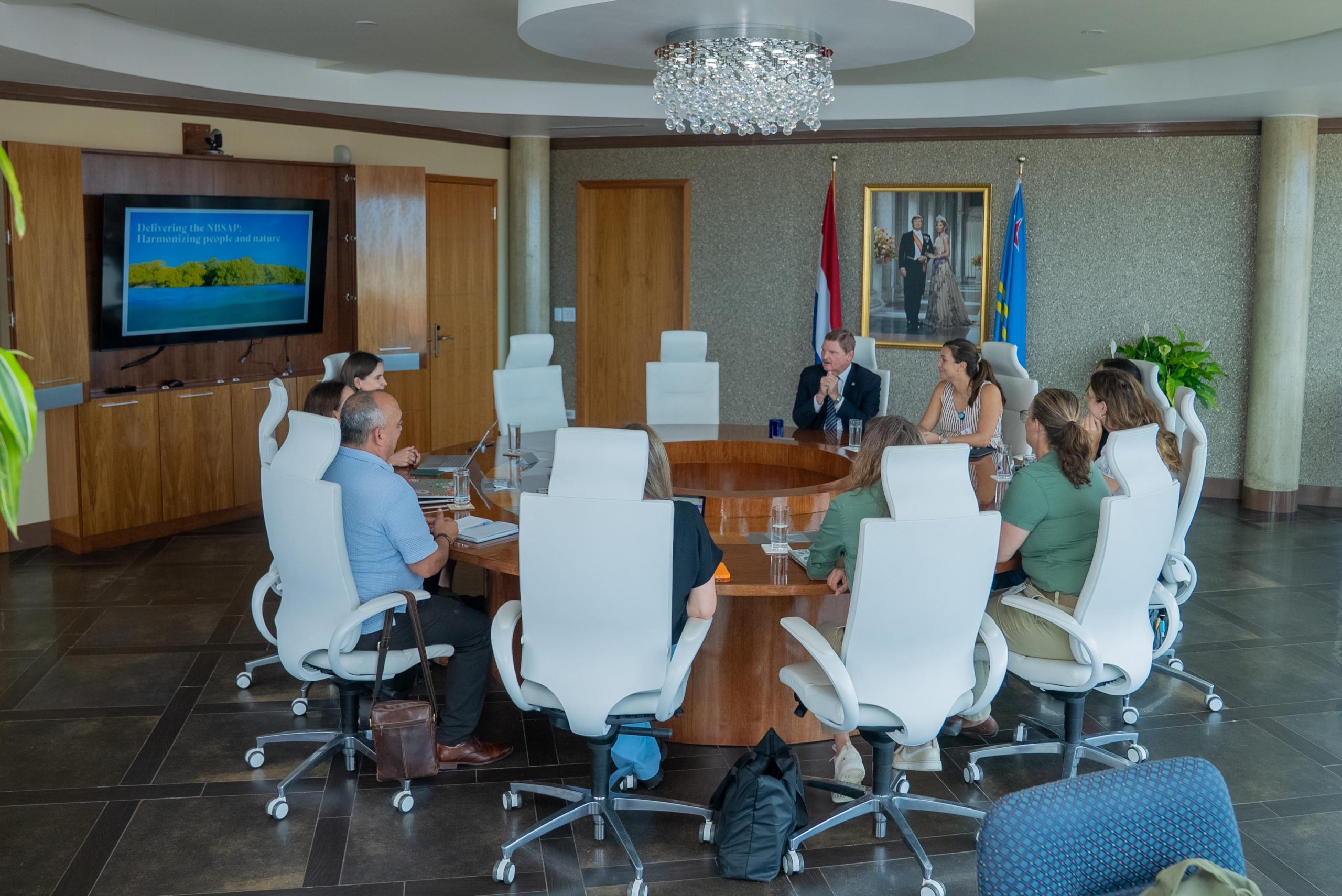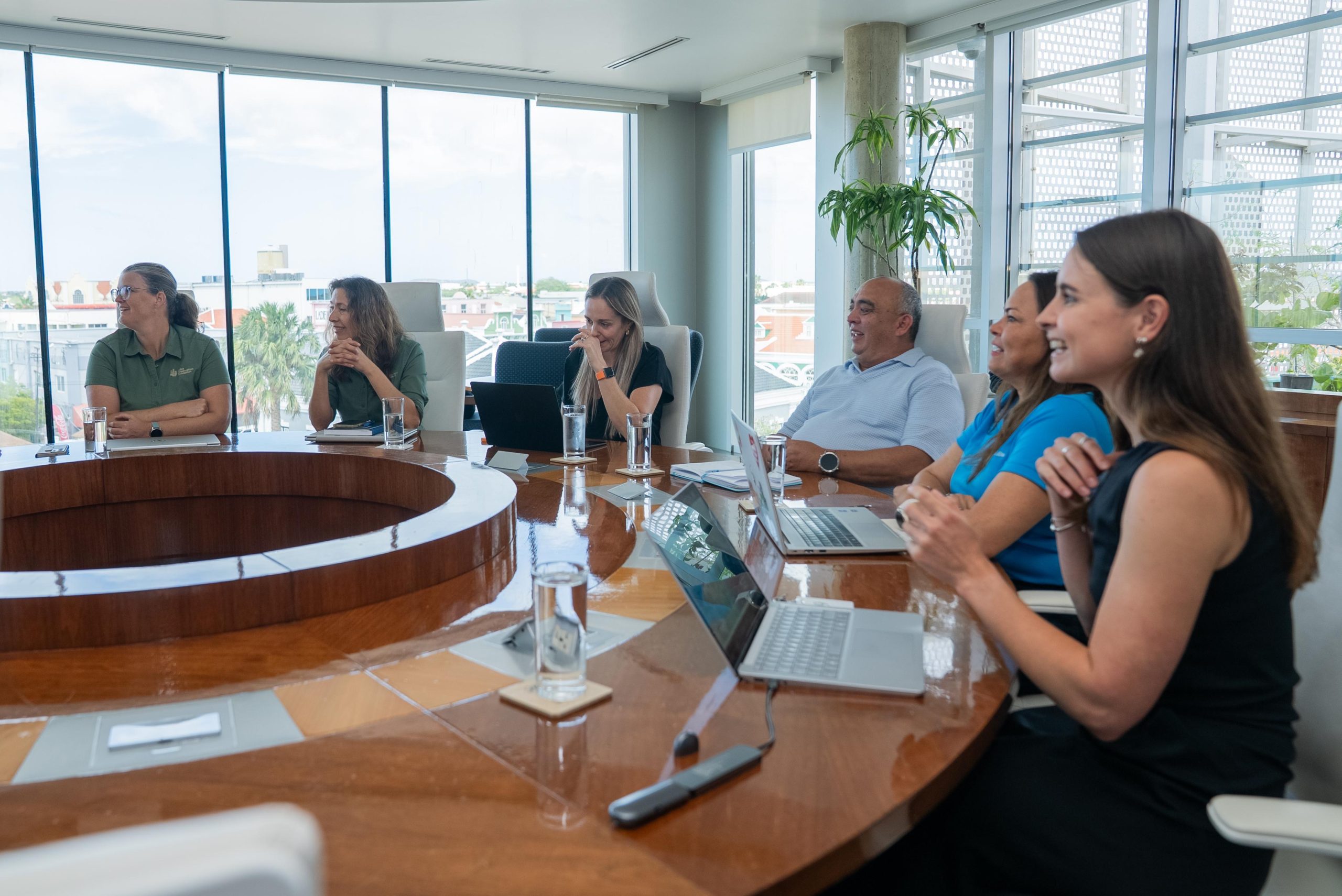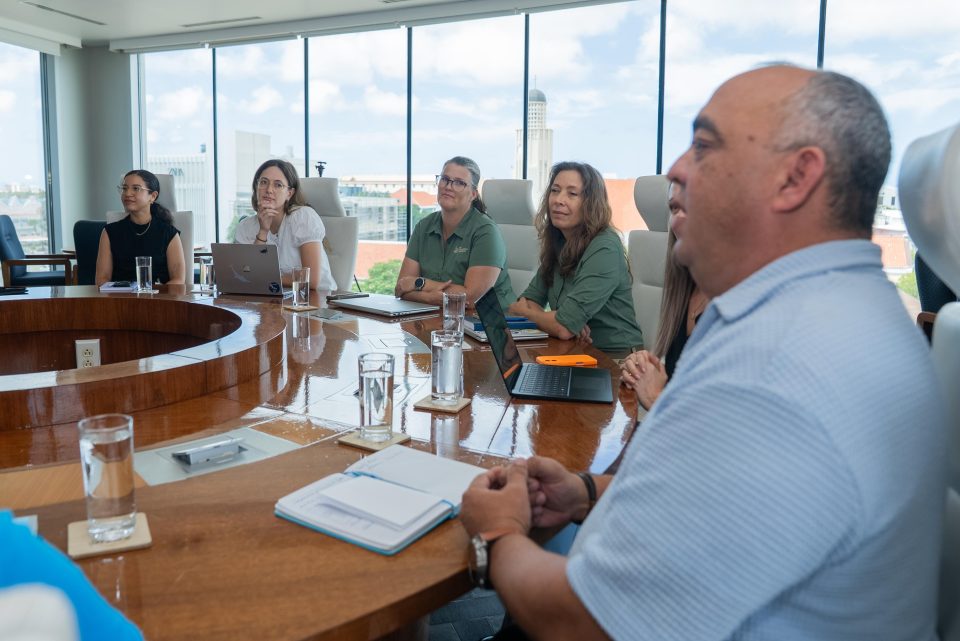
Directie Natuur & Milieu (DNM), alongside the Aruba Conservation Foundation (ACF) and the Blue Marine Foundation (BMF), presented an update to the Ministry regarding progress on the 30×30 process, focused on protecting Aruba’s marine environment. This comes in preparation for the upcoming round of stakeholder dialogue and consultation scheduled for October.
The presentation follows the initial phase of the process that launched early this year. After a first round of consultations, the working group spent the subsequent months conducting technical work, gathering and analyzing data, producing mapping, and formulating various scenarios.
The next step involves re-engaging stakeholders involved in marine environments and activities, this time to share the outcomes of the technical work and gather feedback on the different scenarios under consideration.
DNM Director Gisbert Boekhoudt explained that the project began in February and that the meeting with Prime Minister Eman served to provide an update on the progress achieved to date. As part of this process, DNM and its partners worked with available data concerning nature and the use of marine areas. Based on this information, they developed maps and scenarios to evaluate how Aruba can achieve the international 30×30 target.
The process encompasses both territorial waters and the offshore area, including the exclusive economic zone, exploring various scenarios aimed at protecting more than 30 percent of the marine environment by 2030.
Boekhoudt emphasized that the current phase represents a participatory and consultative research process. Available scientific data, technical work, and stakeholder input are combined and analyzed to establish a solid foundation for subsequent steps.
This approach is crucial, as the ongoing process is not bound to pre-existing legislation. On the contrary, consultation and research are occurring first, ensuring that any future legislation is developed based on scientific evidence while taking into account stakeholder input and feedback.
Protection of marine life For Natasha Silva, Chief Conservation Officer at the Aruba Conservation Foundation, the process is essential given the value marine nature holds for Aruba.
Silva noted that many countries worldwide are working toward the 30×30 target, across both land and sea. In Aruba’s current process, significant attention is being directed toward the offshore area.
According to Silva, protecting the marine environment is key to preserving marine life and broader ecosystem health. She also noted a direct connection to Aruba’s economy, as the marine environment serves as a natural resource supporting various economic activities.
Silva further pointed out that under appropriate protection conditions, marine ecosystems have the potential to recover and yield benefits for both nature and Aruba at large.
Technical support, science, and research Fiona Newell of the Blue Marine Foundation highlighted the collaboration with DNM and ACF, as well as the opportunity for BMF to contribute its international experience in ocean protection.
Newell indicated that the Blue Marine Foundation sees strong potential in Aruba’s approach and that their primary role is supporting DNM with technical expertise where needed.
BMF’s contribution focuses on ocean protection, science, and research, complementing the local knowledge and expertise of DNM and ACF.
Next step: stakeholders to join another round of dialogue Stakeholder participation remains a core element of the process. Following the initial consultation and subsequent technical work, the goal now is to present the findings and developed scenarios to stakeholders connected to marine environments and activities.
During the upcoming dialogue round, stakeholders will have the opportunity to review the scenarios and provide feedback. Their contributions, alongside scientific evidence and technical research, will help form the foundation for future developments.
The presentation to Prime Minister Mike Eman marks the next phase in the journey: moving from initial consultation to technical analysis and scenario building, and back to stakeholders for further dialogue.
Once the research and consultation phase concludes, the gathered data can serve as a foundation for developing potential legislation. Should an area receive legal protection in a later phase, a separate stakeholder consultation process regarding the management of that area will follow.
With the next round of consultations planned for October, DNM, ACF, and BMF continue to advance a process rooted in research, scientific evidence, and stakeholder participation to explore how Aruba can fulfill the 30×30 target for its marine environment.