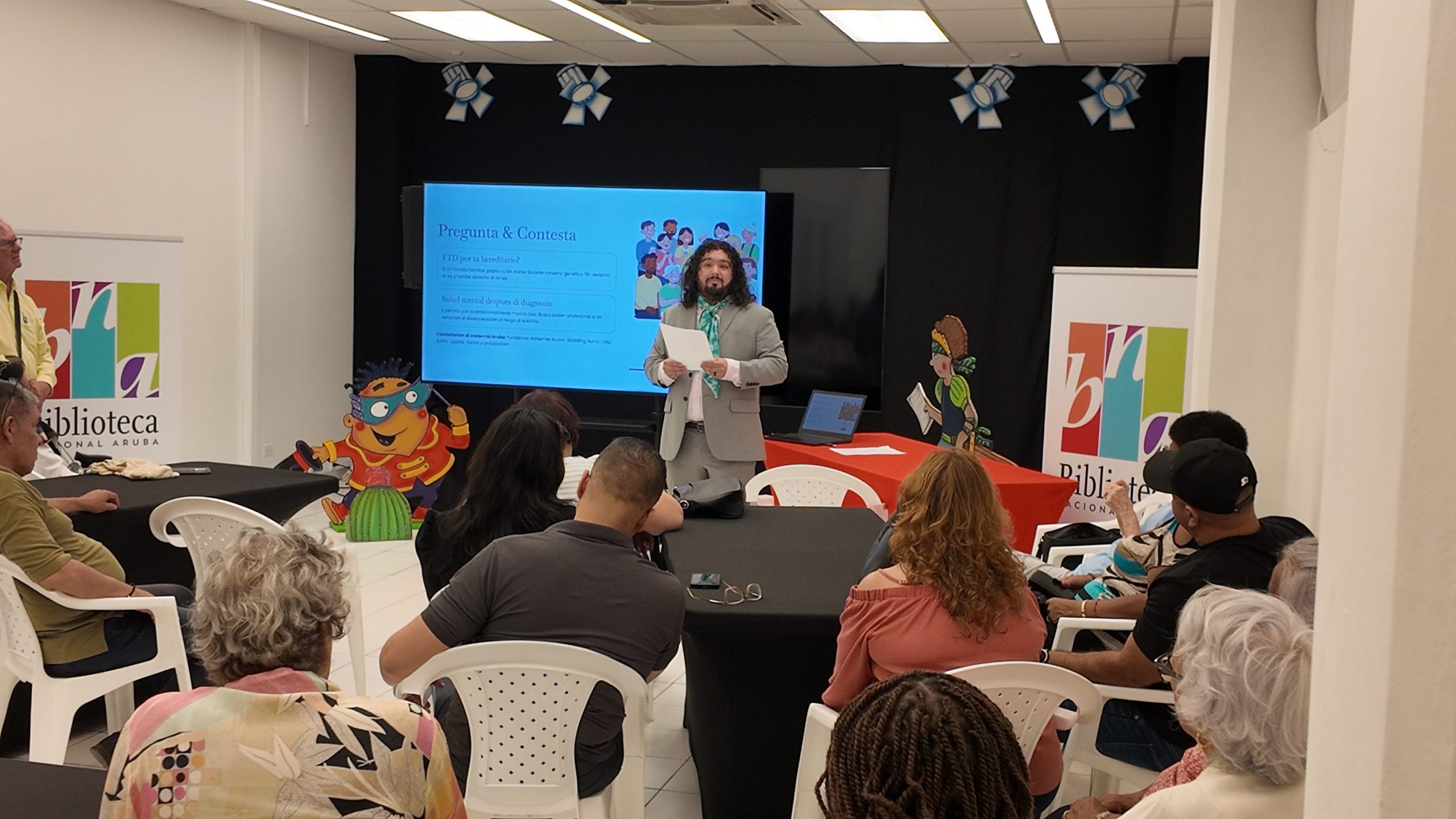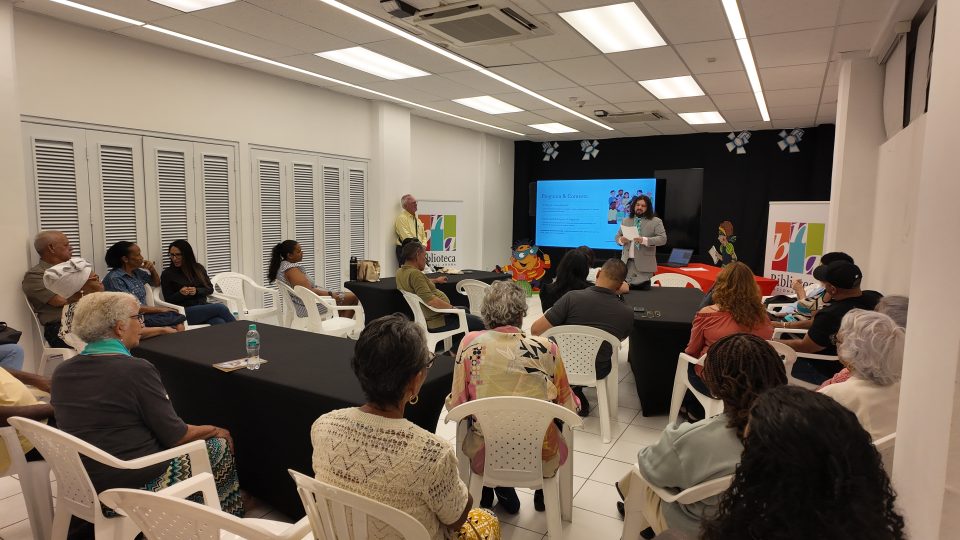
The Alzheimer’s Foundation, together with the Patient Foundation of Aruba (Pashent di Aruba – PDA), under the leadership of its president Jayburtt Dijkhoff, organized an informative evening dedicated to raising community awareness about Frontotemporal Dementia (FTD), a little-known neurodegenerative disorder that is often confused with Alzheimer’s disease.
The primary objective of this initiative is to inform and empower patients and their families, highlight their rights, and prevent misdiagnoses or incorrect treatments (the so-called ‘pitfalls’), thereby enabling families to take control to ensure a better quality of life.
Key difference between Alzheimer’s and Frontotemporal Dementia
The fundamental differences between these two conditions were explained during the session:
- Alzheimer’s: Primarily affects memory, with the individual gradually losing memories and knowledge over time.
- Frontotemporal Dementia (FTD): Targets an individual’s behavior and personality. The person loses their social ‘filter’ or inhibition, causing them to act in ways that others might misjudge as “shameless,” without the patient being aware of their behavioral change.
- Age of onset: FTD appears in significantly younger individuals than Alzheimer’s, manifesting in some cases as early as age 45.
The crucial role of the family and gaps in Aruba’s care system
Since the disease is a progressive process in which the patient gradually declines, the PDA emphasizes the importance of the family serving as a firm support system, documenting all desires and decisions while the patient is still capable of doing so. Practical advice and tips for navigating this stage of life were shared during the event.
An alert was also raised regarding existing gaps in Aruba’s healthcare system:
- Lack of Geriatricians and Care Managers (Zorgmanagers): Aruba lacks geriatric care due to a lack of budget to cover this specialist, nor is there a care manager (zorgmanager) role to guide these cases.
- Need for a multidisciplinary team: Currently, care falls mainly on neurologists and other specialists attempting to fill the void. However, professional guidelines (such as those in the Netherlands) prescribe that FTD should be treated by a complete multidisciplinary team working together to diagnose, treat, and provide integrated support.
Through this session, Patient of Aruba (PDA) aims to bring this taboo topic to the national stage to spark a constructive dialogue leading to real and lasting solutions for patients and their loved ones.