

The debate surrounding the Rijkswet Financieel Toezicht Aruba (HOFA) continues to stir controversy, with proponents playing a central role regarding budgetary benefits and financial governance. However, analyzing the main arguments promoted in the public sphere makes it clear that reality completely deviates from the official narrative. It is fitting to examine three fundamental pillars supporting the pro-HOFA stance and confront them with our country’s institutional and financial truth.
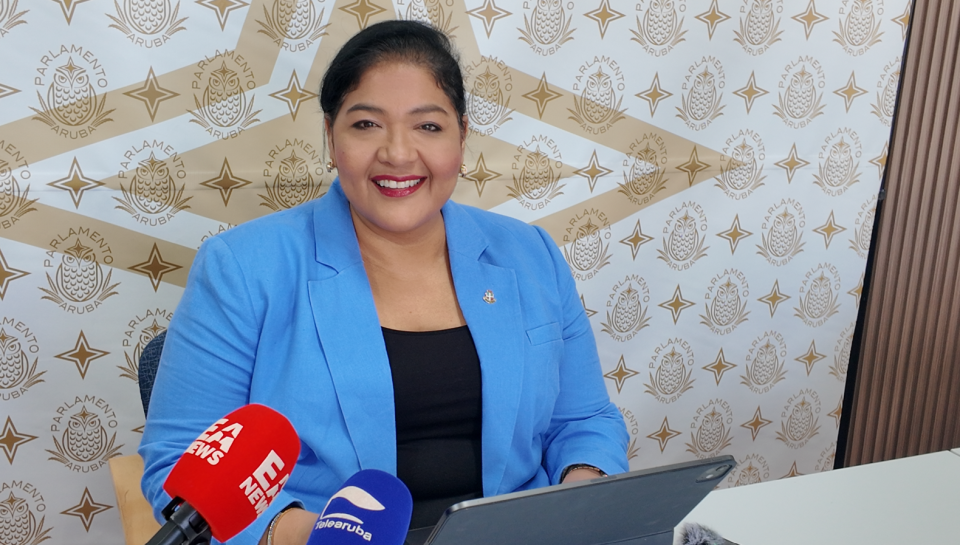
The false promise of external control The first argument frequently heard is that the presence of HOFA guarantees “more control” in Aruba, suggesting that without external supervision, governance lacks oversight. According to Member of Parliament Xiomara Maduro, this argument ignores the constitutional reality and democratic infrastructure the country already possesses. In Aruba, the control chain consists of locally established institutions: Parliament as the supreme supervisory body, the General Audit Chamber (Algemene Rekenkamer), the Central Accounting Service (CAD), the Council of Ministers, the Advisory Council (Raad van Advies), and the Ombudsman.
Strengthening financial governance does not require external imposition, but rather internal investment in the independence and operational capacity of these institutions. When local control fails, the solution in a mature democracy is not to surrender sovereignty, but to give national institutions the space, budget, and legal authority to carry out their work without interference.
Investment and the reality of financing The second voiced argument is that HOFA is a condition without which Aruba cannot attract money for investment. This proposition creates a false dilemma between rigorous external supervision and economic development. Public investment and capital projects do not depend on the existence of a Kingdom Law (Rijkswet), but on sustainable fiscal management, commercial credibility, and solid execution capacity.
International and local financing are based on the creditworthiness of the Country of Aruba, budgetary discipline, and investor confidence in the stability of our economy. A country can maintain healthy public finances and attract capital without having to bow to a supervisory structure that limits governmental autonomy and the decision-making power of the people’s representatives.
The myth of expensive debt on the international market The third point touches the capital market, where it is argued that loans on the international market serve solely to enrich foreign banks, compared to the supposedly cheaper options HOFA could facilitate under Kingdom conditions, eliminating Aruba’s expensive debt. Reality shows that the capital market opens the door to transparent competition, where interest rates are dictated by global market conditions and the country’s risk profile.
Accepting rigid financial conditions under Kingdom tutelage does not automatically guarantee a cheaper financial exit if transaction costs, loss of decision-making autonomy, and social impact are factored into the balance sheet. The solution to the national debt does not lie in surrendering budgetary authority, but in prudent management of current expenditures and the stimulation of sustainable economic growth by our own people.