

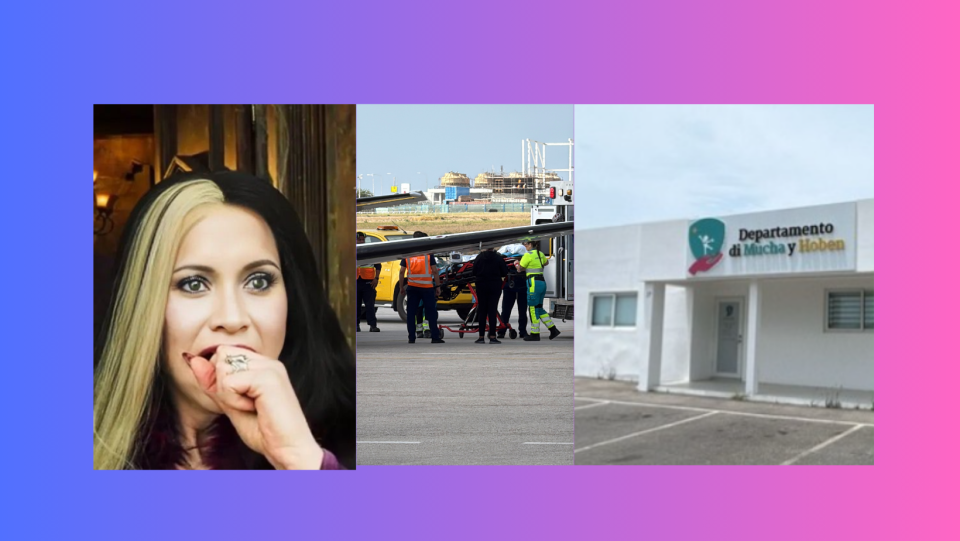
How is it possible that a 5-year-old boy is fighting for his life in Bogotá, Colombia, due to negligence and lack of responsibility and authority from a daycare owner, the government, and all relevant institutions? The news has left everyone angry, shocked, and disappointed that once again, the life of a child is in danger after being left in a transport vehicle for several hours, in critical condition and in a coma.
This case is not just a “sad incident.” It is a brutal alarm that clearly shows: when childcare grows as a business and easy opportunity without real control, our children pay the price. A Department of Youth and Children was established precisely to regulate and guide these centers, but unfortunately Minister Gerlien Croes committed yet another blunder in her first month as minister by closing the Youth and Children Center. For what exactly? Politics? Who carries the consequences?
When the government speaks about closing or restructuring the Department of Youth and Children—the same department created to implement the National Ordinance on Childcare (AB 2017 no. 38) and comply with the Convention on the Rights of the Child the question is harsh but necessary: What exactly are we “protecting” when we remove the only structure whose fundamental purpose was to create control and supervision after more than 30 years of Aruba trying to implement childcare legislation, being the only country in the region where this law is still not fully operational?
The often-used phrase by childcare centers, “we work with love,” is not a measurable quality standard. Love does not replace licensing, training, supervision, protocols, or sanctions. A child does not die or fall into a coma because there is a lack of love at a daycare center; they are placed in danger because there is a lack of a solid and legal system.
The Department of Youth and Children (DMH) was not created to be “just another office.” It was officially established on October 1, 2022, precisely because Aruba must comply with the Convention on the Rights of the Child and bring order to the childcare sector: national registry, permits, supervision, control, and development of management and programs.
The DMH mandate was clear: maintain national administration and registration, issue permits, conduct supervision and enforcement, and develop programs and guidelines to strengthen quality and child protection.
But reality has sabotaged this effort: in an official 2025 letter, DMH itself warned that full implementation of the law faced bottlenecks not only due to the field but also because of ministerial decisions and actions that were not finalized: official appointment of a director, pending ministerial regulations (application forms and quality guidelines), lack of competent personnel for supervision, and legal obstacles to issuing permits.
So when a minister announces the closure of DMH, the question is: did DMH fail, or did the political system fail to provide DMH with the necessary tools to fulfill its mandate? Because if you do not appoint leadership, finalize regulations, train supervisors, and activate enforcement… you cannot later use the consequences as an excuse to close the department.
The case of the child left in the van shows the danger of a sector that is “popping up like crazy” without real enforcement of the law. Child transportation is high-risk and requires mandatory protocols (checklists, headcounts, sign-in/out procedures, back-seat verification, two-adult checks, time logging, and criminal/administrative responsibility). If a center cannot comply, it should not operate—period. Love does not replace control.
The question that remains for the minister and the government is: how many more cases of negligence must we see before we have the real courage to fully enforce the law?
A 5-year-old child is in a coma, and Aruba is praying for a miracle. Meanwhile, Aruba continues to tolerate childcare centers without supervision, permits, inspections, enforcement, or sanctions—and will continue asking for miracles because we prefer not to prevent tragedy, but to act as if these things do not happen.
If a government cannot protect the smallest and most vulnerable, it fails in its most sacred obligation. We do not need another commission; we need action now. Because the next forgotten child in a vehicle, the next child in a coma, the next emergency flight to Colombia must not become normal or acceptable.