

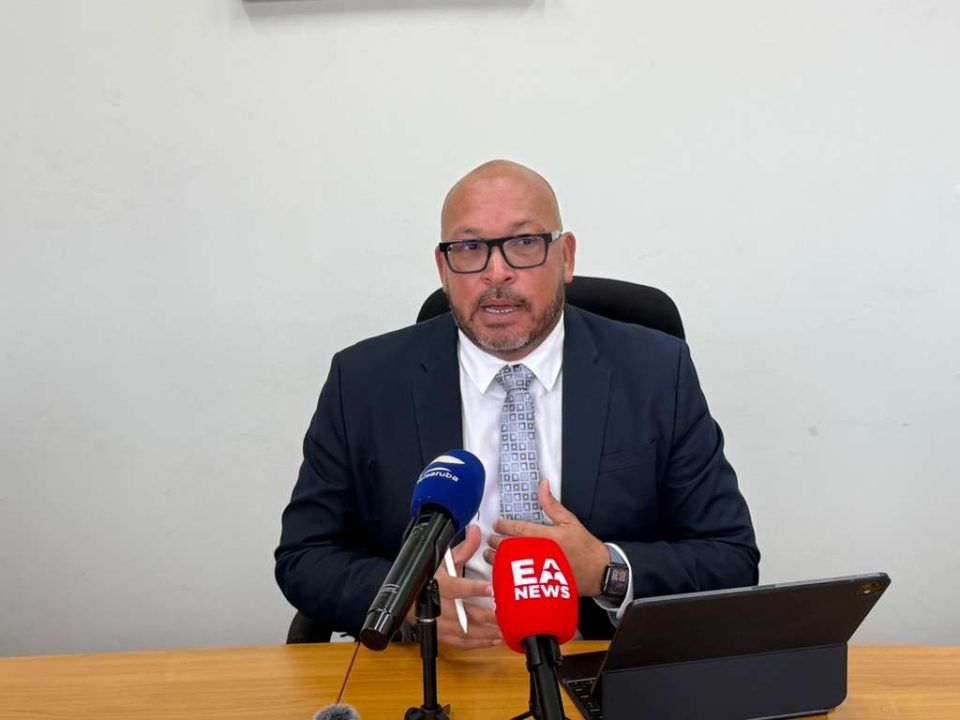
The debate over the HOFA Kingdom Law has transcended the financial realm to enter a profound discussion on the legal foundation of our Status Aparte: the Statute of the Kingdom of the Netherlands. Member of Parliament Edgar Vrolijk has presented a detailed analysis of how this law could permanently alter the relationship between Aruba and the Netherlands, warning of the danger regarding so-called “Kingdom Affairs.”
The Kingdom Statute: What are autonomous affairs? According to Vrolijk, the Kingdom Statute (Article 3, paragraph 1) is very clear in its definition. It contains a limited list of topics considered “Kingdom Affairs,” such as:
- Foreign relations.
- Dutch nationality (passports).
All other matters, such as Education and Finance, are autonomous affairs. This means that each country (Aruba, Curaçao, and Sint Maarten) has the sacred right to govern itself, and the local Parliament is the one that has the final word and oversight over its Government.
The Origin: Negotiation under pressure The path toward HOFA did not begin out of free will, but during the most difficult moments of the 2020 pandemic. Vrolijk explained that the Netherlands used the need for financial aid as an instrument to impose Kingdom Laws. This is a poor reflection of how the Netherlands treats Aruba within the Kingdom.
The MP recalled that the Council of State (Raad van State) itself criticized the way the Netherlands sought to impose these laws in 2020 without following proper procedures. “The Netherlands acted in bad faith when they forced Aruba to choose between signing this law or paying a punitive interest rate of 6.9%,” Vrolijk emphasized.
Article 38 and the Surrender of Control The point of greatest legal concern is the use of Article 38, paragraph 2 of the Statute. This article opens the door for two countries to agree to convert an autonomous matter (Finance) into a “Kingdom Affair.” According to Vrolijk, if Aruba surrenders this, it signals that the current Minister of Finance cannot manage finances properly—a national embarrassment.
Vrolijk outlines the following implications:
- Lack of Healthy Cooperation: Such a conversion should be a mutual decision made in an environment of cooperation, not a condition imposed under financial pressure.
- Loss of Sovereignty: If HOFA is signed in its current form, Aruba surrenders structural control over its own money. Key decisions on budget and public spending would no longer rest solely with our representatives in Aruba. Consequently, Aruba would lose the power to decide on its own local developments and projects.
The decision Parliament must make now will resonate for decades, determining whether Aruba remains an autonomous country within the Kingdom or retreats in its level of sovereignty