

Placing containers in neighborhoods is neither a sustainable nor a lasting solution. Aruba needs a vision for waste management.”
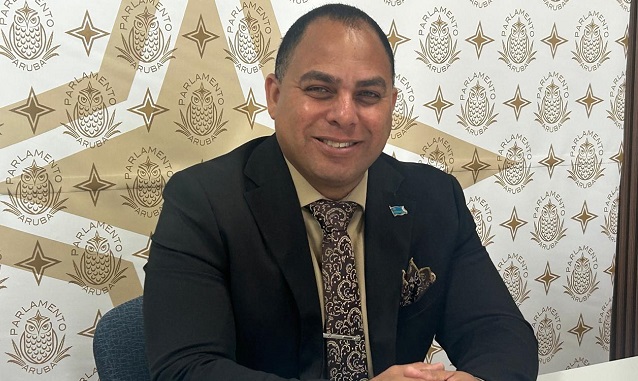
While the Government celebrates the placement of waste collection containers, Parliamentarian Eduard Pieters of the Aruban Patriotic Party (PPA) states that Aruba can no longer confuse temporary relief with a permanent solution.
During his interview on Enfoke 90, Pieters made it clear that the PPA is not against the initiative of placing more containers in neighborhoods. On the contrary, according to Pieters, any effort that makes it easier for citizens to dispose of waste correctly deserves recognition. However, according to the parliamentarian, the question the Government is failing to answer is different.
What happens after the containers fill up?
“We are treating the symptoms,” Pieters said. “But we are not treating the cause of the problem.” According to Pieters, Aruba faces a waste crisis that did not start today. For over a decade, different governments have reacted to the problem with temporary solutions while the amount of waste continues to grow.
The parliamentarian recalled that since 2018, under the leadership of Otmar Oduber as Minister of Infrastructure, the introduction of modern incinerators was proposed as part of a broader plan to reduce dependence on the landfill. According to Pieters, that proposal was heavily criticized by the opposition and ultimately did not move forward. Ironically, today the Government resorts to the exact same technology to treat medical waste and sludge. “That shows the idea wasn’t bad. What was lacking was political will and courage.” According to Pieters, the problem Aruba currently faces cannot be resolved solely with more bins or containers. “The waste doesn’t disappear. It just changes location.”
A national strategy is needed
The parliamentarian pointed out that after closing Parkietenbos, Aruba opened Ser’i Teishi as a temporary solution. However, eight years later, the “temporary” fix has become permanent, while communities like Simeon Antonio and Cas Paloma continue to face environmental consequences.
For Pieters, Aruba needs a national strategy that goes far beyond simply collecting garbage. According to Pieters, the country must invest in waste reduction, recycling, source separation, environmental education, and modern technology that minimizes the amount of waste that ultimately ends up in the landfill.
Regional cooperation for a more efficient system
The parliamentarian also proposed that Aruba explore regional cooperation to create a more efficient waste-to-energy incineration system, taking advantage of greater waste volume together with the other islands. However, the possibility of transporting garbage by sea must be explored, which according to experts is not permissible. “There is no miraculous solution,” he said. “But there are sustainable solutions, and we have the vision to think ten or twenty years ahead.”
For Pieters, the current debate should not limit itself to a single contract or provider. The real debate is whether Aruba will finally decide to shift from reactive management to a national policy that truly attacks the root of the problem. “We cannot keep putting container after container, while the mountain of waste keeps growing everywhere in Aruba that has a hole.”
According to the PPA, Aruba does not lack initiatives. It lacks a national vision for waste management and an end to temporary solutions, as they will only create more challenges and problems for future generations.