In 1776, Fort Oranje returned the salute of the American vessel Andrew Doria. With that gesture, Statia became part of the history of American independence. This year, on Statia Day, the island commemorated the 250th anniversary of the First Salute. The Slavery Past Commemoration Committee contributed to the Statia Week program. Its goal is to commemorate the history of slavery, unite communities across the Kingdom, and pass this history on to younger generations.
On each of the six Caribbean islands and in the Netherlands, the legacy of slavery continues to have its own distinct impact. Statia Day and the events leading up to it provide space to reflect on that history. They also offer a moment to honor the people who lived in slavery and those who resisted it. The Committee contributed financially to the reburial of the 69 Golden Rock ancestors and assisted local partners with the preparations. During Statia Week, other Committee projects are also highlighted, ranging from burial ground markers to a permanent exhibition bringing together the history of all six Caribbean islands. A children’s book about the 1848 uprising is being released, a mural honoring Thomas Dupersoy is being unveiled, and Statia’s very first miniature Anansi door is opening.
A Dignified Resting Place for the Golden Rock Ancestors
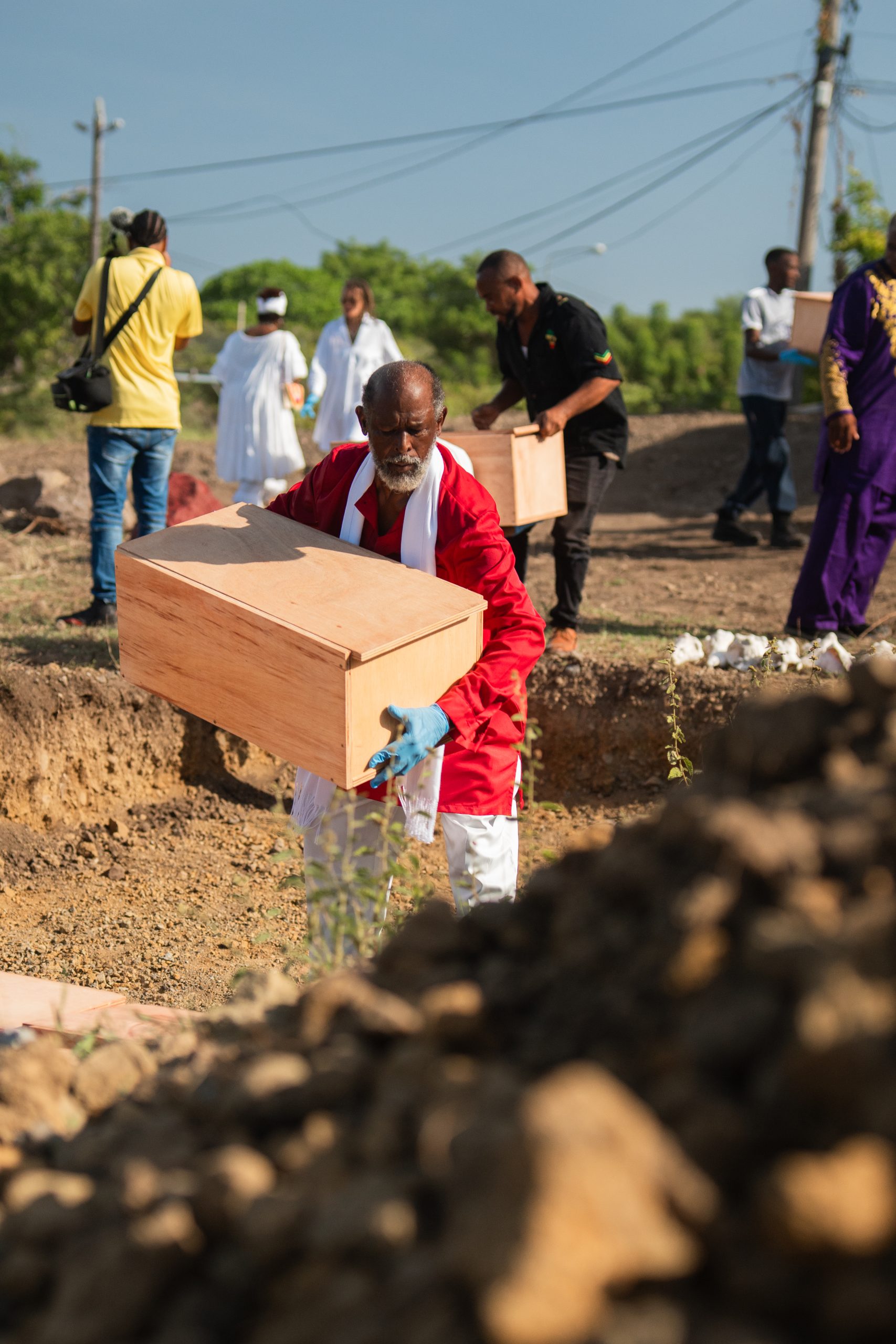
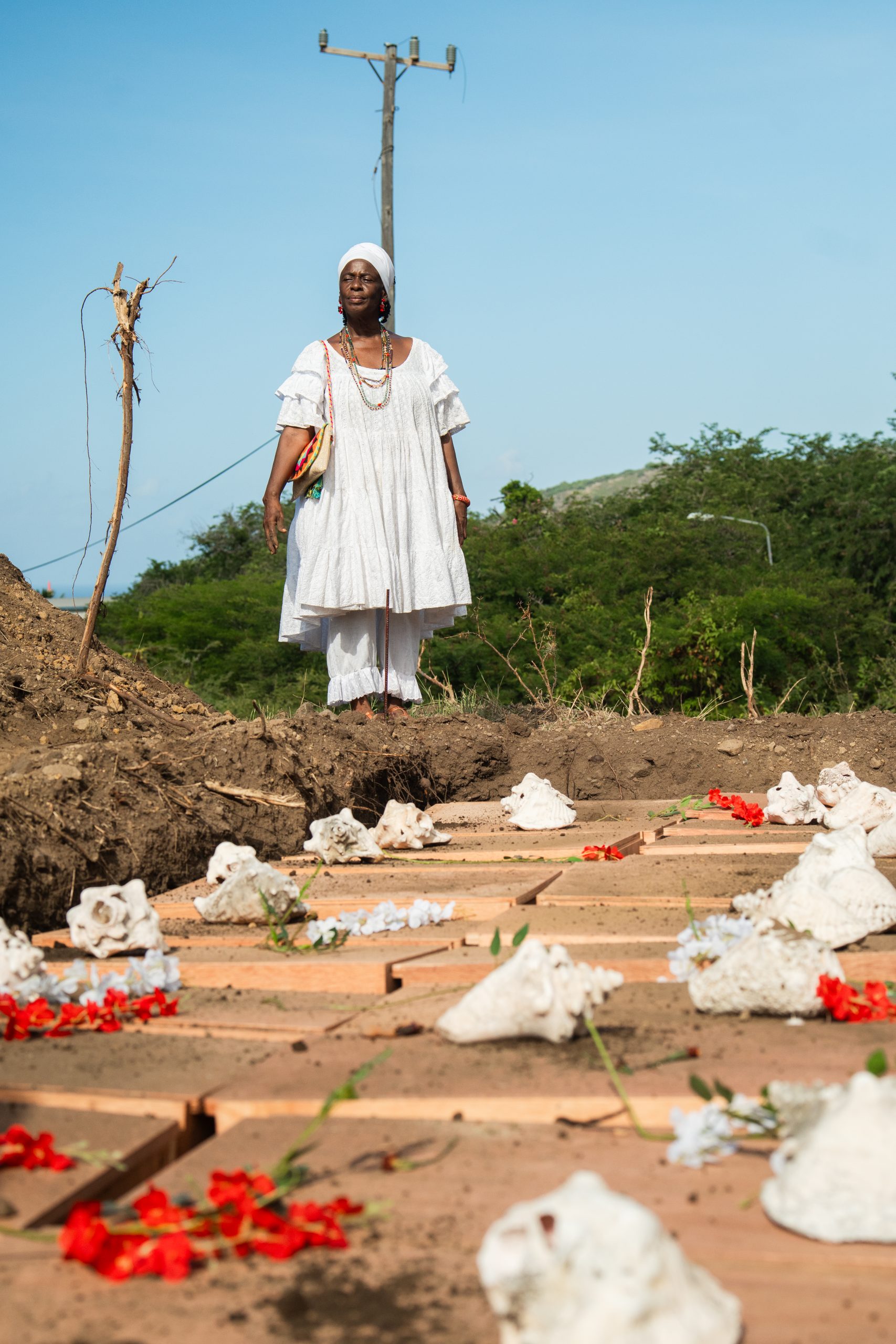
On November 13, the Golden Rock ancestors found their final resting place on Statia. In 2021, during the expansion of F.D. Roosevelt Airport, the remains of 69 enslaved people were discovered in an 18th-century plantation burial ground. Descendants asserted their rights and insisted on a dignified reburial, as well as a voice in decisions regarding the research conducted on their ancestors’ remains. Five years after the discovery, descendants, families, and other residents were invited to the public commemoration to reflect together on the lives of the ancestors and their place in Statia’s history.
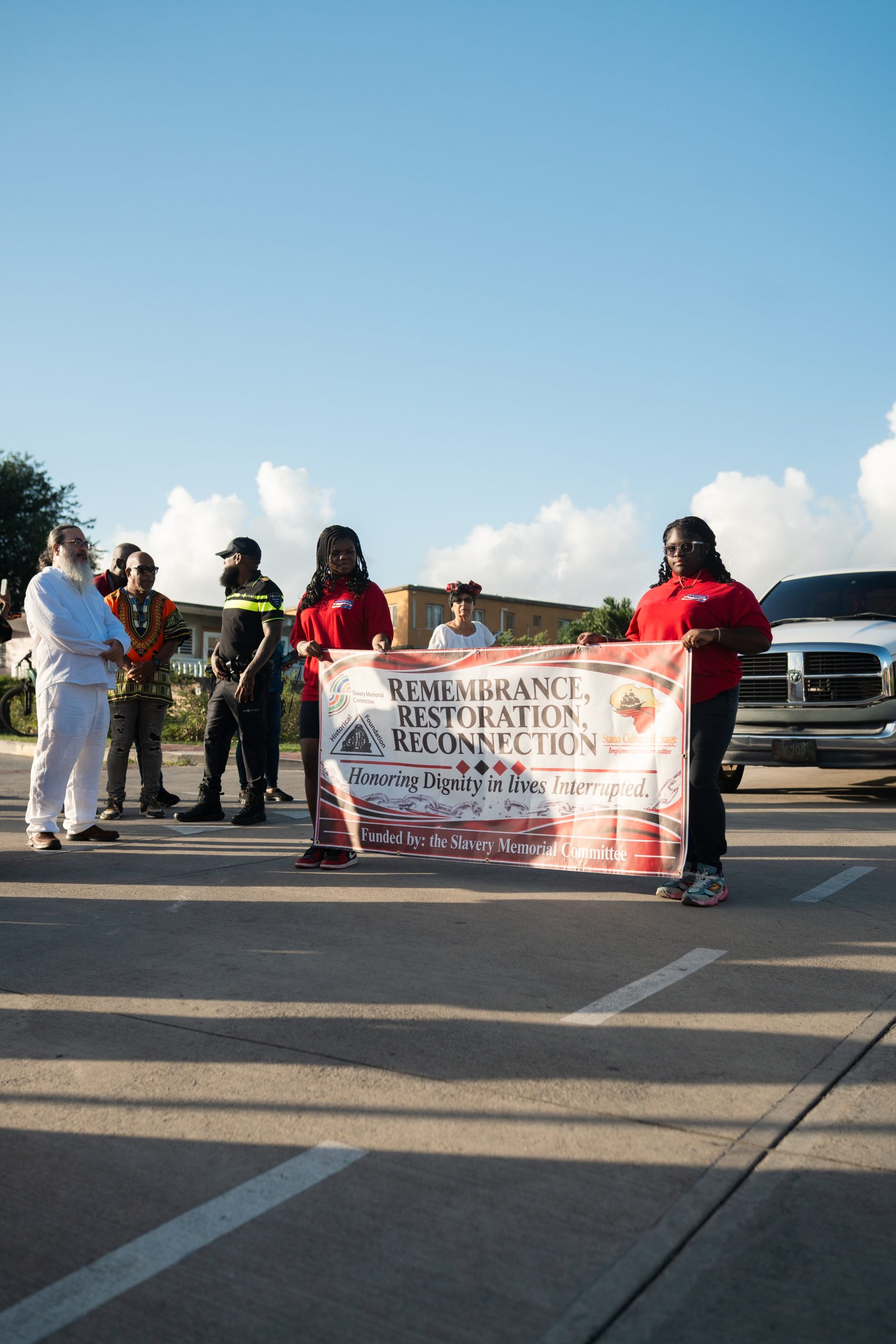
On Friday morning, the caskets were officially handed over. Afterward, a solemn procession moved through streets decorated in red and white. The route passed several historic sites, including the former Golden Rock plantation, and concluded at the new burial ground at Princess Estate, behind the Old Church Cemetery. Traditional music accompanied the reburial. The names of the ancestors were read aloud, and those in attendance observed moments of silence and reflection.
According to Paulo Martina, managing director of the executive organization of the Slavery Past Commemoration Committee: “These ancestors were part of a community whose history lives on in Statia. During their lives, their freedom was taken from them. With this reburial, they are given a dignified resting place, and the community can commemorate them with honor. That is why the Commemoration Committee believes it is important to support the descendant community and local partners in bringing the ancestors back to their final resting place.”
The Statia Cultural Heritage Implementation Committee and the St. Eustatius Afrikan Burial Ground Alliance organized the ceremony alongside local partners. The Slavery Past Commemoration Committee contributed 50,000 US dollars toward this reburial and, together with the Alliance and the island government, also assisted with the preparations.
Sites to Commemorate, Stories to Pass On
On November 14, at Fort Amsterdam, four markers were unveiled at burial grounds of enslaved people. They are part of a series of fifteen funded by the Committee on Statia. The markers make the burial grounds recognizable as places of remembrance. Via a QR code, residents and visitors can learn more about the history of each site.
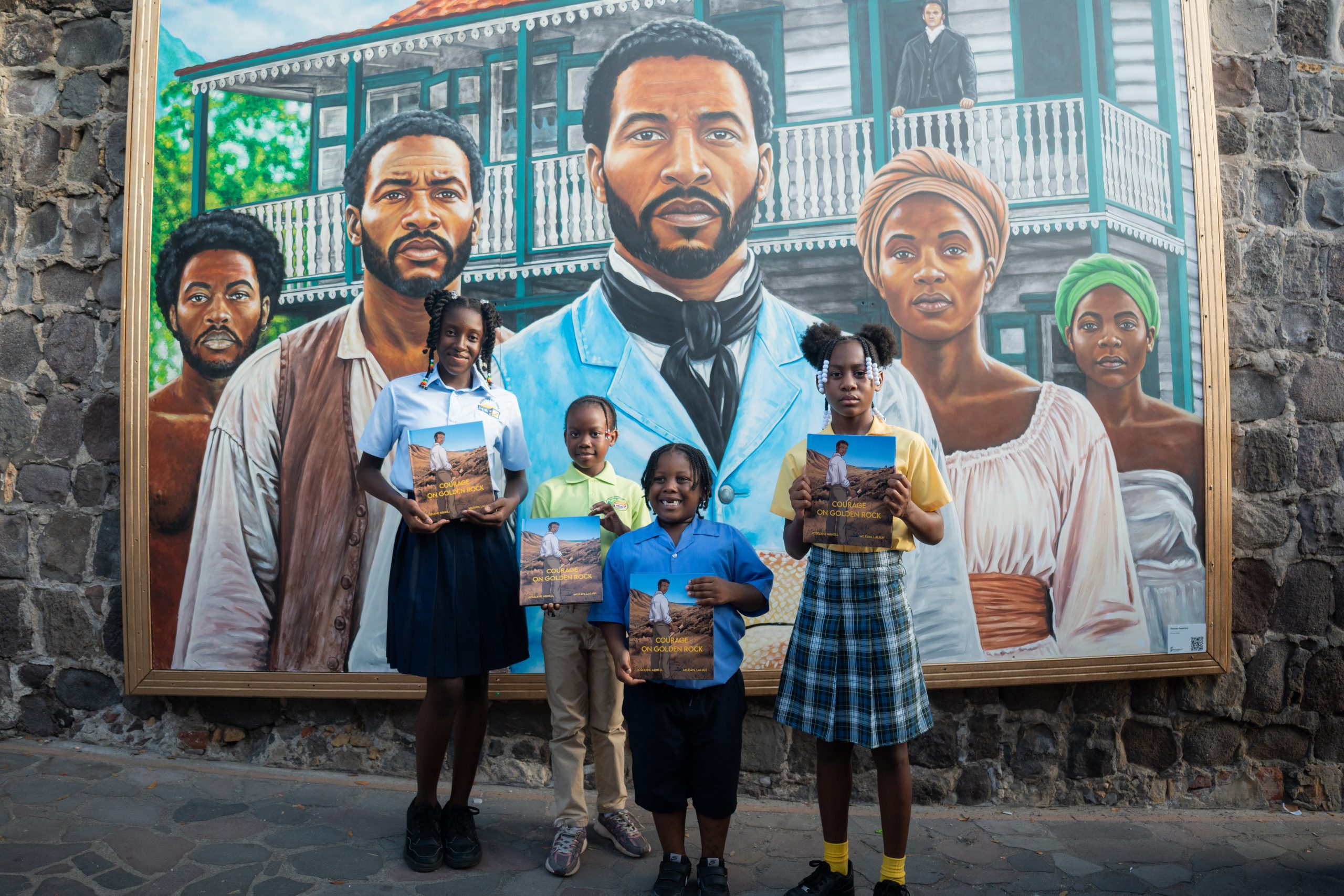
That same day, at the Committee’s office on Statia, the children’s book Courage on Golden Rock was launched. Author Joselyne Arnell and illustrator Milkaya Laijah tell the story of Thomas Dupersoy and the community that rose up against slavery on June 12, 1848. Every young person on Statia will receive a copy, and the book will also be available in libraries throughout the Kingdom. A day later, Dupersoy’s story found a place on the streets of Statia with the unveiling of a mural by artist Jhomar Loaiza. The Committee initiated the mural and funded it entirely.
Little Doors. Big Stories.
During Statia Week, the island unveils the first miniature door of The Doors of Anansi, a Kingdom-wide project by the Slavery Past Commemoration Committee. Anyone who opens the little door and scans the QR code will hear Anansi’s clever tricks. The stories are told in a local language, by a voice listeners may recognize. In the coming months, more miniature doors will follow. Sixty are planned across the six Caribbean islands and another sixty in the Netherlands, each with its own design and story. The Committee chose Anansi because his tales are passed down from generation to generation on all six islands. Each island has its own versions, and each generation views his cleverness in a different light.
The History of Six Islands Comes Together
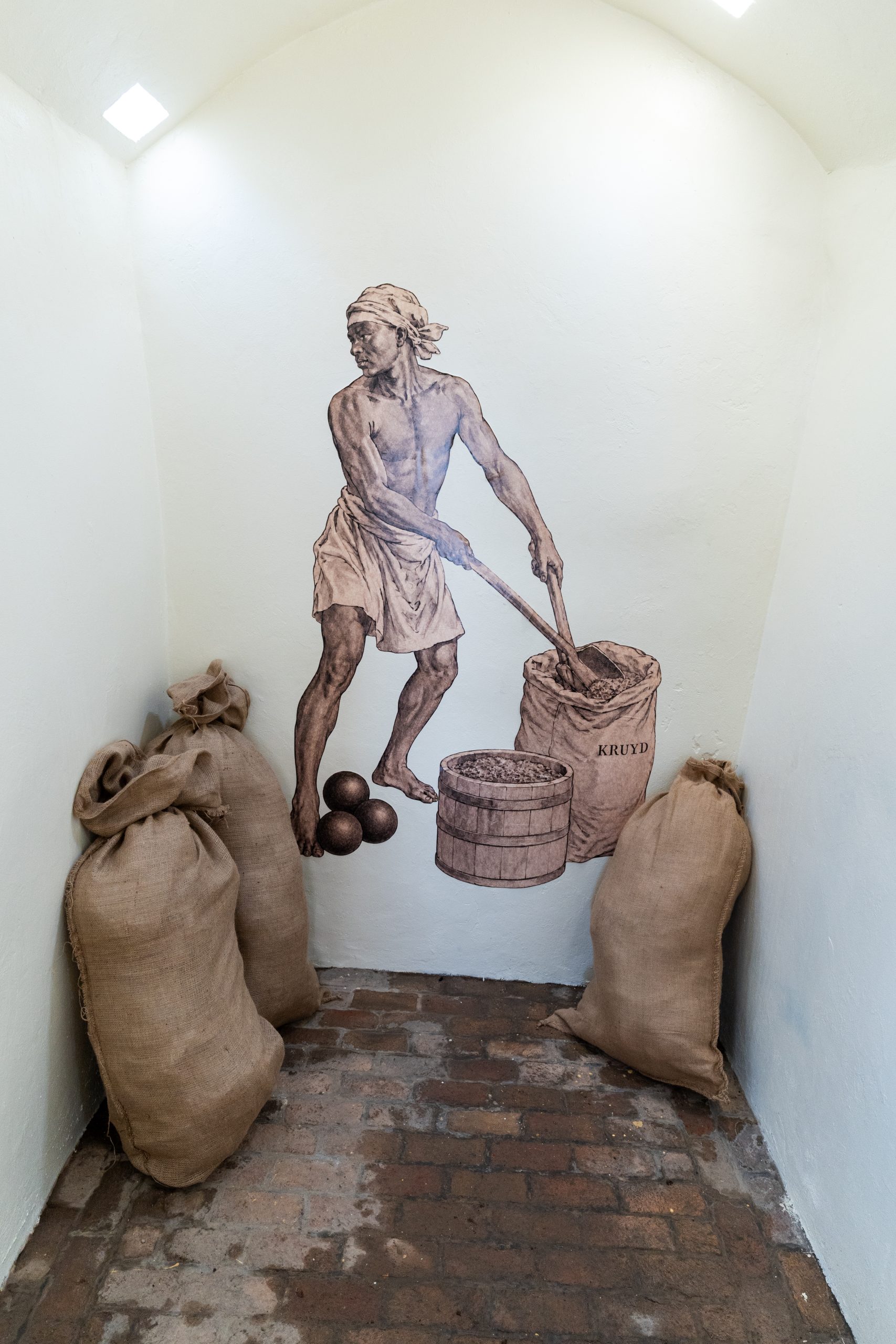
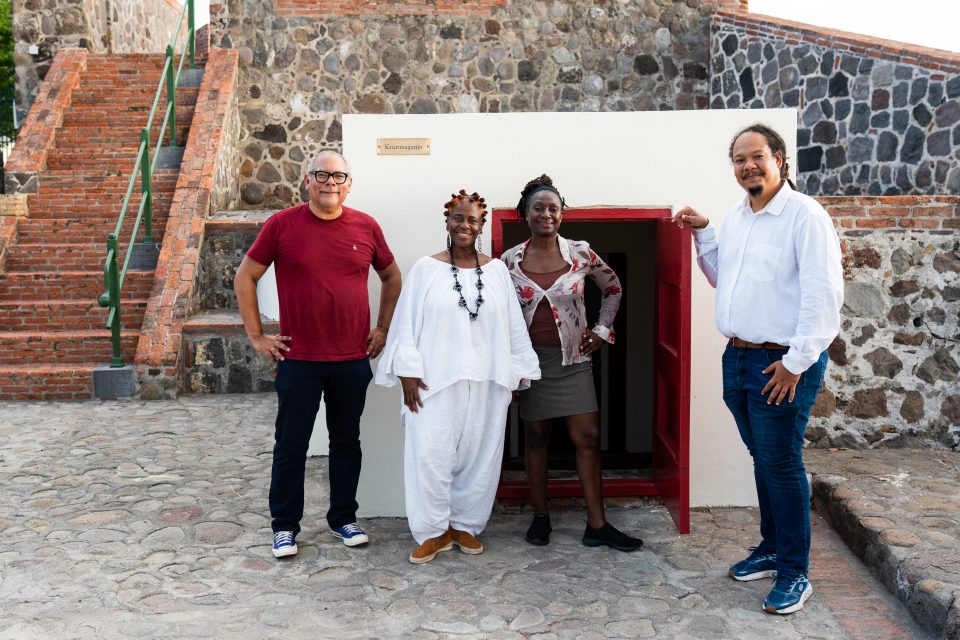
On November 12, the former powder magazine next to the museum at Fort Oranje also opened as an exhibition space. The exhibition tells the story of the enslaved people who had to transport gunpowder and faced the constant risk of fire and explosion. In 1721, a local ordinance forced enslaved people to assist with the restoration of the fort. At the very site where Statia commemorates the First Salute, visitors can also see how the island’s defense relied on forced labor.
In the new Fort Oranje Museum, the perspective of enslaved people is central to Statia’s story. The Slavery Past Commemoration Committee funded the ground floor, where a permanent exhibition brings together the history of slavery across all six Caribbean islands. In this way, that history secures a permanent place on Statia. Visitors from Aruba, Bonaire, Curaçao, Saba, and St. Maarten can discover what their own island’s history shares with Statia’s and how the experiences differed from island to island. The museum officially opened on November 16, Statia Day.
Taking the Commemoration Further
Paulo Martina, managing director of the executive organization of the Slavery Past Commemoration Committee, and chairwoman Astrid Elburg, along with several board members and staff of the executive organization, attended the activities on St. Eustatius.
The Slavery Past Commemoration Committee is proud to have honored the ancestors alongside the people of Statia and to share the island’s history with the rest of the Kingdom. The Committee works to ensure that Statia receives the recognition it deserves and that the history of slavery holds a permanent place in public commemorations throughout the Kingdom.