World Telecommunication and Information Society Day aims to raise awareness of the possibilities that the use of the Internet and other information and communication technologies (ICTs) can offer to societies and economies, as well as to promote digital inclusion.
Since 1969, World Telecommunication Day has been celebrated on May 17 to mark the creation of the International Telecommunication Union and to commemorate the signing of the first International Telegraph Convention in 1865.
In November 2005, the World Summit on the Information Society (WSIS) requested the United Nations General Assembly to declare May 17 as World Information Society Day to draw attention to the importance of information and communication technologies (ICTs) and the numerous issues related to the information society raised by WSIS.
In March 2006, the General Assembly adopted a Resolution stipulating that World Information Society Day would be commemorated on May 17.
In November 2006, during an ITU conference in Turkey, it was decided to combine both celebrations into a single World Telecommunication and Information Society Day on May 17.
2026 THEME: DIGITAL LIFELINE FOR A CONNECTED AND RESILIENT WORLD
In a world that increasingly depends on uninterrupted connectivity, the resilience of our digital networks proves to be essential. Key digital infrastructures—terrestrial networks, submarine cables, satellites, and data systems—constitute the backbone and nervous system of all communities and economies in the world.
On World Telecommunication and Information Society Day (WTISD) 2026, we urge all governments, industries, and communities to strengthen these vital infrastructures that keep the world running.
In a world where submarine cables can be cut, and terrestrial networks, satellites, and data systems are vulnerable to cyberattacks, power disruptions, or physical destruction, this requires national, regional, and international collaboration to ensure that digital lifelines are robust, secure, and resilient.
MESSAGE FROM THE SECRETARY-GENERAL OF THE UNITED NATIONS, ANTÓNIO GUTERRES
On World Telecommunication and Information Society Day, the International Telecommunication Union and the world recognize digital technology as a lifeline, connecting human beings with each other, with digital services, and guaranteeing security.
When disasters occur, networks transmit early warnings, mobilize first responders, and keep medical establishments, educational centers, and public services functioning.
But digital lifelines must be reliable, secure, and accessible to everyone. Too many communities are not connected. Critical systems are vulnerable. Disinformation and cyber threats are on the rise.
And with climate emergencies intensifying and the divide growing between those who lack access to AI and those who do, the cost of inaction falls hardest precisely on those who have already been left behind.
We must invest in connectivity – from submarine cables and satellites to local access to open standards and acquiring digital skills.
We must implement the Global Digital Compact, advance and promote governance for artificial intelligence based on rights, and strengthen cooperation between governments, the private sector, and civil society in all countries.
Digital infrastructure is an essential common good, and let us unite to make it resilient in the face of all current and future crises, because when digital lifelines are universal and secure, every community can prepare, respond, and recover.
WORLD TELECOMMUNICATION AND INFORMATION SOCIETY DAY 2026
CRUCIAL LIFELINES: SEMICONDUCTORS AND DATA CENTERS
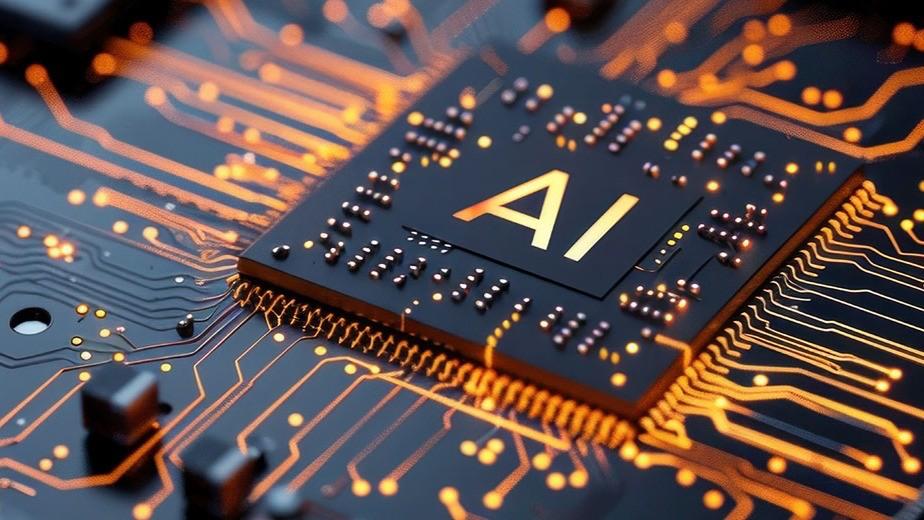
Semiconductors (microchip technology) act as the physical foundation for all digital lifelines, enabling edge computing, resilient data transmission, and efficient energy conversion, and certain types of semiconductors guarantee that global communication networks remain in service during times of crisis.
AI and logic processors (CPU, GPU, and NPU): They serve as the “brains” coordinating global digital networks and data centers processing enormous amounts of data. Enabling autonomous operations and real-time response capabilities.
Edge AI Chips (low-power machine learning accelerators): They process data directly on local devices (such as Internet of Things sensors and mobile phones) instead of depending on services that reside on remote cloud computing servers.
Compound semiconductors (GaN and SiC): Manufactured from materials like Gallium Nitride (GaN) and Silicon Carbide (SiC), these chips allow high-voltage energy conversion with incredible efficiency and thermal management.
Memory chips (DRAM and NAND Flash): They are responsible for storing and retrieving massive data collections that run across modern networks.
Optoelectronics and photonics: They convert electrical signals into light for ultra-fast data transfer (for example, laser diodes and photodetectors).
Data centers: Within the framework of the 2026 theme, different types of data centers function as the beating hearts for digital lifelines, ensuring that emergency systems, the financial world, healthcare, and telecommunications can withstand crises and recover quickly.
Central and enterprise data centers: Centralized facilities used by major technology corporations (e.g., OpenAI, AWS, Google, and Microsoft) or large financial and governmental institutions. They function as central repositories for critical global applications, cloud computing service platforms, and national databases.
Micro or edge data centers: Localized, smaller facilities close to users and equipment (at the edge of the network). Because they are local, they reduce latency (transmission time) and keep services running, even if there are temporary disruptions in long-distance services or submarine cables. They are fundamental for processing early emergency alerts, autonomous navigation, and real-time telehealth responses.
Modular and containerized data centers: These are scalable and autonomous units that pack servers, cooling, and power equipment to be mobilized for emergency use, disaster zones, conflict areas, or remote regions for the rapid restoration of local network connectivity, access to financial services, or other services when permanent infrastructure fails.
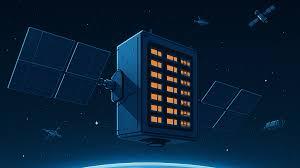
Space data centers: This forms a next-generation infrastructure placed in low Earth orbit (LEO), designed to handle data processing and routing in space. As part of the broader Space-Air-Ground Integrated Networks (SAGIN), these data centers in orbit provide essential backup and retransmission when terrestrial power grids or data systems are destroyed by extreme natural disasters (e.g., mega-earthquakes or floods).
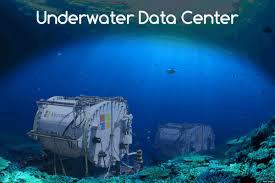
High-altitude, green, floating, or submerged data centers: These are either located in high-altitude zones or cold climates, or frequently utilize exclusively renewable energy.