

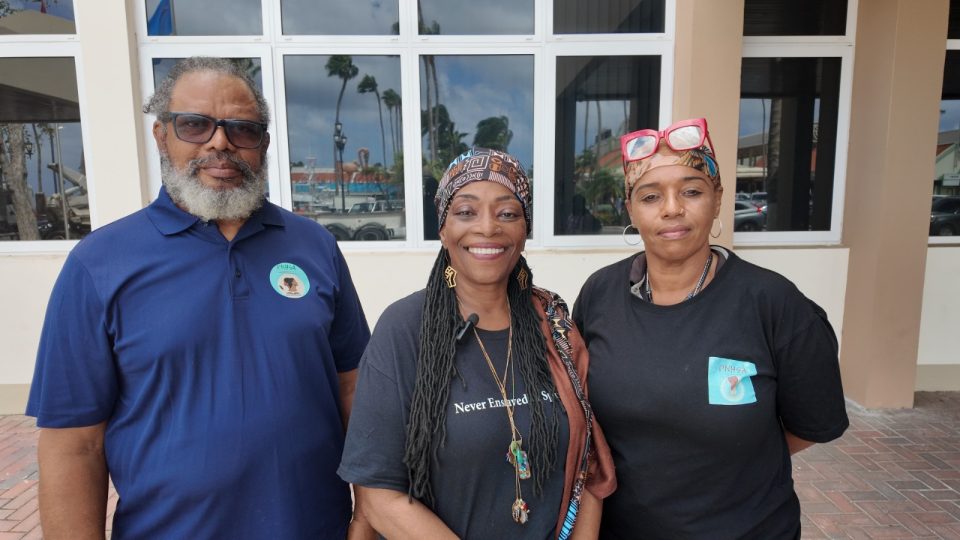
The National Platform for the Heritage of Slavery in Aruba (PNHSA), together with organizations in Curaçao, St. Maarten, and St. Eustatius, delivered a joint letter to the parliaments of the islands on July 6, 2026. This action is not only a rejection of the reintroduction of the “Dienstplicht” (mandatory military service), but also a wake-up call regarding the threat that the current constitutional constellation poses to the Caribbean islands.
The current “constellation” and the danger of the Rijkswet HOFA During the delivery of the petition, Sirelda Jackson, President of the PNHSA, explained that the islands are in a vulnerable position due to the constitutional constellation with the Dutch Kingdom. We are in a constellation that we must protect, but we see the push for the HOFA, which will have consequences for every citizen in Aruba.
• Limited autonomy: The islands are in a situation where their autonomy is threatened by the way the Kingdom operates.
• Impact of HOFA: Jackson stated that the islands are aware of the risks of losing more autonomy. If financial supervision laws, such as the Rijkswet HOFA, are implemented or maintained in their current form, this will drastically limit the islands’ ability to decide their own destiny.
• Dependency on the Netherlands: The letter points out that, in the current constellation, the Netherlands holds the power to decide on matters that directly affect the islands, without the people on the islands having a real voice in those decisions.
The “Dienstplicht” as an example of unilateralism The foundation considers the reintroduction of mandatory military service to be the perfect example of how the current constitutional constellation works against the interests of the islands.
• Unilateral decisions taken in the Netherlands ignore the reality and the desires of the Caribbean people.
• Jackson emphasized that, even though the islands are part of the Kingdom, these decisions are imposed without consultation, putting the islands in a situation similar to that of “countries during the colonial period,” where the decision-making power was and remains in the hands of the “Mother Country.”
A call for unity The PNHSA urges the parliaments of the islands not to remain “silent.” The letter delivered is a formal request for the parliaments to reject the “Dienstplicht” and demand a change in the constitutional relationship to prevent the islands from losing their autonomy entirely under the pressure of Dutch “supervision.” The foundation concludes that, to maintain Aruba as a “zone of peace,” it is essential for the islands to act as a united bloc against decisions coming from the Netherlands that threaten their sovereignty.