Member of Parliament Eduard Pieters visited Cura Cabay to meet with the fishermen of the Cura Cabay Fishing Center, a project that for more than 10 years has represented vision, culture, and local economic development. What began in 2016 under the leadership of former Minister Otmar Oduber was an investment in Aruba’s maritime identity: a dignified space for fishermen, a pier renovated and expanded in 2018 under the same former minister, and a vision to connect fishing with tourism. Today, the reality is a mixture of pride and serious concern.
A project maintained with their own funds
Eduard stated: “The Cura Cabay Fishing Center is more than a physical structure. It is a cultural meeting point, where fishermen can sit before or after going out to sea, store their equipment, and spend time as a community. For years, the fishermen themselves have paid for maintenance out of their own pockets — repairing lighting, carrying out basic maintenance, and taking care of the pier.”
However, love for tradition cannot replace government responsibility. The pier’s bolts require technical maintenance. Proper lighting is crucial for safety when entering or leaving early in the morning or at night.
“The original vision was that this space could also evolve into an economic niche: if the fishermen could obtain the lease of the adjacent land and abandoned building, they could sell fresh fish directly — especially to tourists from, for example, Hotel Secrets, which has already opened its doors in San Nicolas. This would create an authentic, local experience that could generate income for the Fishing Center itself and for the community. But this potential is now at risk.”
Pollution that cannot be ignored
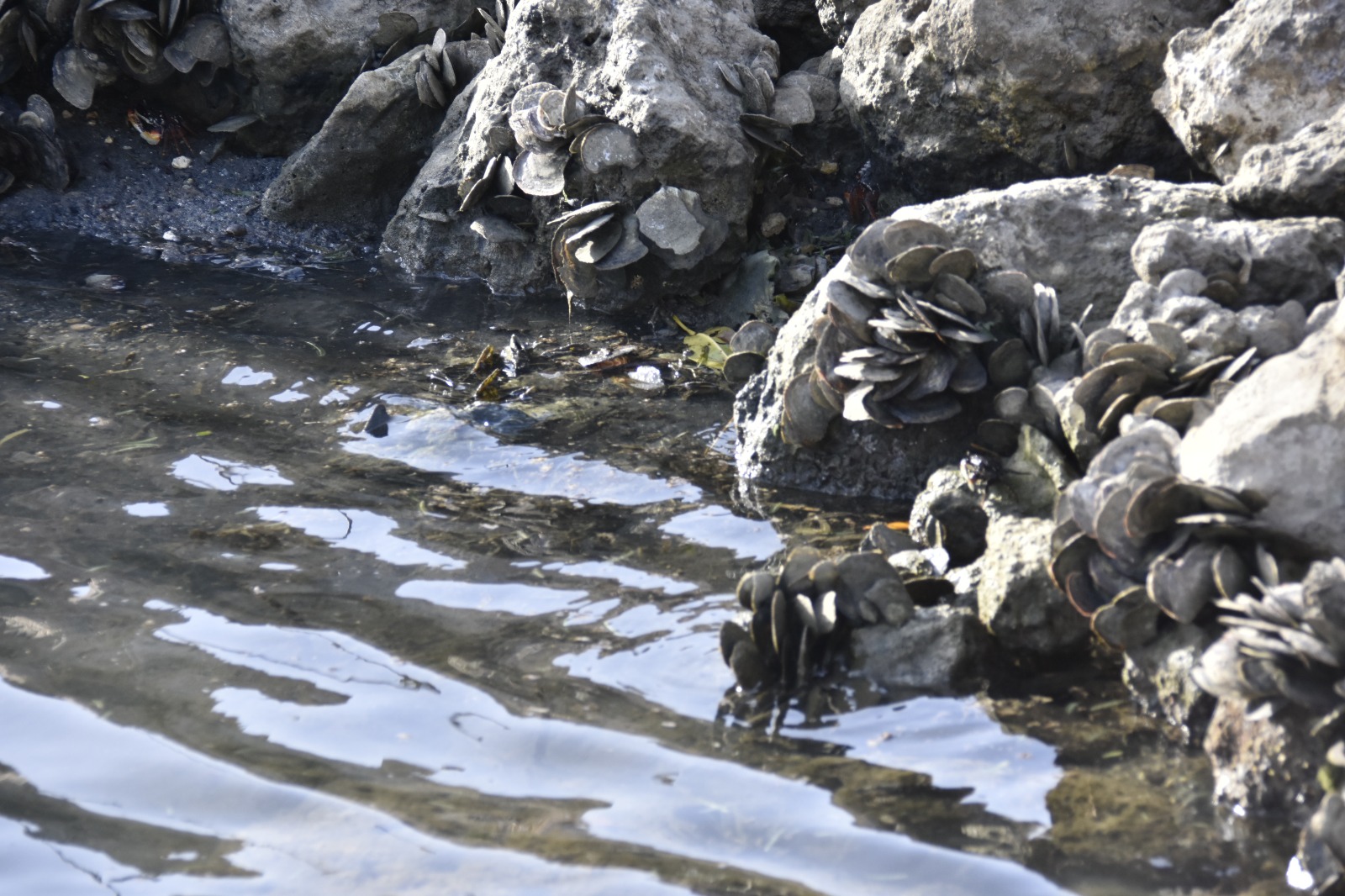
One of the sludge tanks has a crack. The result? Oil is leaking into the sea. The white stones that were placed to beautify the area are now completely black. The bay shows clear signs of contamination.
The fishermen demonstrated the concerning situation with clear evidence: in recent years they have found dead fish floating in the water, sludge accumulating, and unusual algae forming along the edge of the pier.
Where is the environmental action? Where are the technical inspections? Where is the immediate intervention?
According to Eduard: “This tank is not just a structural defect. It is a risk to the environment, the local economy, and public health. The PPA parliamentary faction is making a clear appeal: the government must urgently intervene to stop the oil leakage and protect the bay.”
RWZI and inconsistent management
Additionally, there are serious questions about past management of the RWZI. Limited capacity was exceeded for a long time due to too many septic trucks. The result? Wastewater had to be discharged somehow. There is suspicion that part of this discharge is reaching the bay of Zeewijk.
The visual impact is alarming: sludge accumulation in several areas and at the pier ramp. The ramp becomes nearly inoperable when sludge builds up. Therefore, the PPA faction is urging the government to send excavators to clean (dredge) the area so fishermen can safely launch and dock their boats.
Reopen the channel: a practical solution awaiting action
Finally, a simple measure could provide immediate relief: reopening the channel.
Currently, fishermen must navigate 30 minutes to enter and another 30 minutes to exit. This costs them an extra tank of gasoline each time. The channel was previously open. Their request is reasonable: reopen it to save time, money, and fuel.
“Cura Cabay is a symbol of cultural resilience. But love for tradition cannot substitute responsible governance. We cannot celebrate fishing as heritage while allowing pollution to destroy its foundation. We cannot speak of the primary economy while infrastructure deteriorates,” Eduard emphasized.
The government must intervene now protect the environment, support the fishermen, and honor a project that has demonstrated real value for Aruba.