

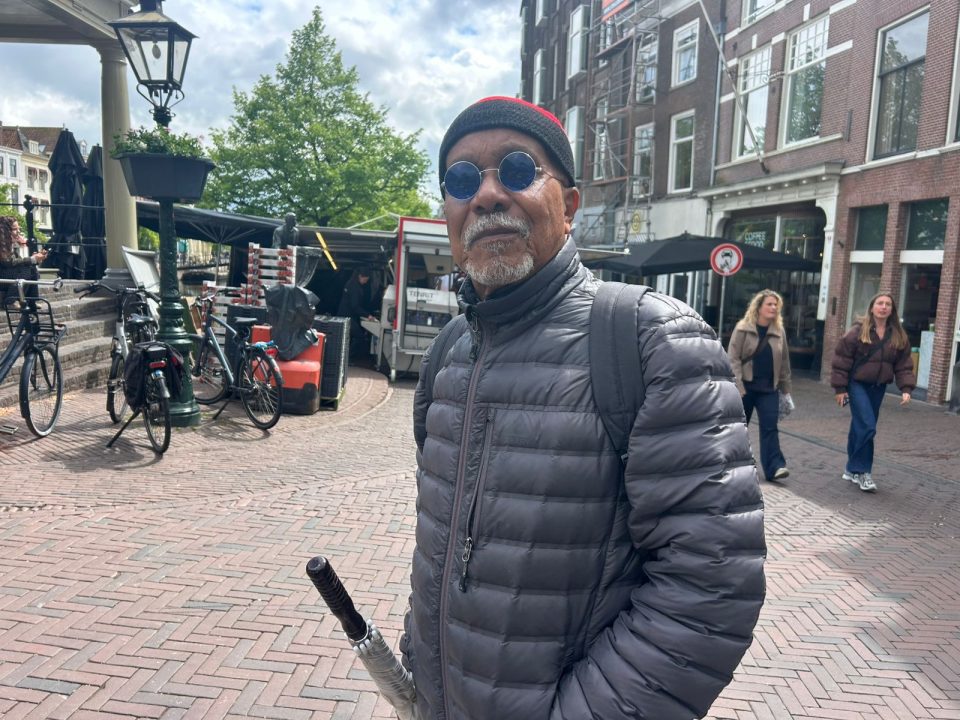
Cornelis Wilson, a retired Aruban professional and development planner, is advocating for a profound transformation in the way Aruba is governed. After living a large part of his life in Europe, Wilson shares a unique vision in which he proposes introducing a new morality into politics and governance, inspired by the universal figure of the mother and the concept of care.
Through his initiative titled “Mother Project” (Proyecto Mama), Wilson wants to take the political debate beyond traditional ideologies. “We were all cared for by a mother,” Wilson emphasizes, clarifying that his concept is not limited solely to the biological mother, but to all people who have the best interests and the task of caring for our country at heart. From his perspective, the “salvation” of the Caribbean lies in the hands of maternal values.
A “man of the world” with his heart in Aruba and the Caribbean
Although he was born in Aruba, Wilson was sent to Leiden, Netherlands, at just 13 years old. By living most of his life away from the island’s system and daily routine, he developed a broad perspective that helps him consider himself a “man of the world.” Wilson touched upon the topic of his personal freedom, explaining that this distance gave him the opportunity to live a life “liberated” from certain local standards, a value he appreciates deeply.
Currently, Wilson dedicates much of his free time to his passion for poetry, writing in the five official languages of the Caribbean: Papiamento, English, Spanish, Dutch, and French.
However, his connection to Aruba remains intact. “My heart is completely open to Aruba, to its past, present, and future,” he declares. He sees a strong similarity between the political dynamics within the small circle where he is active in Leiden and politics in Aruba, which fuels his concern for the same problems and circumstances that the people are going through. With a touch of humor, Wilson commented that, one way or another, he gets “more votes” (attention and recognition) in Leiden than in his own homeland.
Philosophy of the “Mother Project”: A shift in the stance of power
The central goal of the “Mother Project” is to redefine leadership. Wilson points out that, although mothers are currently occupying positions of greater importance and power in society, they often adopt the traditional governing posture and style of men. His goal is to encourage a reconsideration of this position, infusing a perspective of love, care, and protection—characteristics inherent to the maternal figure—into daily governance. The speaker considers himself a “son of all mothers,” expressing his concern for the well-being of all women who carry that title.
Concrete proposals: A Museum and a Virtual Wall
To give substance and life to his philosophy, Cornelis Wilson comes forward with two tangible proposals for Aruba:
- Mother’s Museum: Inspired by the “Women’s Museum” that Wilson visited every month when he lived in Hanoi, Vietnam, he proposes a similar place for Aruba and Curaçao. The purpose of this museum would be to educate and raise awareness about the journey and all aspects of a mother’s life, while simultaneously serving as a platform to consolidate women’s organizations to achieve concrete changes in society.
- Mother’s Wall: This idea consists of a public wall decorated with art tiles, photos, or designs representing mothers from the community. Each tile would feature a QR code directing citizens to a website with detailed stories about that mother. This would allow the community itself to tell its history in a visible way, without structurally depending on newspapers or the radio.
Without fear, without shame, but without patience
Wilson categorically states that he has no fear of trying to influence politics in Aruba, given the enormous potential the island has for further development. He promised to use every platform and public opportunity available to insist on this vision.
Regarding his personal attitude in this battle, Wilson opens up completely: “In my morality, I have no fear and I know no shame,” he concluded, admitting, however, that the only thing lacking on his path is patience, as he wants to see these social and political changes happen as soon as possible for the well-being of Aruba.