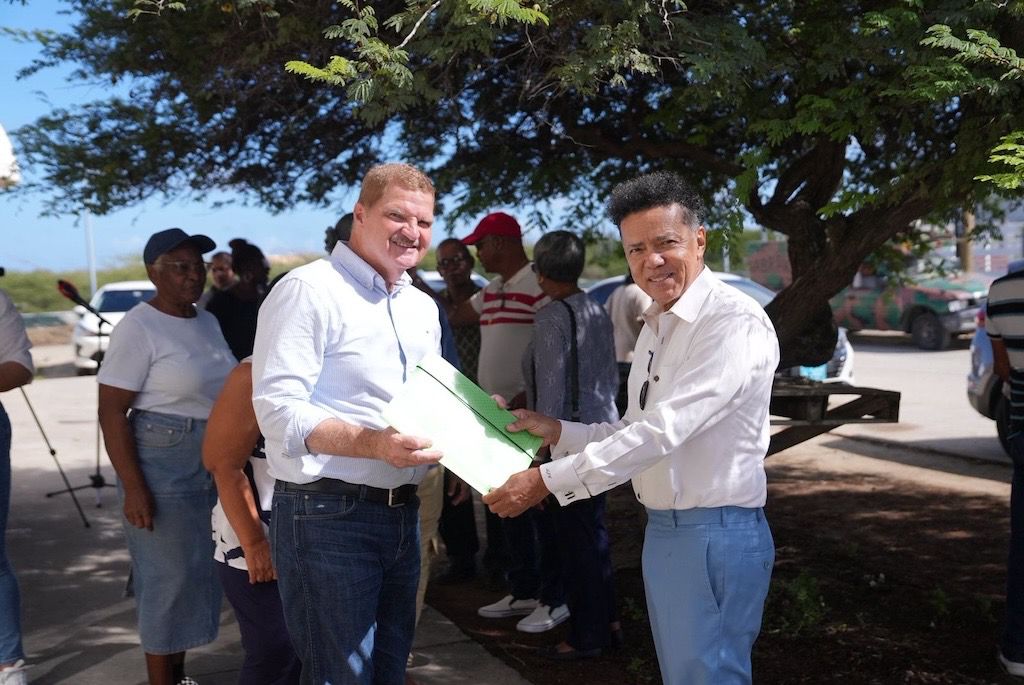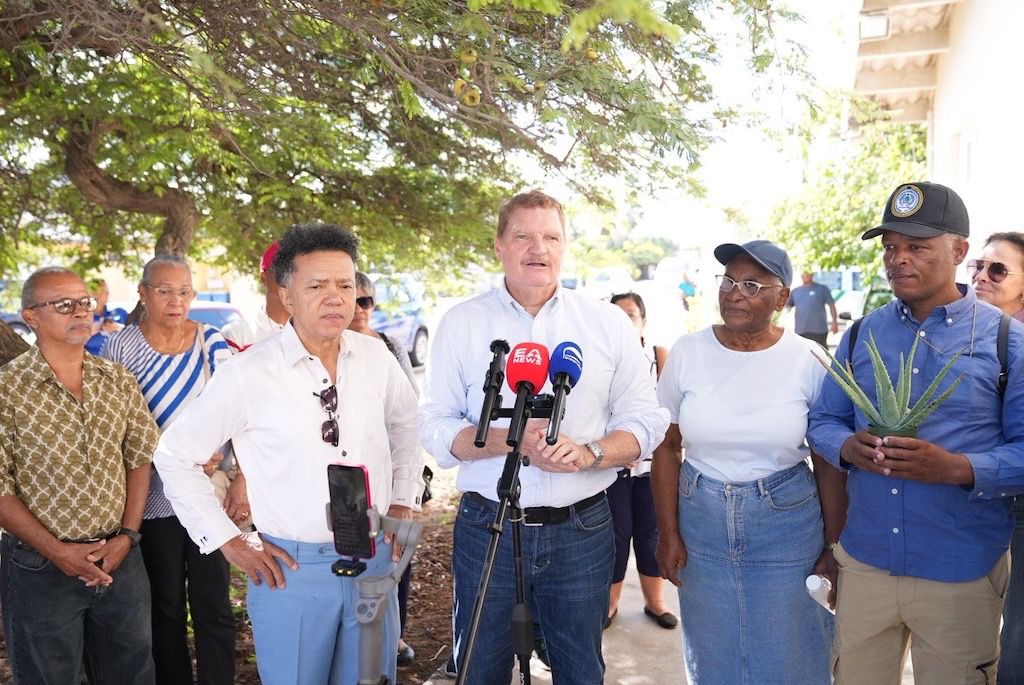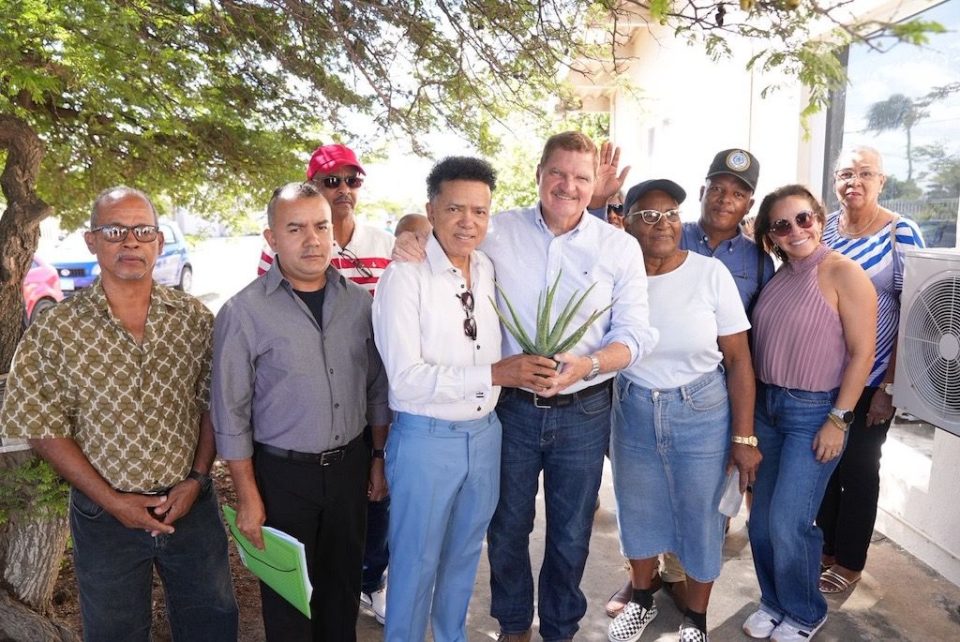
On Thursday morning, Prime Minister Mr. Mike Eman, together with the dynamic Acción di Bario team, visited the neighborhood of Madiki. For this occasion, Dr. John Croes shared part of the history of the aloe plant.
Few people know that aloe was imported by Dr. Croes’ great-great-grandfather, Mr. Fernando Martis, a Dutchman born in 1839 according to the Curaçao census records. Fernando was a foreman at a workshop and, during the transatlantic voyages between Curaçao and West Africa — during which he was responsible for the care of enslaved people on the long journey — he brought three aloe plants to Curaçao, and later two to Aruba. These were plants previously unknown on the islands of the former Dutch Antilles.
The aloe plant that Fernando brought to Aruba was planted in the same area of Madiki, near where Acción di Bario began its activities this past Thursday morning.
On August 3rd, 1875, Fernando became the father of a son, Esteban Martis, who would eventually own a large aloe plantation in the Madiki and Hato areas.
After sharing this history, Dr. John Croes presented Prime Minister Eman with an aloe plant as a symbol of support for continuing to care for Aruba’s flora and fauna, and to honor the traditional healers and herbalists of the island. In closing, Dr. Croes thanked Prime Minister Eman for his significant work in protecting Aruba’s nature and wished him success and wisdom in carrying out the national reforestation plan.
Prime Minister Eman was impressed by the story and reflected on the importance of the aloe plant in Aruba’s economic history — a plant that is even featured on the island’s national coat of arms. Aloe was one of the economic pillars that sustained Aruba during times of severe drought, when other crops failed to generate enough income to support the community. Aloe, however, continued to flourish. The plant is known for its medicinal properties, and Aruba has its own aloe factory whose products are recognized worldwide.
“This is a moment of affirmation of our country’s history and a commitment to continue it for future generations. Today, we have a doctor here who was inspired by his great-great-grandfather to look to the plants of our land for the medicine our community needs,” Eman concluded.
Press release: Government of Aruba