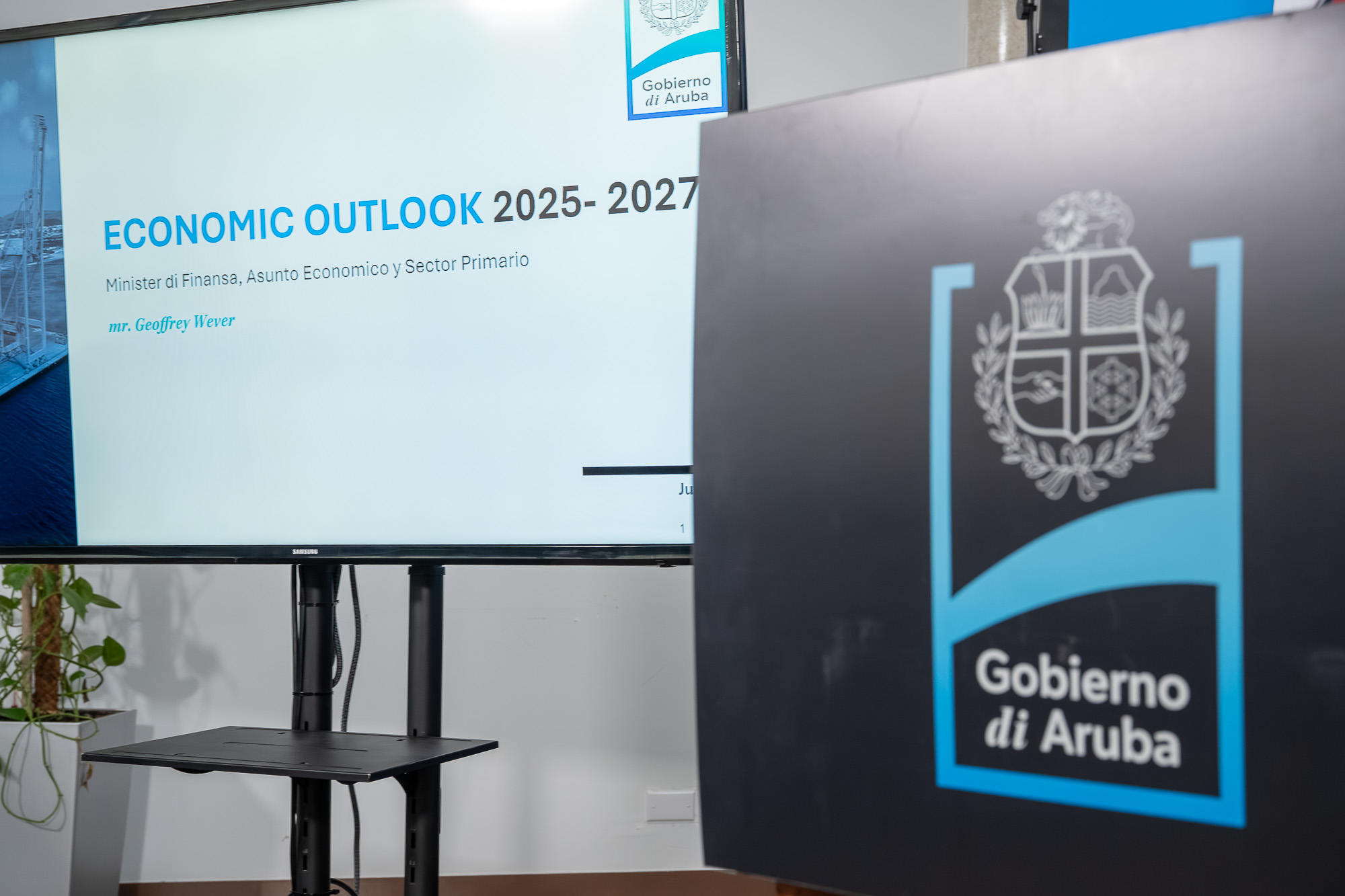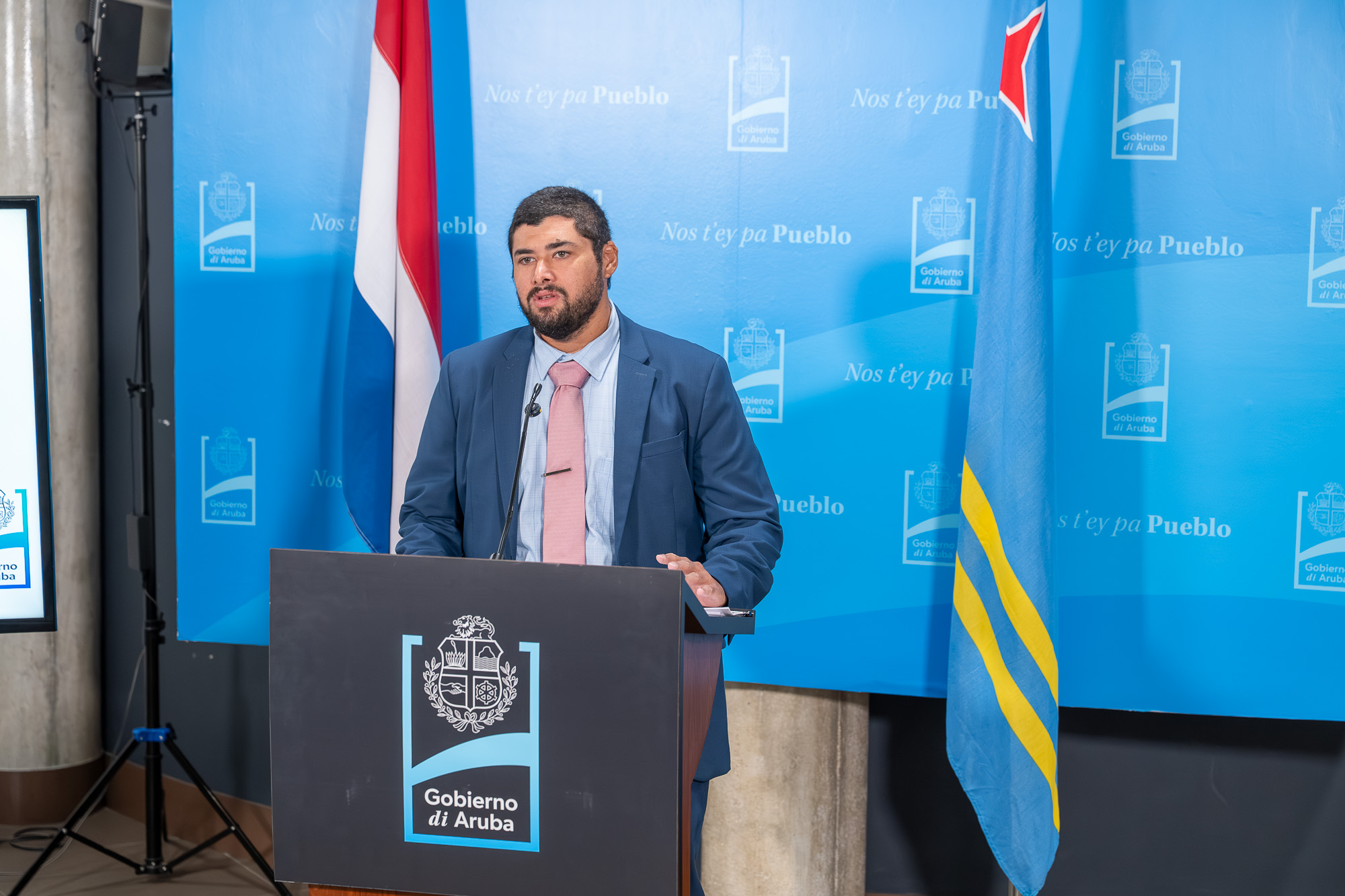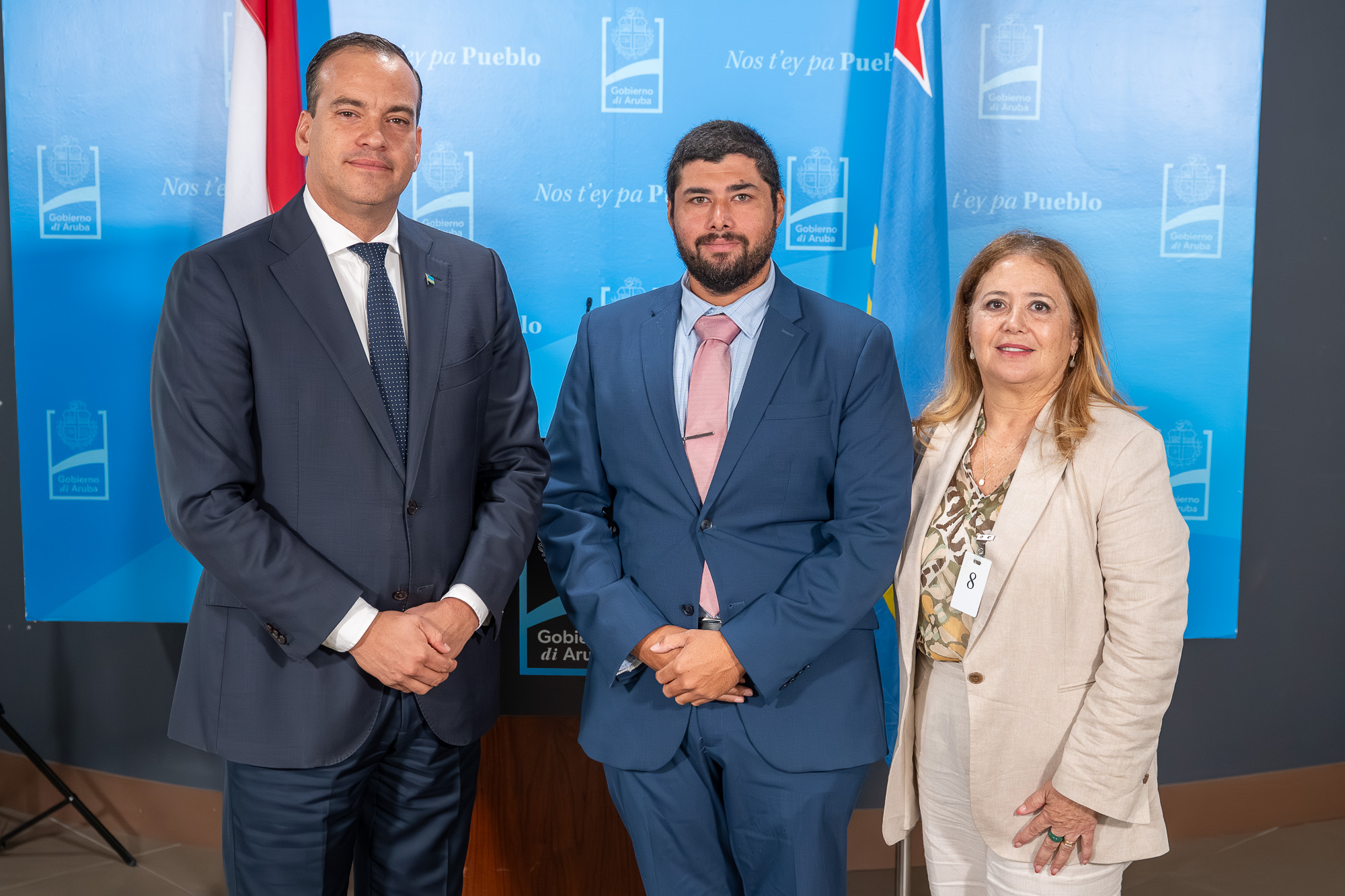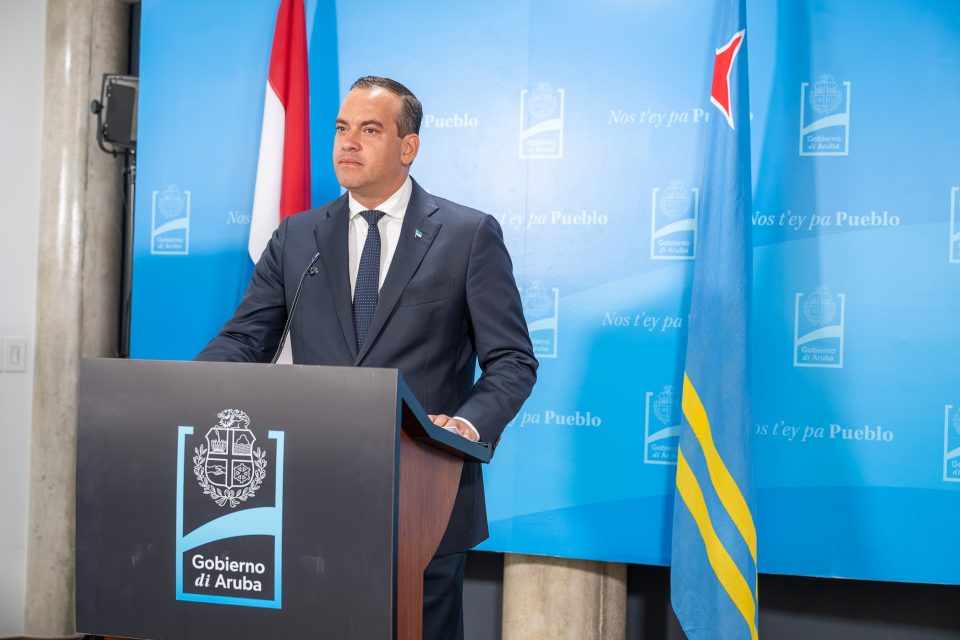
The Minister of Finance, Economic Affairs, and Primary Sector, Geoffrey Wever, Esq., informs that the latest projection for Aruba’s economy in 2026 is positive. The Department of Economic Affairs, Commerce, and Industry (DEACI)’s “Economic Outlook May 2026 – 2027” contains an adjustment of the economic growth for 2025 and also provides a projection for 2026 and 2027. This latest adjustment and projection are based on economic data available up to March 2, 2026.
Official and public data for 2025 regarding visitor volume and employment numbers show a higher growth rate than previously projected. According to the Aruba Tourism Authority (A.T.A.), the number of stay-over visitors grew from 1.4 million to 1.5 million in 2025, which represents a growth of 7% compared to 2024. Data from the Social Security Bank (SVb) show that in 2025, the number of employment relations grew by more than 3,000, or 4% compared to 2024. Additionally, the income tax rate adjustment to 0% on certain income brackets in January 2025 is estimated to have contributed approximately Afl. 46 million to private consumption. Furthermore, the extra sum of Afl. 250 in monthly relief allowance (reparatietoeslag) introduced on May 1, 2025, for nearly 22,000 pensioners resulted in an estimated disposable income increase of Afl. 5.4 million per month, or an extra Afl. 44 million from May to December 2025.
Based on this official and public information, DEACI has adjusted Aruba’s nominal economic growth for 2025 from 5.9% up to 6.4%. This translates to an adjustment of the Gross Domestic Product (GDP)—the indicator used to measure economic activity—from Afl. 7.861 billion to Afl. 7.978 billion.
According to DEACI, the positive growth of 2025 is anticipated to continue into 2026. In DEACI’s December 2025 projection, nominal GDP growth was predicted to rise from Afl. 7.861 billion to Afl. 8.068 billion, or 2.6%.
In the “Economic Outlook May 2026,” DEACI now forecasts a growth from Afl. 7.978 billion to Afl. 8.078 billion, or 1.3%. DEACI anticipates a 4.8% growth in stay-over visitors. Figures from A.T.A. show that up to April 2026, stay-over arrivals actually indicate a growth of 9.6%.
Private consumption is expected to grow from Afl. 4.148 billion in 2025 to Afl. 4.274 billion in 2026, which is equivalent to a 3.0% growth. To stimulate purchasing power, the monthly relief allowance for pensioners was raised by an additional Afl. 150 starting January 2026, bringing the total to Afl. 600 per month. General Old Age Insurance (AOV) payouts increased by an average of 100 florins per pensioner per month. Additionally, the AZV medical insurance premium for pensioners with an annual income of up to 30,000 florins was reduced from 5% down to 0%.
Regarding investments, DEACI forecasts a delay in the execution of investment projects. In 2026, the value of investments is projected to reach Afl. 1.439 billion compared to Afl. 1.565 billion in 2025.
For 2027, the economic outlook for Aruba remains positive. DEACI projects a nominal growth of 4.1%, reaching a value of Afl. 8.408 billion in 2027.
To mitigate the impact of higher fuel prices on families and businesses, the government introduced a strategic reduction in fuel excise duties in April 2026. Inflation remained at a very low level of 0.1% in 2025. For 2026, inflation is projected at 3.0%, primarily as a result of the ongoing situation in the Middle East.
As part of continuous monitoring, DEACI compiled three additional scenarios. In the “Longer Resolution” scenario, it is predicted that if the current conflict in the Middle East lasts longer, the nominal growth of the Gross Domestic Product could drop to 0.8%. In the event of a “Terror Attack” scenario, which assumes a shock to the tourism sector, a GDP decline of 2.9% is projected. In the “Stronger Tourism” scenario, where visitor arrivals grow faster than projected, nominal growth could reach 1.9%.
The compilation of these economic projections is made possible through the use of the MARUBA macroeconomic model. The MARUBA model is based on the National Accounts of Aruba published by the Central Bureau of Statistics (CBS) and reflects the functioning of Aruba’s economy. The management of the MARUBA model falls under the responsibility of DEACI. These economic projections are achievable thanks to continuous dialogue with various local entities and experts, as well as analyses of different trends. The MacroModel Commission meets regularly to exchange information, analyze data, and evaluate assumptions. Members of the MacroModel Commission include the Directorate of Finance, the Tax Department, A.T.A., AHATA, AAA (Airport), SVb, AZV, DAO (Department of Labor), the Central Bank of Aruba (CBA), with DEACI serving as chairperson.
The Ministry of Finance, Economic Affairs, and Primary Sector, together with the Department of Economic Affairs, Commerce, and Industry, will continue to monitor the developments of Aruba’s economy.
Minister Geoffrey Wever wishes to thank Director Maria Dijkhoff-Pita, the Economic Policy and Research department, and the MacroModel Commission for making this economic outlook possible. For more information regarding the “Economic Outlook May 2026 – 2027,” please visit the DEACI website: www.deaci.aw.