

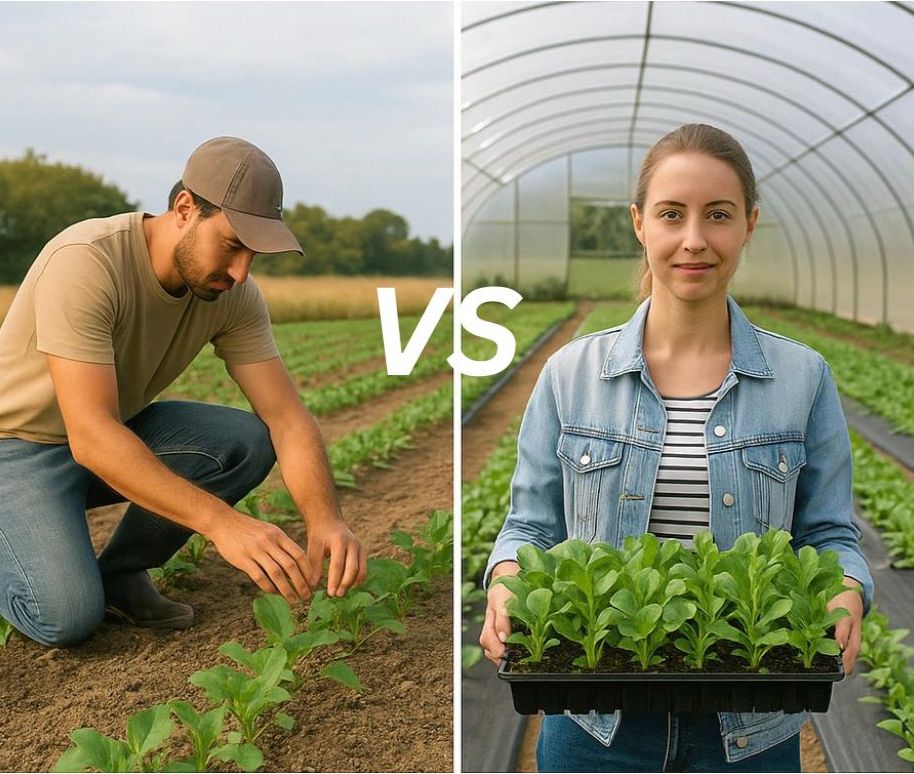
Kinsasha Thielman–van der Bliek (Raiz) questions the way Minister Geoffrey Wever, in charge of the Primary Sector, is handling this portfolio. The Agri-Innovation project was presented as a solution, but in reality, it goes against the vital goal of teaching citizens to grow their own food on local soil. “We’re moving from importing food to importing technology,” Thielman–van der Bliek stated.
The Agri-Innovation Park involves systems, materials, and equipment that are not produced in Aruba. Therefore, technologies will need to be imported to carry out the project, along with foreign experts to operate these systems. As a result, Aruba will remain dependent on imports — merely in a different form.
Mrs. Thielman–van der Bliek points out that the types of vegetables and fruits planned for cultivation in the Agri-Innovation Park are not those typically used in local cuisine. According to the PRIVA report, the ultimate goal of the project is to achieve an abundance suitable for export. It is therefore clear that the focus lies more on generating government revenue than on empowering local people to grow their own food and reduce dependence on external factors. Minister Wever’s management does not prepare the population for times of crisis. Given Aruba’s vulnerability to external influences and how easily its economy and stability can be disrupted, this issue can no longer be ignored.
Dutch funding
It is regrettable to see that funds are now being invested in the Agri-Innovation Park, while traditional farmers receive no support to continue promoting food cultivation. Mrs. Thielman–van der Bliek notes that several challenges remain unaddressed, such as the historical allocation of lease land without assessing soil suitability. Some people have inherited lease land but no longer cultivate it, often because the plots are too large. Another issue is the renewal of lease contracts: the process has been stalled for five years, leading many not to cultivate their land as they wait to see if they will retain it before making investments. “The minister could have considered other ways to support and empower local farmers with what they actually need, before introducing a new project,” said Thielman–van der Bliek.
She continued that if Minister Wever’s true intention was to address the food needs of the population and meet local demand for agricultural products, he should have looked to strengthen and invest in existing local initiatives, instead of introducing a new project that sidelines local farmers.
Another major concern is the decision to remove management of the project from the Santa Rosa Department. For years, Santa Rosa has been working hard to improve and reform itself, despite insufficient government investment. To make matters worse, the plan involves taking 100,000 square meters of land from Santa Rosa and placing a Dutch national in charge of the project. “It was even stated that if local farmers do not make use of these greenhouses, foreign investors will be brought in to cultivate them instead.” Thus, instead of supporting local farmers, the minister is effectively bringing in competition against them.
“This is an abuse,” concluded Thielman–van der Bliek. “For years, local farmers have worked tirelessly on the land, and now they are being told to change their ways and pay rent in order to work within the Agri-Innovation Park.”