

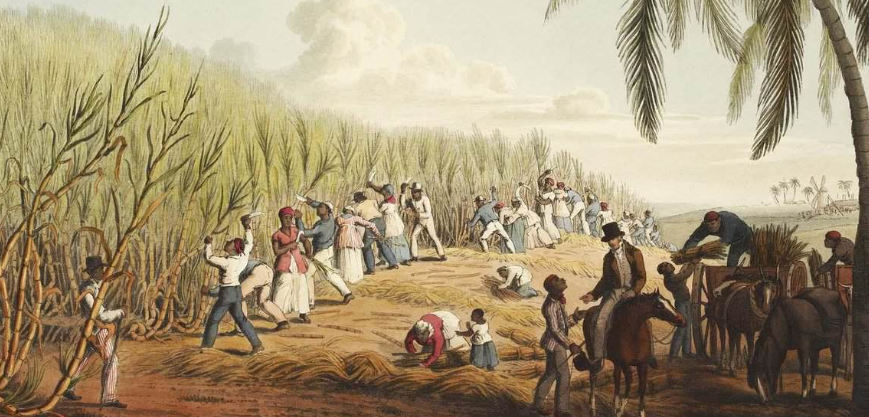
On July 1, 2026, the Preserva Aruba Foundation commemorates the abolition of the transatlantic slavery law within the Kingdom of the Netherlands. On July 1, 1863, 487 individuals were declared free in Aruba. In the history book written by Johan Hartog, Aruba zoals het was zoals het werd – van de tijd der indianen tot op heden (Aruba as it was, as it became – from the time of the Indians to the present), published in 1953, it is indicated on page 227, according to the governor’s journal, that the day of emancipation passed without any incidents.
Hartog also documents that the people of Aruba commemorated and celebrated the abolition of the transatlantic slavery law for the first time on July 1, 1888. This took place twenty-five years after Emancipation Day. He reports that this memorable day back then fell on a Sunday. On this day, a service was held at the Protestant Church in Playa (Oranjestad) commemorating the liberation. The following day, July 2, 1888, a service took place at the Catholic church in Playa. After the mass, children from the Catholic school and the public school walked to the governor’s house in Ponton. The Catholic school was located near what we now know as the Maria Convent in Playa, which was built of wattle and daub (torto); the public school, which was built of stone, was located where the CBS/Central Bureau of Statistics office currently stands on Wilhelminastraat, and the governor’s house was situated in Ponton. In front of the governor’s residence, the school children sang the national anthem of the Netherlands and other songs. The governor, Jacob Thielen II, spoke to them and gave them a treat.
We do not know what the governor said to the children. We assume that he thanked them for their effort in walking the long distance from their school to his house under the sun to sing, among other songs, the Wilhelmus. The Preserva Aruba Foundation is interested in knowing what the governor might have said. If there are people who have heard stories about this from their families, please share them with us. Our WhatsApp is 7404342 and our email is preservaaruba11082023@gmail.com. Or write an article yourself and share it.
Jacob Thielen II became governor on June 7, 1888. He took over from Governor David Gaerste. Governor Jacob Thielen II recorded the events of July 1 and 2, 1888, in his journal, and in this way, a part of our history was preserved, which Johan Hartog included in his book for us to read. Based on this information, Johan Hartog recounts that in the evening, there were dances in various places as part of the celebration of the emancipation of the slaves in Aruba.
We do know that since 2012, the We Culcha foundation in San Nicolas started with the public commemoration and celebration of the emancipation of slaves “east of the bridge” (pariba di brug). For 124 years, things were quiet in Aruba regarding the abolition of transatlantic slavery. To this day, there are still people who do not know that Aruba also experienced the slavery of African people. Could it be that people commemorated this day in private? Research will be needed to find out if perhaps Club Surinam commemorated and celebrated this day before 2012.
The struggle of the descendants of slavery for the recognition of the injustices committed against their ancestors has a long history. The struggle began with Anton de Kom as early as the 1920s. Anton de Kom wrote the book Wij slaven van Suriname (We Slaves of Suriname) in 1937. His struggle was followed by a march in Amsterdam in 1960 and the efforts of various organizations in the Netherlands, which resulted in 2012 in the National Monument in Oosterpark, Amsterdam, and the National Institute for Dutch Slavery History and Heritage (NiNsee). The struggle for the recognition of the Netherlands’ role in transatlantic slavery culminated in the apology by Prime Minister Mark Rutte on December 19, 2022, and by King Willem-Alexander on July 1, 2023. On the occasion of the latter event, the Governor of Aruba, the Wever-Croes cabinet, and their guests were present at the Archaeological Museum, where the King’s apology was followed via television.
On June 19, 2023, the government of the Netherlands apologized to the two children of Anton de Kom who were still alive. Both passed away in 2024. For the family of Anton de Kom, their struggle lasted for more than a century. Who remembers what was done in Aruba on July 1, 2024?
In 2025, the Wever-Croes cabinet boycotted the slavery commemoration committee of the Netherlands and did not commemorate this day. Different foundations did mark the day. The Preserva Aruba Foundation published an article in the newspaper related to the abolition law of August 8, 1862.
On July 1, 2026, the Mike Eman cabinet commemorates this day with a protocol/official act. This is going to be a historic day for Aruba.
The Preserva Aruba Foundation invites everyone in Aruba to reflect on this day, ask yourself what this day means to you personally, and how you would like to leave Aruba behind when you pass away. For the director of the Preserva Aruba Foundation, it is a day of mourning filled with sadness for all those who were held in slavery against their will, and after her passing, she wishes to leave an Aruba behind that is better than she found it—namely, an Aruba without discrimination.