

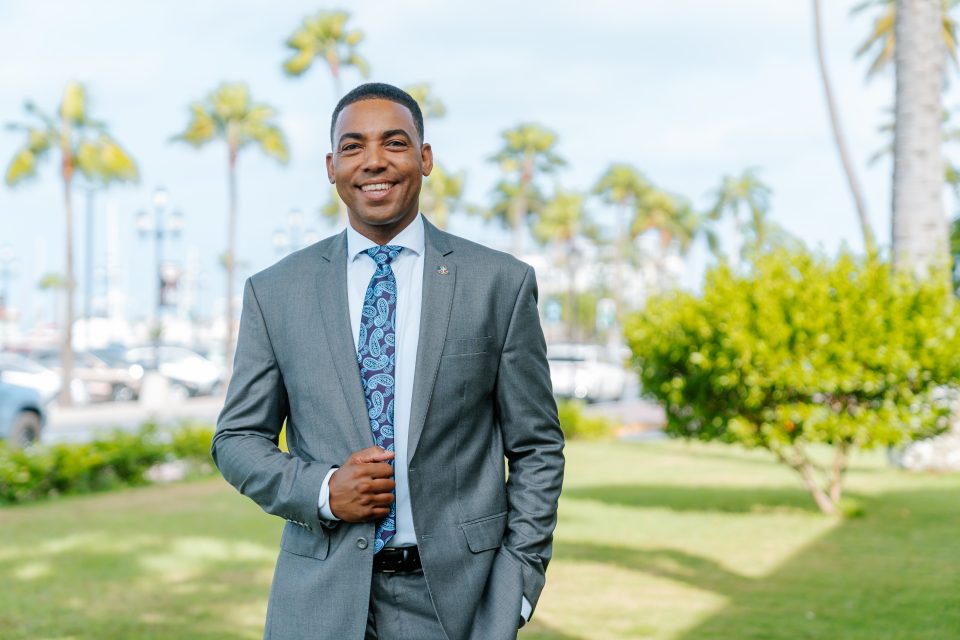
During the debate on the National Ordinance for the Aruba Investment and Development Fund (AIOF) in the parliament hall, I asked a question that I would like to leave you with as well: If 10 million florins in infrastructure generates economic growth, what is the real cost when we do not invest in our people?
This question is not against the fund. Aruba needs to invest—in infrastructure, in innovation, in economic growth. This is something that MEP supports. However, during the debate, something caught my attention. As someone who has worked in care and accompanied families and youth through difficult situations for many years, I could not remain silent about it.
The symposium that changed the question
The day before the debate, at the University of Aruba, criminologist Henk Ferwerda gave a presentation that stayed with me. His message was clear and based on research: Aruba has a significant group of young people growing up in vulnerable circumstances. Youth who grow up without sufficient guidance, without opportunities, in neighborhoods where social and economic pressures weigh heavily.
His conclusion was not a surprise to me, but it bears repeating: the solution is not more repression, not more buildings, not more concrete. The solution is investment in prevention, in guidance, in education, and in real opportunities for young people who currently see no way forward for themselves.
As someone who has worked directly with addiction and mental health, I know what the absence of these investments looks like in real life. Not in statistics, but in the faces and hearts of families. In families that ask for help too late. In young people who have gone down the wrong path not because they wanted to, but because no system reached them in time.
What international science demonstrates
The research of Nobel laureate James Heckman is one of the most cited in the economics of education and human development. His conclusion, based on decades of research, is that investing in children and youth at an early age generates a higher economic return than practically any other form of public spending. The percentage indicated by this research shows between a 7% and 13% annual return for every florin invested early in human development.
That is not a political opinion. That is economic science.
The result of this investment is not just moral; it is quantifiable: less crime, higher labor market participation, better public health, and greater social cohesion. In the long term—something that government always looks for—it means more tax revenue for the country. A healthier, more educated, and more stable population generates more fiscal income than any investment in infrastructure.
What Aruba has demonstrated before
We are not talking about theory. Aruba itself has demonstrated the power of this approach. The Social Crisis Plan, implemented under the previous government, was precisely a structural response to the type of vulnerability described by Ferwerda. The plan put resources where the need was greatest: in the neighborhoods, in families, and in prevention. The result was real and measurable.
This is not to say that concrete is not necessary. It is to say that concrete alone is not enough. When we design a fund worth millions of florins, the question of how the money is distributed—not just how it is controlled—is equally important.
A balance that Aruba must strike
Parliament approved the AIOF. MEP requested stronger guarantees regarding control and transparency, which I continue to support. But beyond the technical debate, I want to leave you with the following:
A country does not measure its success solely by the kilometers of roads it constructs, nor by the number of projects it completes. A country measures its success by what its people can achieve, by the opportunities it offers to its youth, and by the dignity it guarantees to its families.
The most valuable investment Aruba has is not in concrete. It is in its people.
We are in favor of the investment fund. Always. But investing in infrastructure without simultaneously investing in people is an incomplete strategy. These two must go hand in hand, because roads without people are just asphalt, and people without opportunities represent lost potential.