

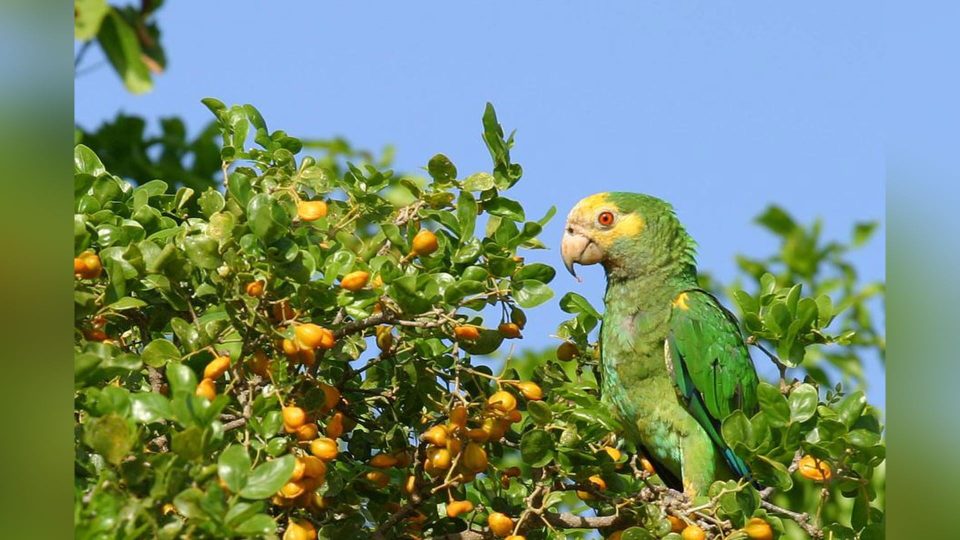
The Public Entity of Bonaire is calling on residents and visitors not to feed wild parrots. The parrot, also known as the Amazona barbadensis (Yellow-Shouldered Amazon), is a species that has lived on Bonaire for thousands of years. Bonaire is one of the last remaining places where this species still lives in the wild.
Although the parrot population has grown in recent years, the species remains vulnerable. Feeding wild parrots can have harmful consequences. Birds fed by humans may lose their natural fear of people. Consequently, they are at a higher risk of accidents involving cars, buildings, or domestic animals. Furthermore, young parrots may become dependent on humans instead of learning to forage for natural food on their own.
Additionally, feeding sites can spread diseases, as many birds gather in close proximity to one another. The food provided by humans often lacks the essential nutrients that wild parrots require. According to experts, the healthiest parrot is a wild one. These animals have adapted to Bonaire’s nature, and the best way to protect them is to leave them alone.
Parrots are protected by both local and international legislation. It is prohibited to disturb, feed, capture, buy, or sell wild parrots. The parrot is an important part of Bonaire’s natural and cultural heritage. Everyone can help by enjoying these birds in the wild without feeding them or keeping them as pets. In this way, we can ensure together that Bonaire’s parrots can continue to fly free in the future.