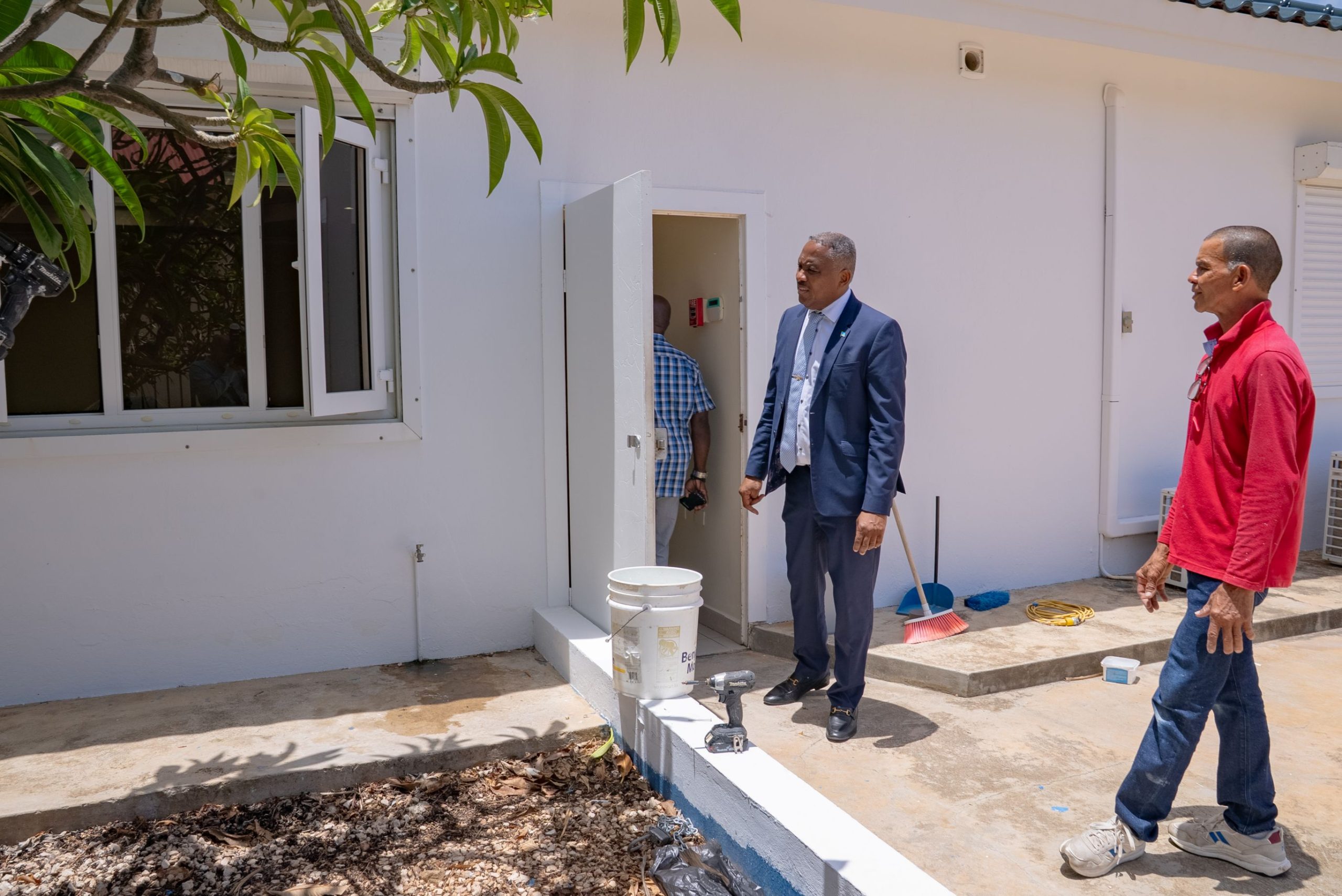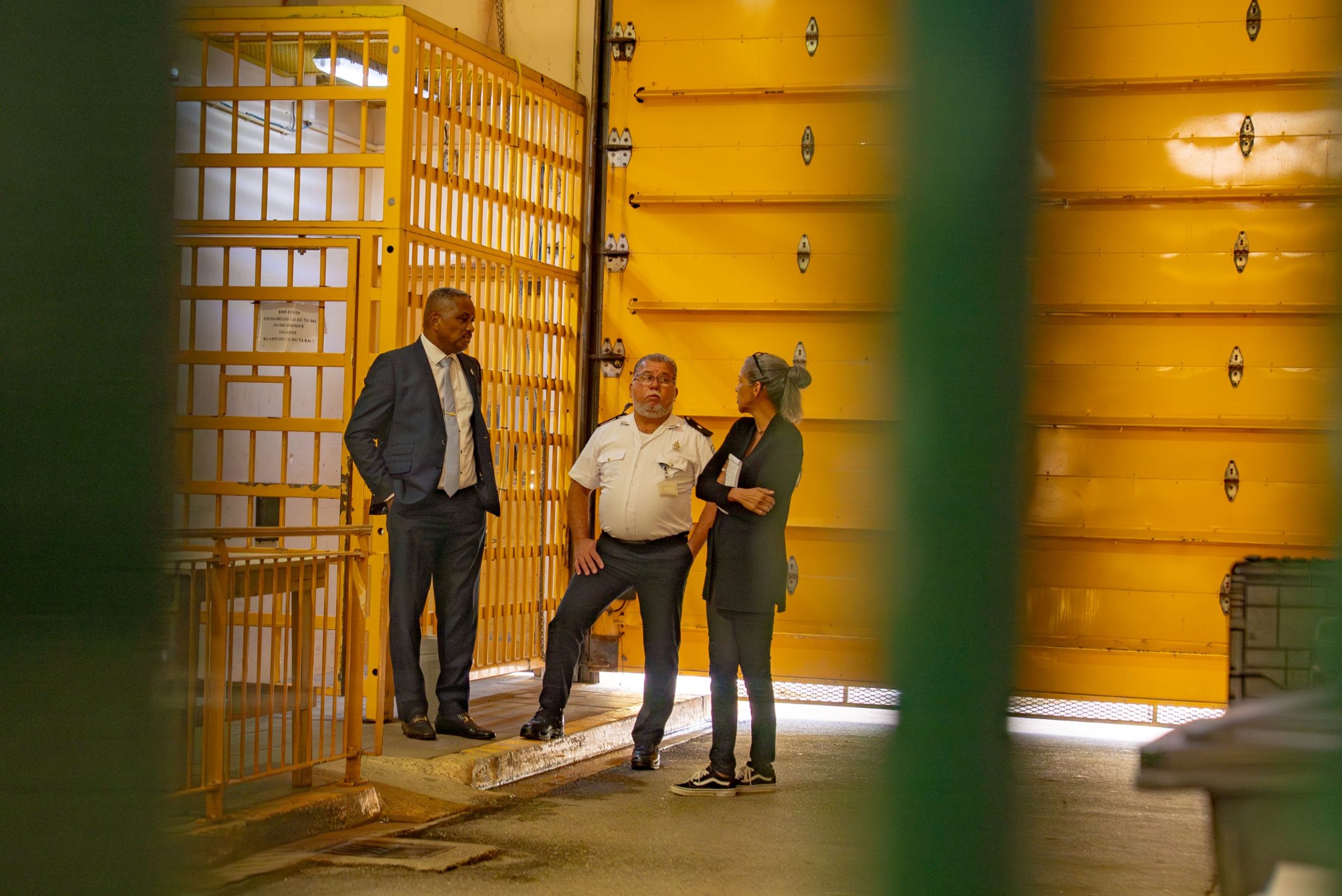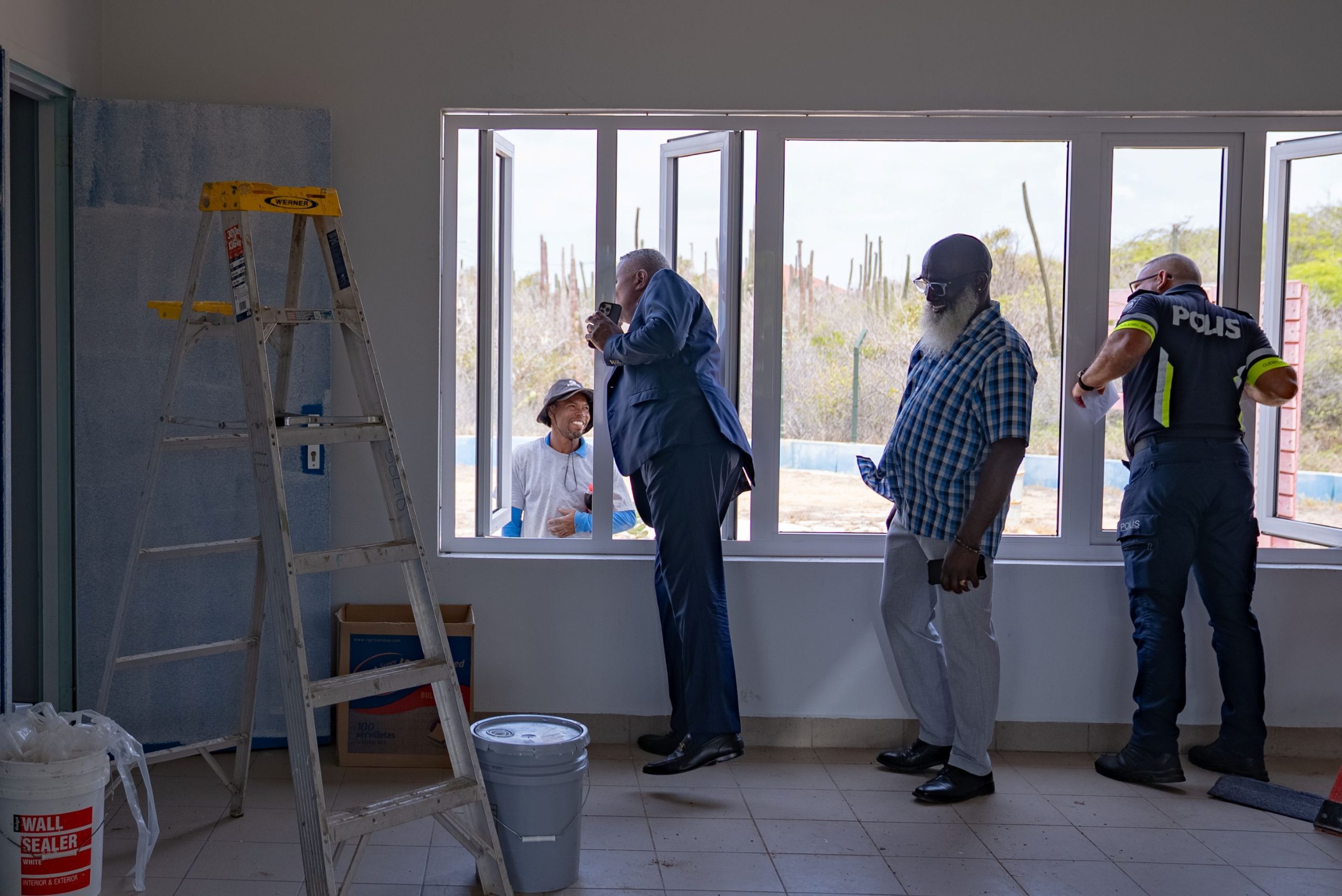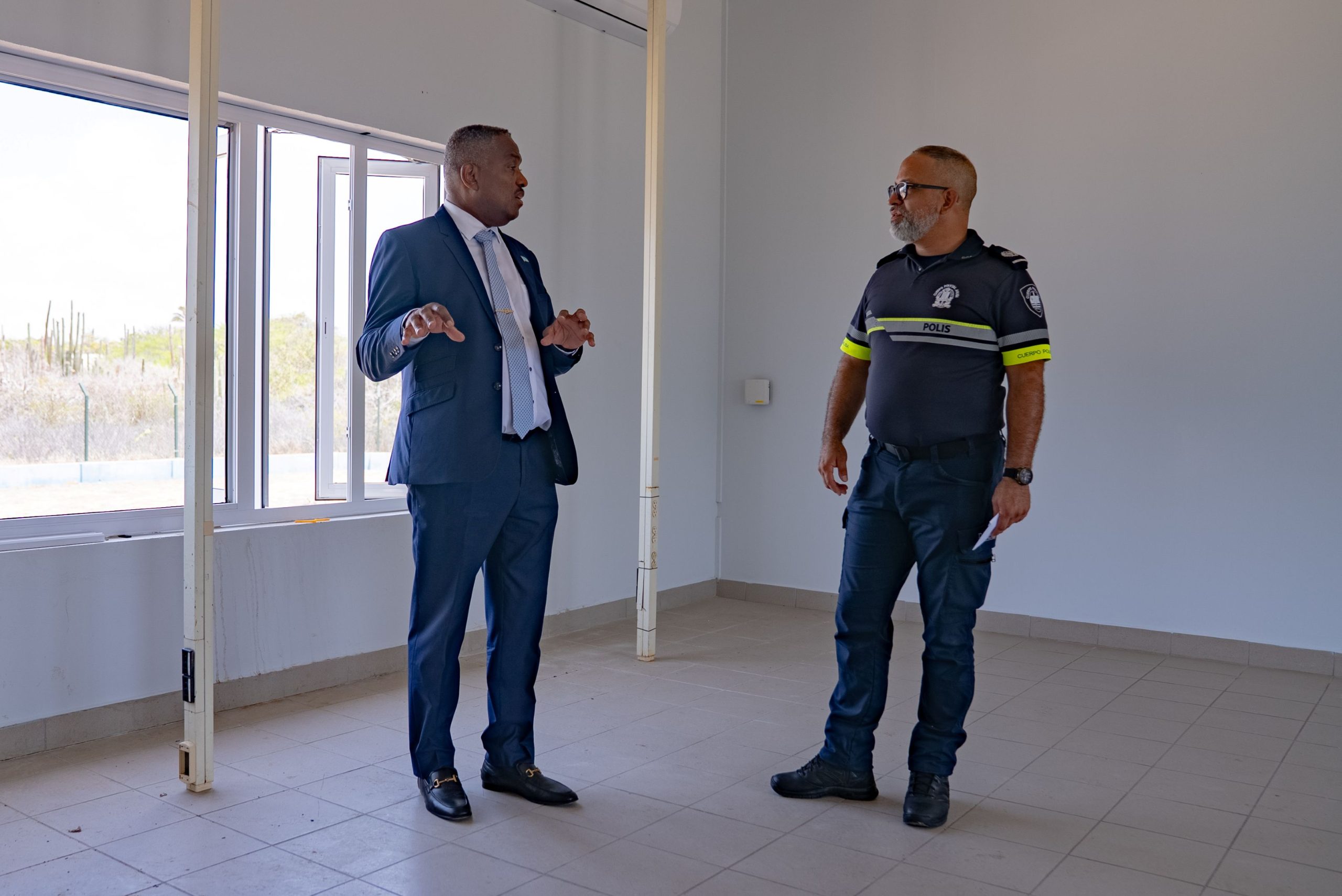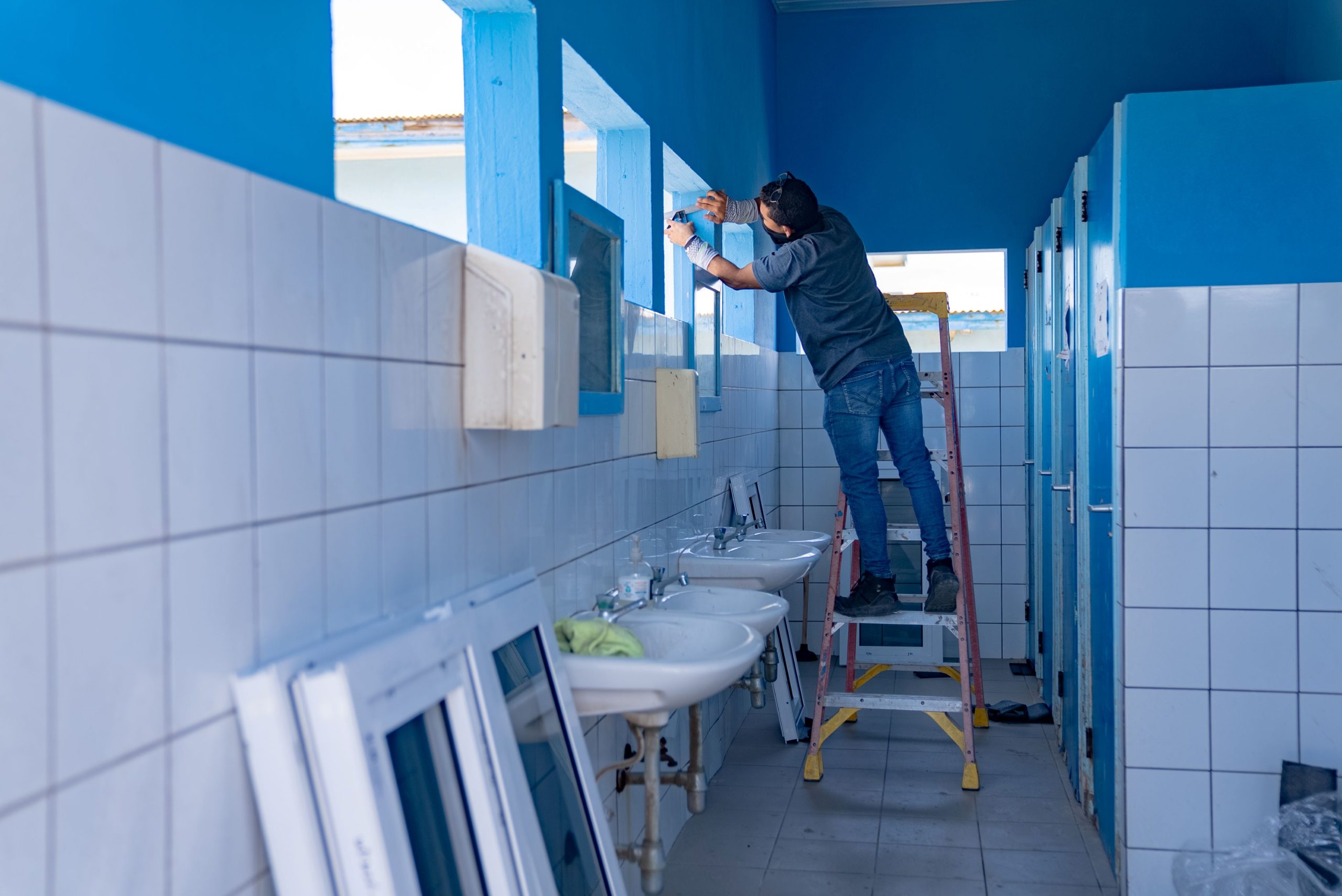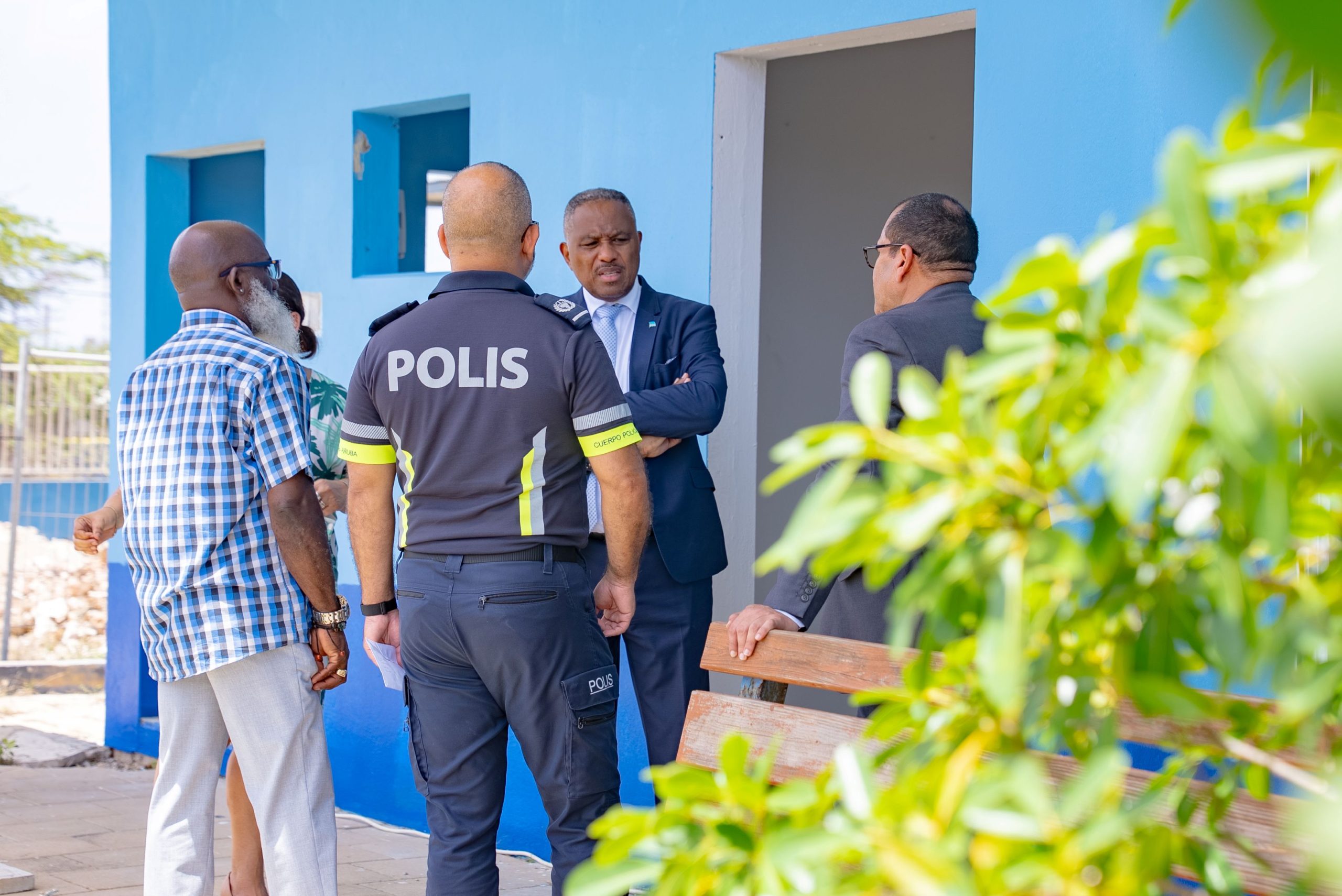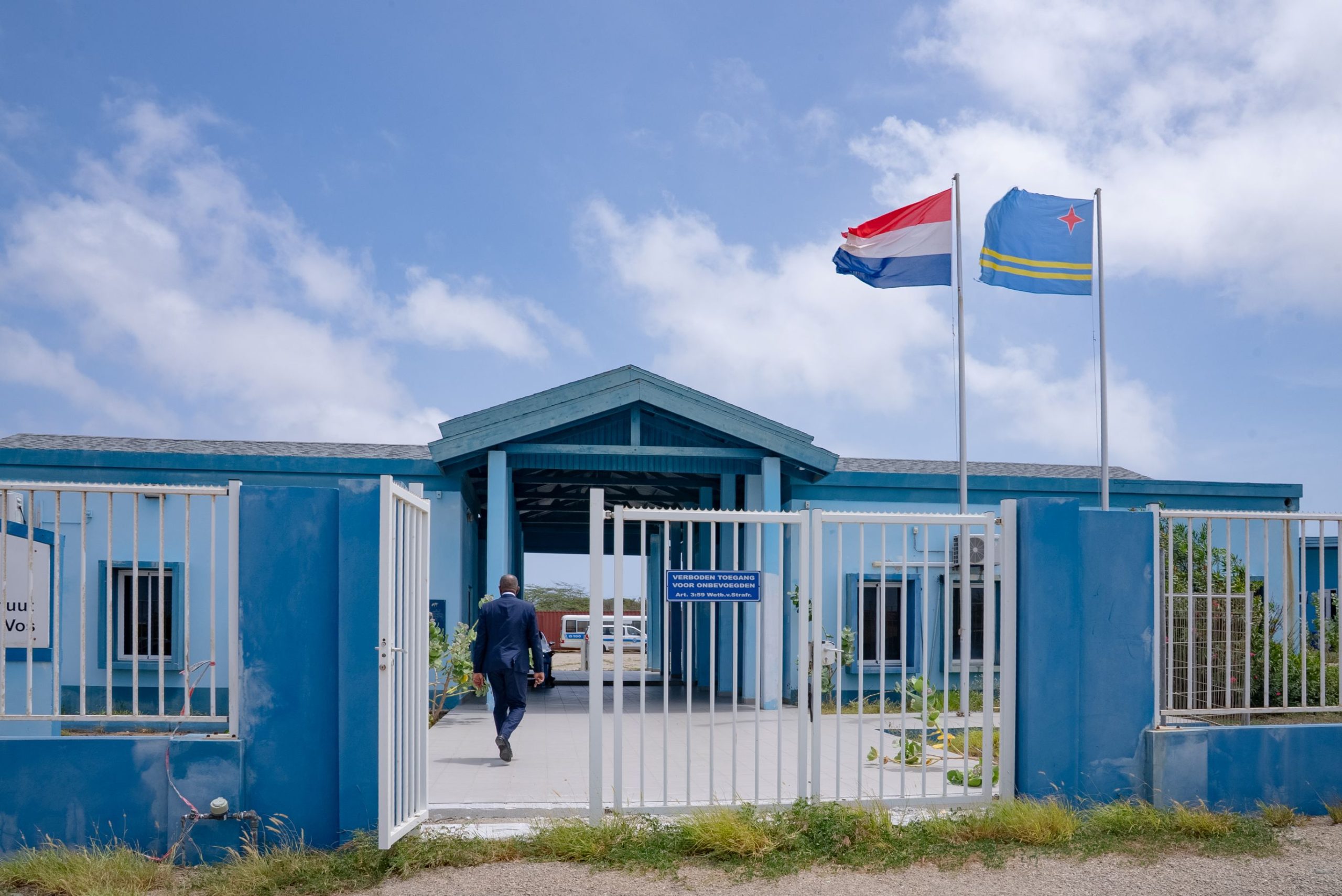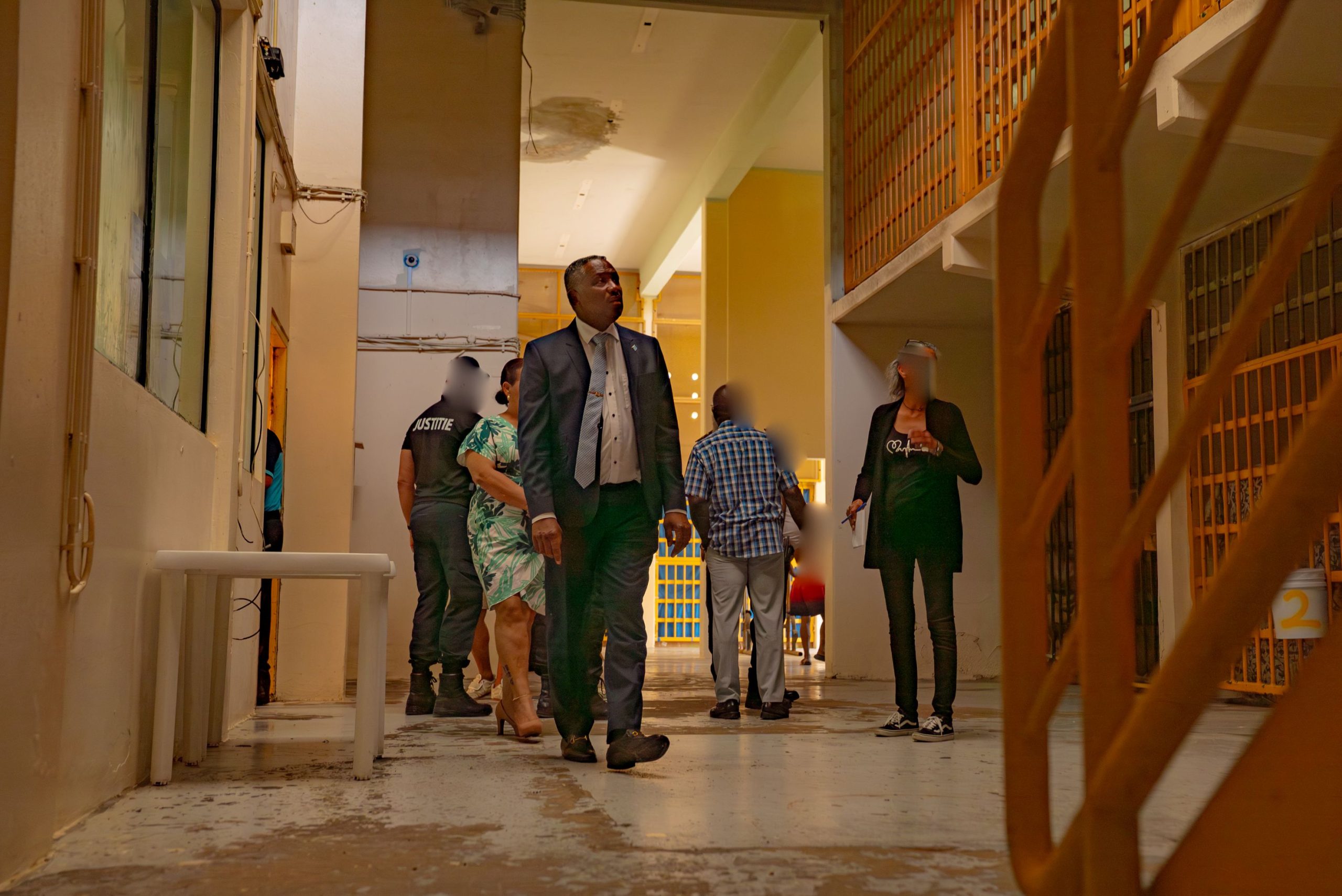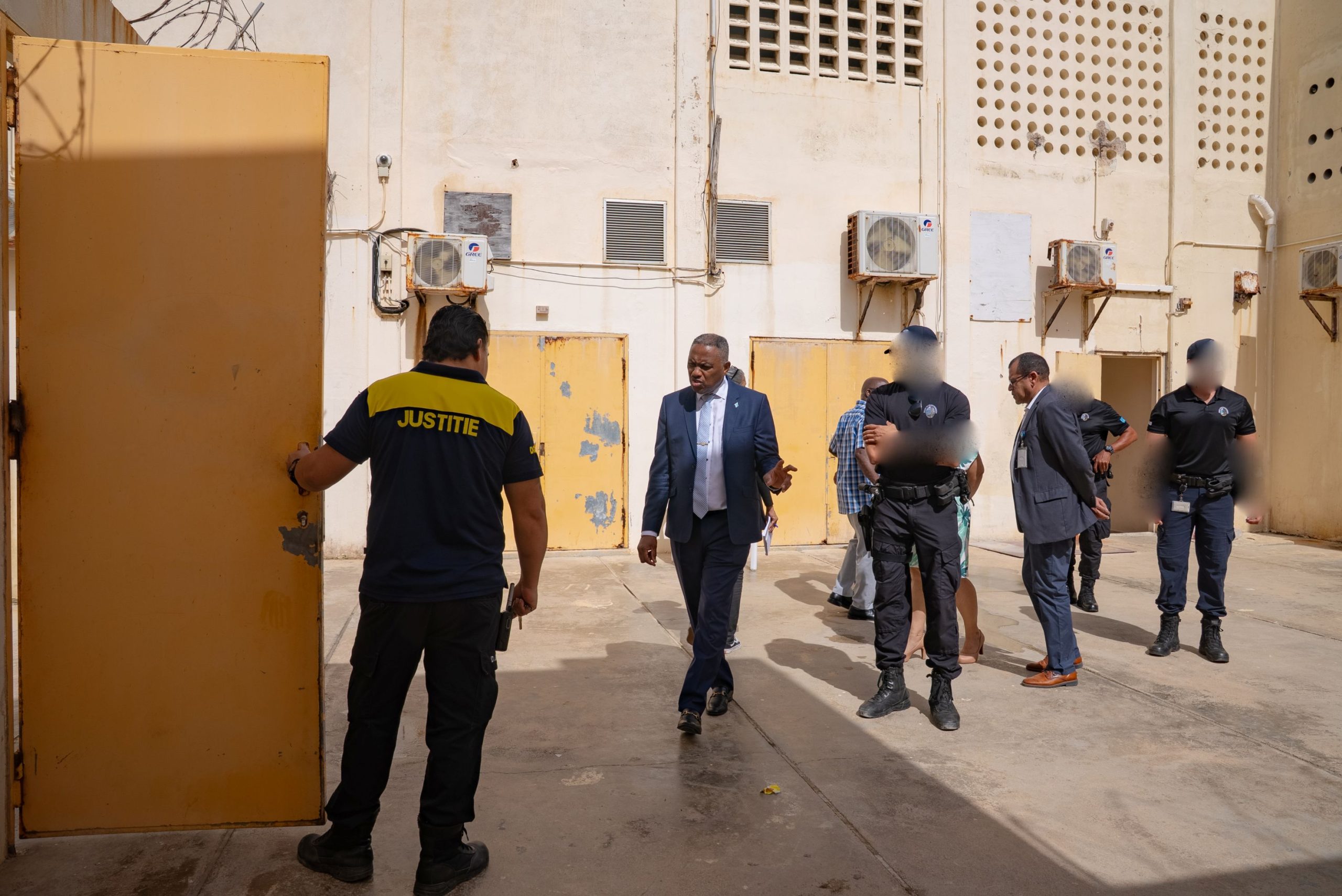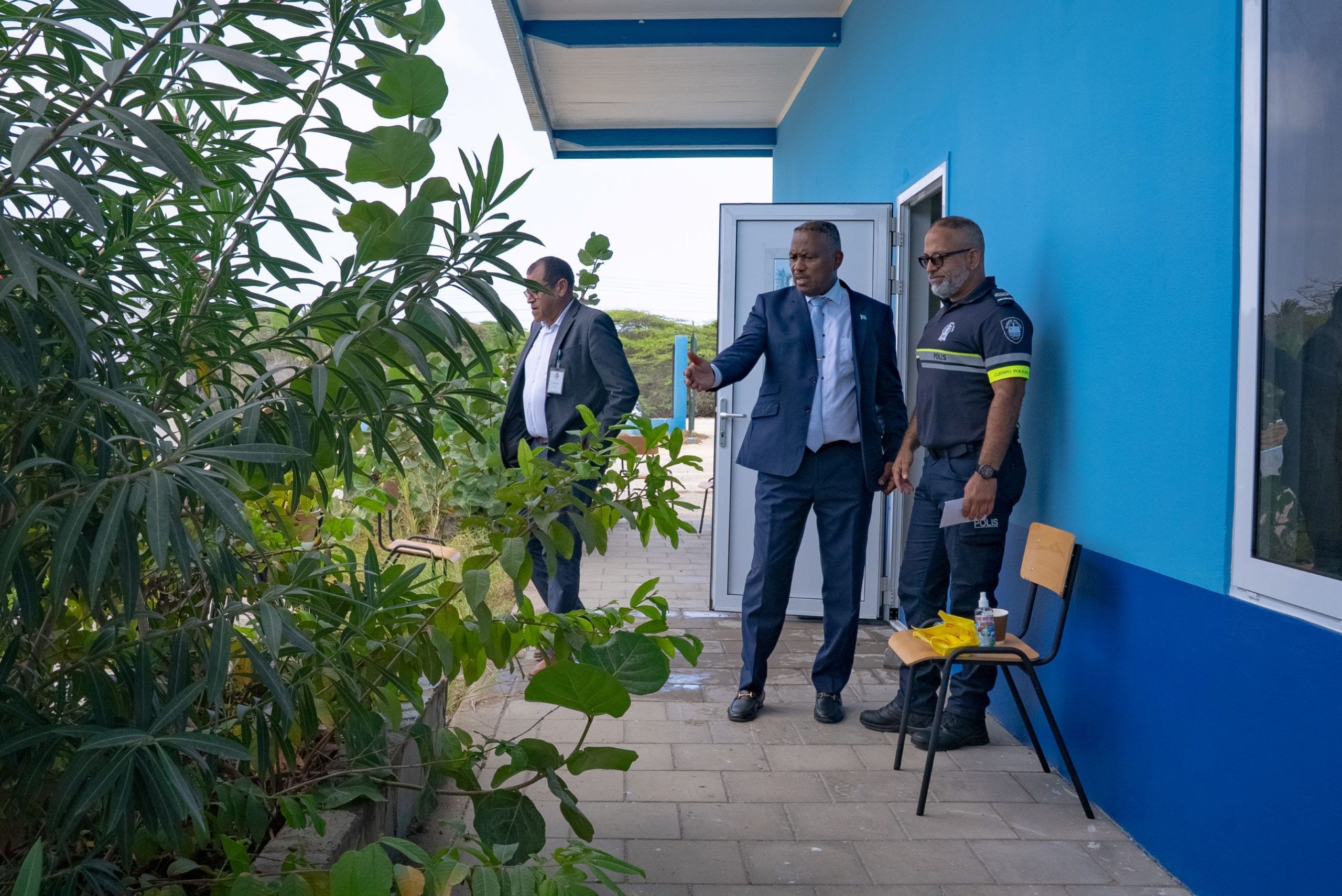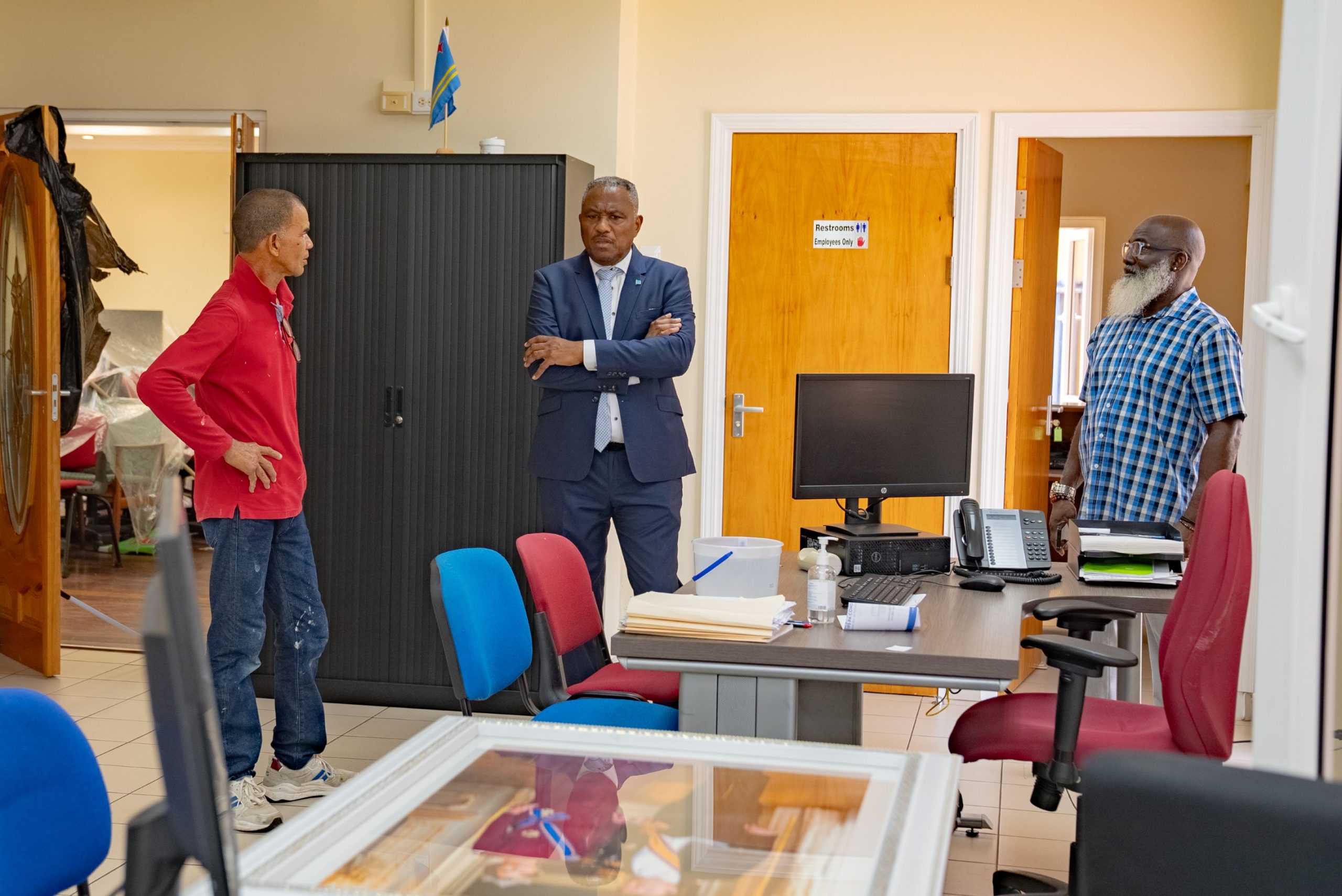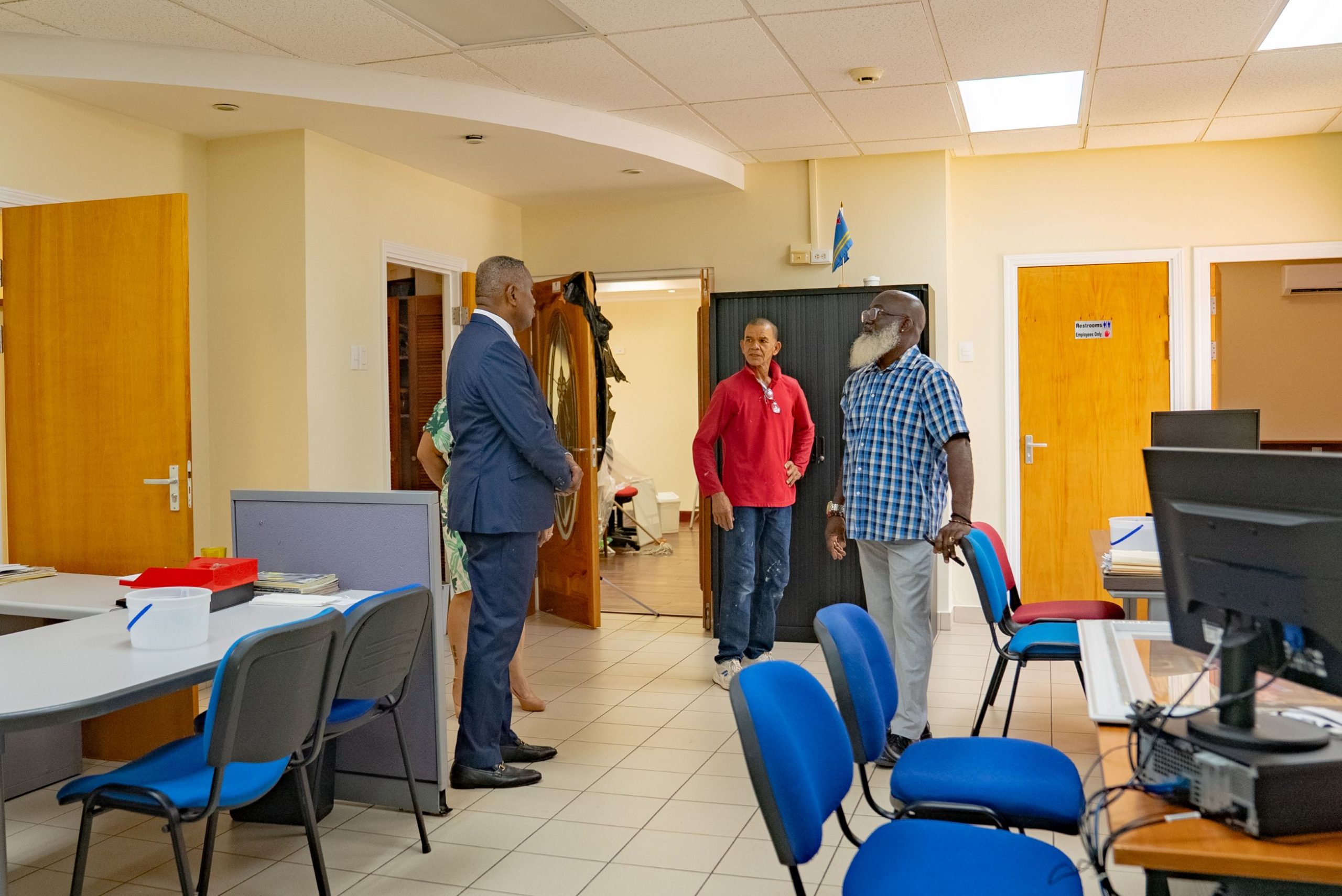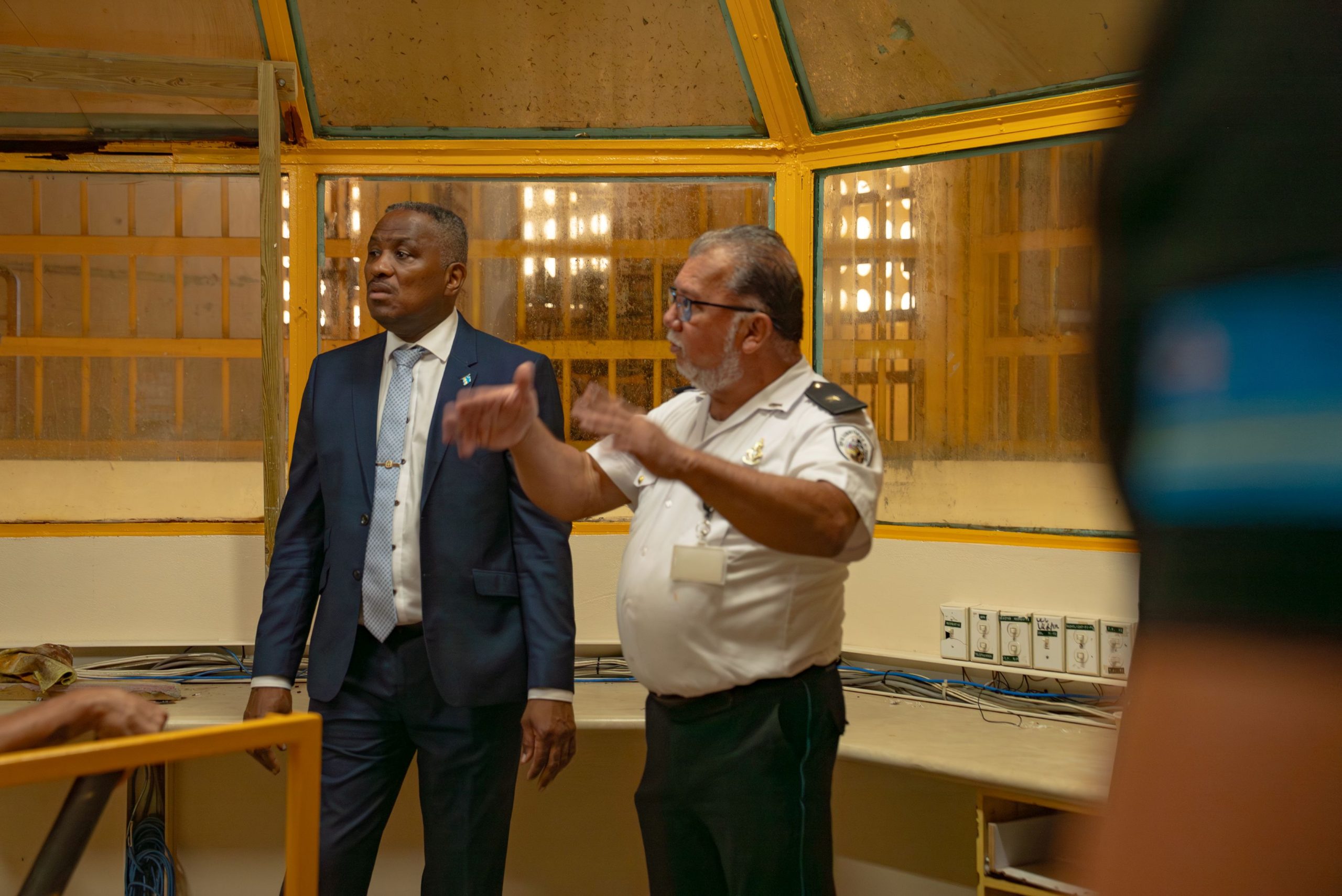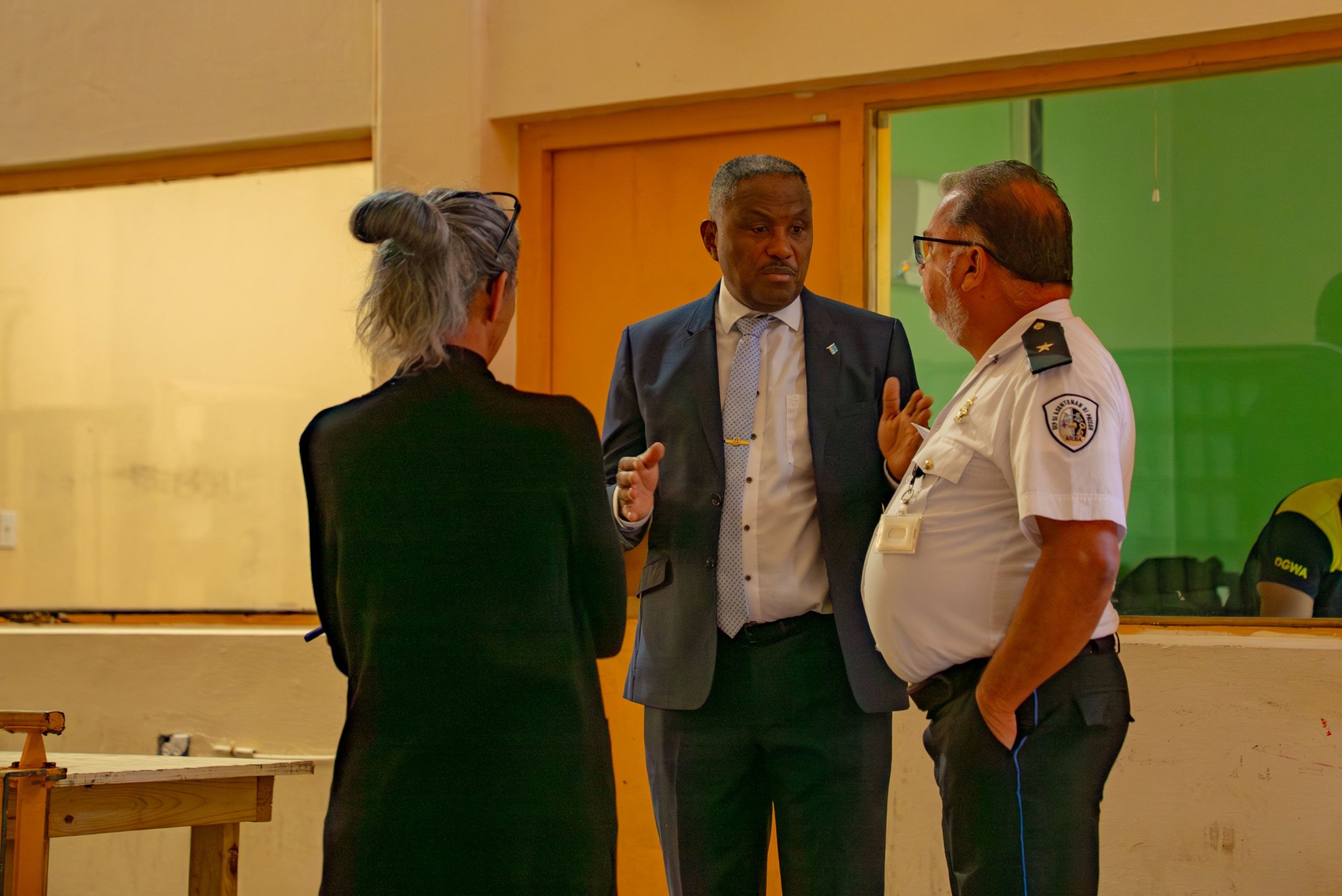
The Minister of Justice, Integration, Public Transport, and Energy, Mr. Dr. Arthur Dowers, recently carried out several surprise visits to facilities under his responsibility where renovation and improvement work is currently taking place.
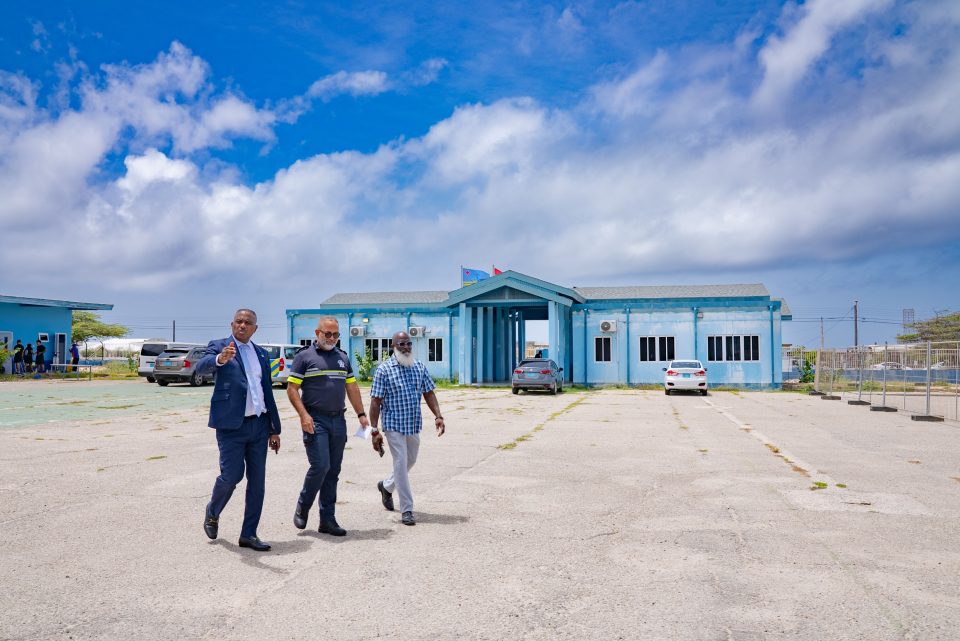
Among the facilities visited by Minister Dowers are the Correctional Institution of Aruba (KIA), the Edgar Joaquin (Watty) Vos Police Training Institute, and the DIMAS branch located in San Nicolas.
The objective of the visits is for the Minister to personally observe how the work is progressing, where there is progress, and where there may eventually be delays or issues requiring additional attention.
For Minister Dowers, project follow-up should not be limited to reports and meetings. Especially when dealing with facilities that have faced infrastructure problems for a long time, he considers it important to go on-site, see the situation with his own eyes, and maintain direct contact with those responsible for execution.
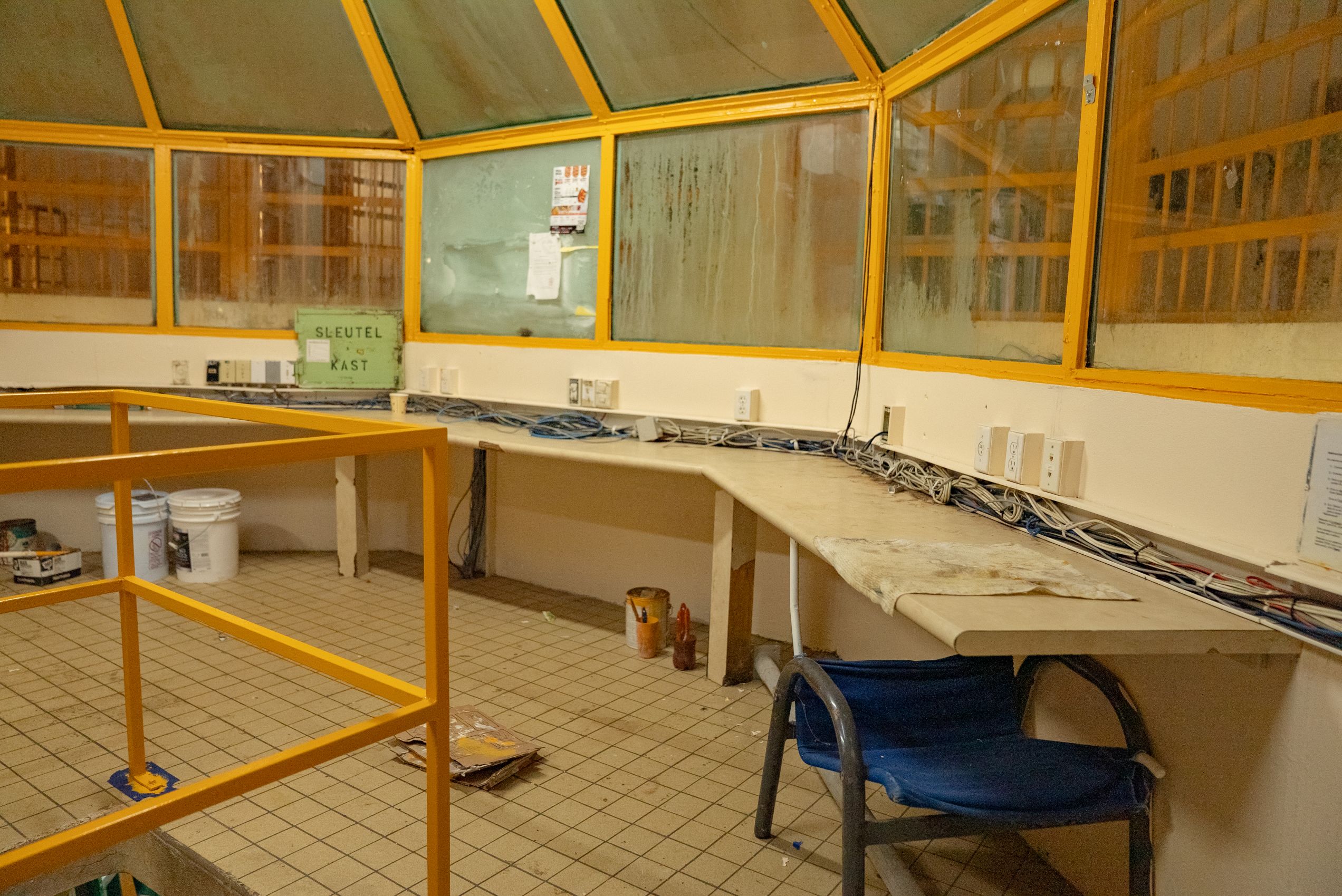
Particular attention to the situation at KIA
At KIA, the need for improvements is particularly urgent. The condition of various parts of the complex demands investment and constant follow-up, both to create more adequate conditions for the inmates and for the staff who must work daily within the facility.
Therefore, Minister Dowers wants to follow the process personally and verify that the agreed-upon work is taking place. Where delays or obstacles arise, the intention is to identify them in time and figure out how to address them to avoid unnecessary delays.
The same follow-up approach applied to the renovation of the Edgar Joaquin (Watty) Vos Police Training Institute, where work is being executed to gradually rehabilitate and expand police training facilities.
Also at the building designated as the DIMAS branch in San Nicolas, the Minister personally verified the progress of the work and the points that still need attention.
Result of the follow-up
The surprise visits are part of how Minister Dowers wants to pursue the projects under his responsibility. The goal is not only to initiate renovations, but to follow them during execution and address timely situations that could cause delays.
According to the official, each of these facilities has an important function within the public service. Therefore, investment in their infrastructure must ultimately translate into better working conditions for staff, more dignified facilities, and a public service that can function in adequate conditions.
The priority is to maintain constant follow-up and ensure that every project put into motion truly continues to advance until its completion.