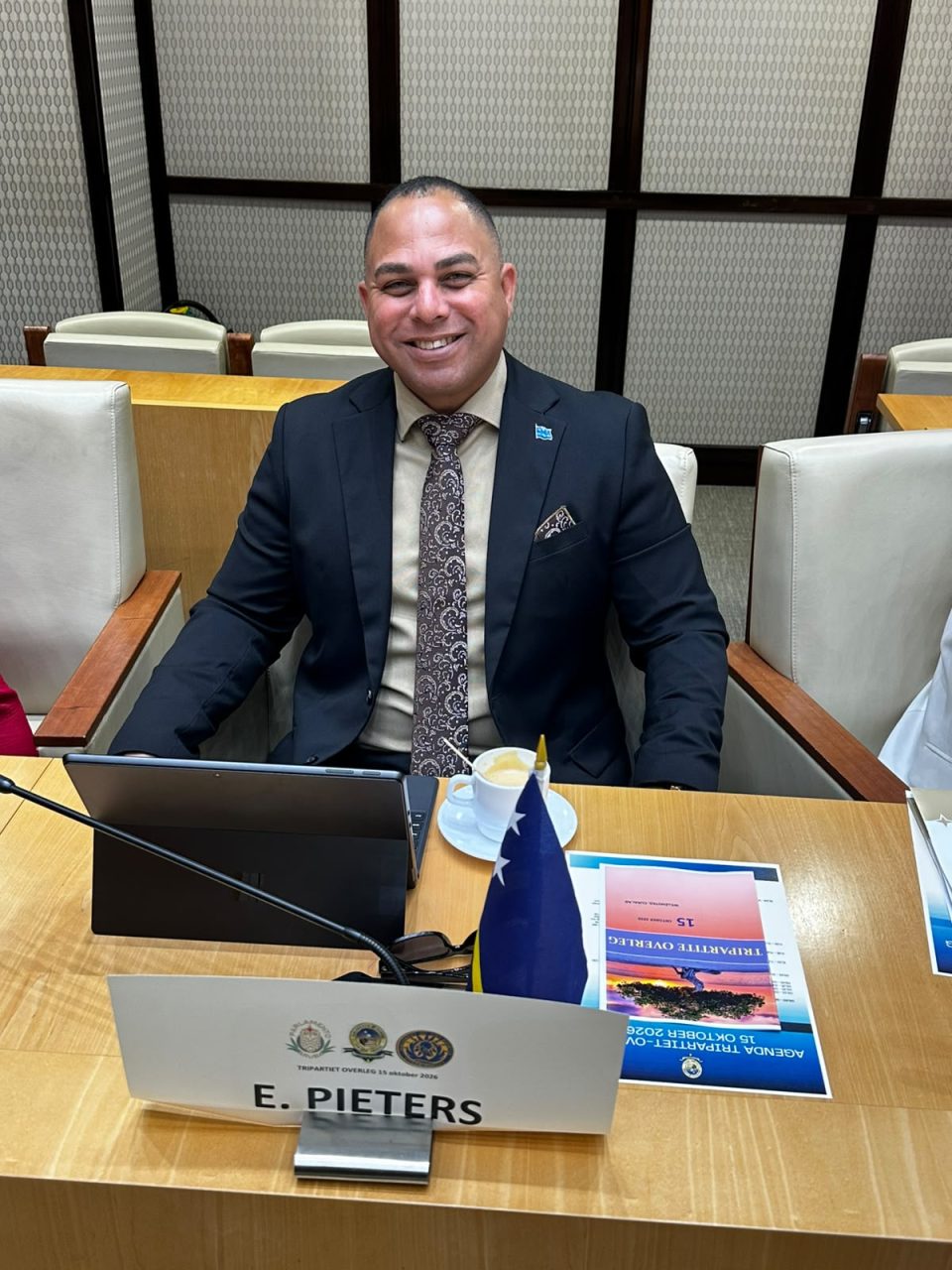
Following the Tripartite meeting in Curaçao, PPA puts HOFA under scrutiny once again: “Government alone cannot declare that Aruba has given consensus; Parliament must also have a say.”
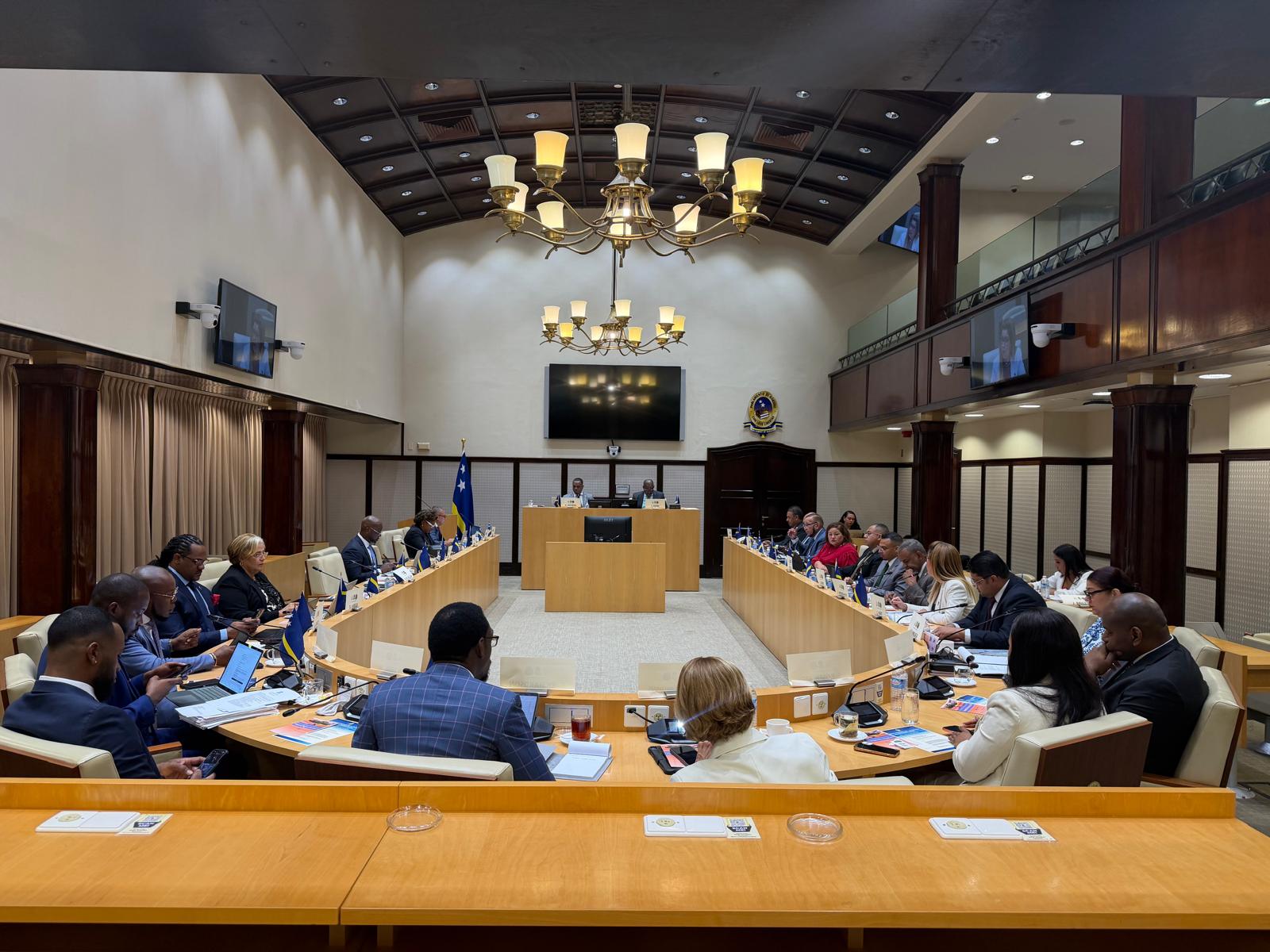
During the recent Tripartite meeting in Curaçao, where the Parliaments of Aruba, Curaçao, and Sint Maarten deliberated on various constitutional issues affecting their standing within the Kingdom, one word was once again central: consensus.
However, for Member of Parliament Eduard Pieters (PPA), this is precisely where Aruba needs to ask an uncomfortable question: Whose consensus? Because when it comes to the Kingdom Act on Sustainable Public Finances for Aruba (Rijkswet Houdbare Overheidsfinanciën Aruba – HOFA), PPA questions whether the Government alone can commit Aruba on an autonomous matter and then present the outcome as “consensus”, while Parliament only enters the process when it is already far advanced. For Pieters, HOFA is not merely a financial debate, but a debate about power, autonomy, and who possesses the authority to commit Aruba.
Article 38: Agreement must be genuinely mutual
HOFA is grounded in Article 38, Paragraph 2, of the Charter (Statuut), which allows countries within the Kingdom to arrange matters among themselves through mutual agreement, including via a consensus Kingdom Act (consensus Rijkswet).
For Pieters, the key phrase is “in mutual consultation” (in onderling overleg). The Kingdom Council of State (Raad van State van het Koninkrijk) also noted in its advisory report on HOFA that public finances are an autonomous affair of Aruba and that participation in a scheme based on Article 38 must occur freely. That is why Pieters sets forth the core principle: “Mutual consultation must be free. It cannot be based on blackmail.”
“With your back against the wall, how free are you?”
Pieters links the debate directly to the pandemic. Aruba was in a deep economic crisis and desperately required financial support. According to Pieters, the Netherlands conditioned its financial support on reforms and frameworks that subsequently led to greater control.
His political question is striking: “If a country urgently needs money and the other party sets the conditions to receive that money, how free is that consensus really? How can an agreement be reached with another party when conditions are placed on the table?”
Pieters characterizes the situation as one under pressure and even “blackmail.” That is his political interpretation of the relationship during the crisis, but the principle underlying his criticism is broader: consent only holds value if a country genuinely has the space to say “no.”
The Government is not Parliament
For PPA, there is a second issue. The governments of Aruba and the Netherlands may reach an agreement, but Pieters questions whether the Government can independently conclude that Aruba has given consensus when the agreement touches upon the country’s autonomous authority. “A Government on its own cannot conclude: we have consensus.”
For Pieters, Parliament cannot merely be invited after a direction has already been set. The Government governs, while Parliament represents the people and oversees the Government. Even more so when a Kingdom Act touches upon Aruba’s budgetary authority and autonomy, Parliament’s voice must carry greater weight.
HOFA is the test
HOFA is precisely where this principle is being tested. The proposal establishes financial supervision through a Kingdom Act and grants a significant role to the CAft and the Kingdom Council of Ministers (Rijksministerraad). The Council of State pointed out, among other things, that limitations on the authority of Aruba’s Government and Parliament (Staten) must not go further than necessary to achieve the agreed goals.
PPA goes further and maintains its political and constitutional opposition to HOFA. Pieters questioned whether the structure sufficiently respects Aruba’s autonomy. However, his final warning goes beyond HOFA.
Finally, Eduard Pieters concluded that what Aruba accepts today could become a precedent for tomorrow. A law may carry the word consensus and two governments may sign it, but for Pieters, that alone is not enough: “Consensus must be free, democratic, and involve a real say from the Parliament of Aruba. Otherwise, we must ask: Whose consensus?”