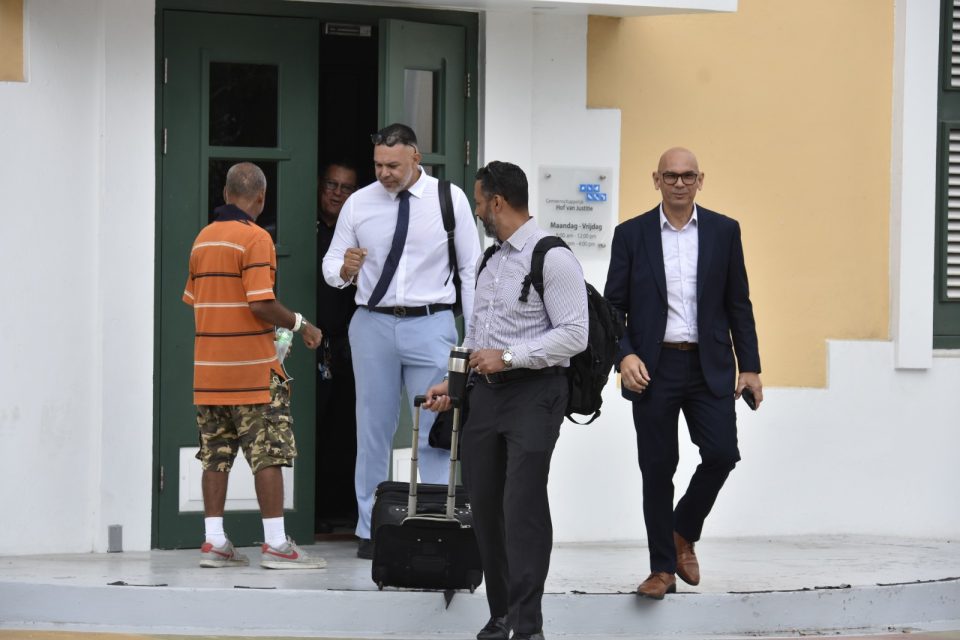
This morning, the Court of Justice started the appeal hearing in the Flamingo case. The appeals were filed by Otmar Oduber, Farida Esser, and Rachelle Wever. The case itself was not heard in substance; instead, a preparatory “procedural session” took place, during which the lawyers could request the Court to conduct certain investigations.
It became clear that the Court decided to hear only two witnesses and that the full hearing will take place in June 2026.
OTMAR IS CONVINCED OF HIS INNOCENCE
After the prosecution presented all charges against Oduber, Esser, and Wever, the Court asked Oduber why he decided to appeal. Oduber said he appealed because he is convinced he did nothing wrong. He said the appeal is very important for his career and for clearing up all issues.
WANTS WITNESSES TO BE HEARD
Mr. Carlo told the Court that the defense maintains its requests, even though the prosecution rejected them. The lawyer asked the Court to re-hear Ms. Wever in the Malmok case, although the prosecution believes she has already been questioned sufficiently. The defense argues that clarity is needed about the land transfer matter to show that Oduber should be acquitted.
Regarding the issue of “ghost employees,” the lawyer argues that Oduber was unfairly convicted, as the decision was based on a civil case ruling used by both the prosecution and the judge as evidence. The defense says the civil ruling has nothing to do with the charges against Oduber. Therefore, the lawyer wants to hear several people about the “ghost employee” topic — individuals who allegedly received salaries without showing up for work. In total, he requested six witnesses for this part of the case.
The Court asked Oduber whether he remembered what he had stated in the Court of First Instance regarding the Malmok case. The Court pointed out that Oduber had stated he wrote a policy for the allocation of land and that he published it. Oduber explained that he drafted the policy but that there were exceptions for those seeking large plots. He said he informed the press about the exceptions, but they were not published. The government was aware, he added.
The prosecution responded that there is no need for new interrogations.
Oduber told the Court that he believes it is important to hear the witnesses, because they can show that the policy existed before he became a minister and that it is still used today. He explained emotionally that he created the policy to avoid the appearance of political favoritism. He asked the Court to make a decision soon, as the case has been ongoing for years and deeply affects him.
TWO WITNESSES WILL BE HEARD
The Court suspended the hearing to deliberate. After about half an hour, the Court returned and decided not to rehear witnesses in the Malmok case, since they have already been questioned previously.
Concerning the six requested witnesses in the ghost-employee case, the Court decided only two will be heard — those who were closely involved with Oduber’s work at the time. The other requests were denied.
The Court assured Oduber that during the full hearing it will thoroughly examine whether ghost employees existed, and it will not rely blindly on the civil case ruling as happened before.
THE CASE WILL BE HEARD IN JUNE 2026
The Court stated that the examining magistrate will be instructed to hear the two witnesses. The full hearing will begin on 1 June 2026, and the entire week will be set aside to ensure sufficient time for the case.