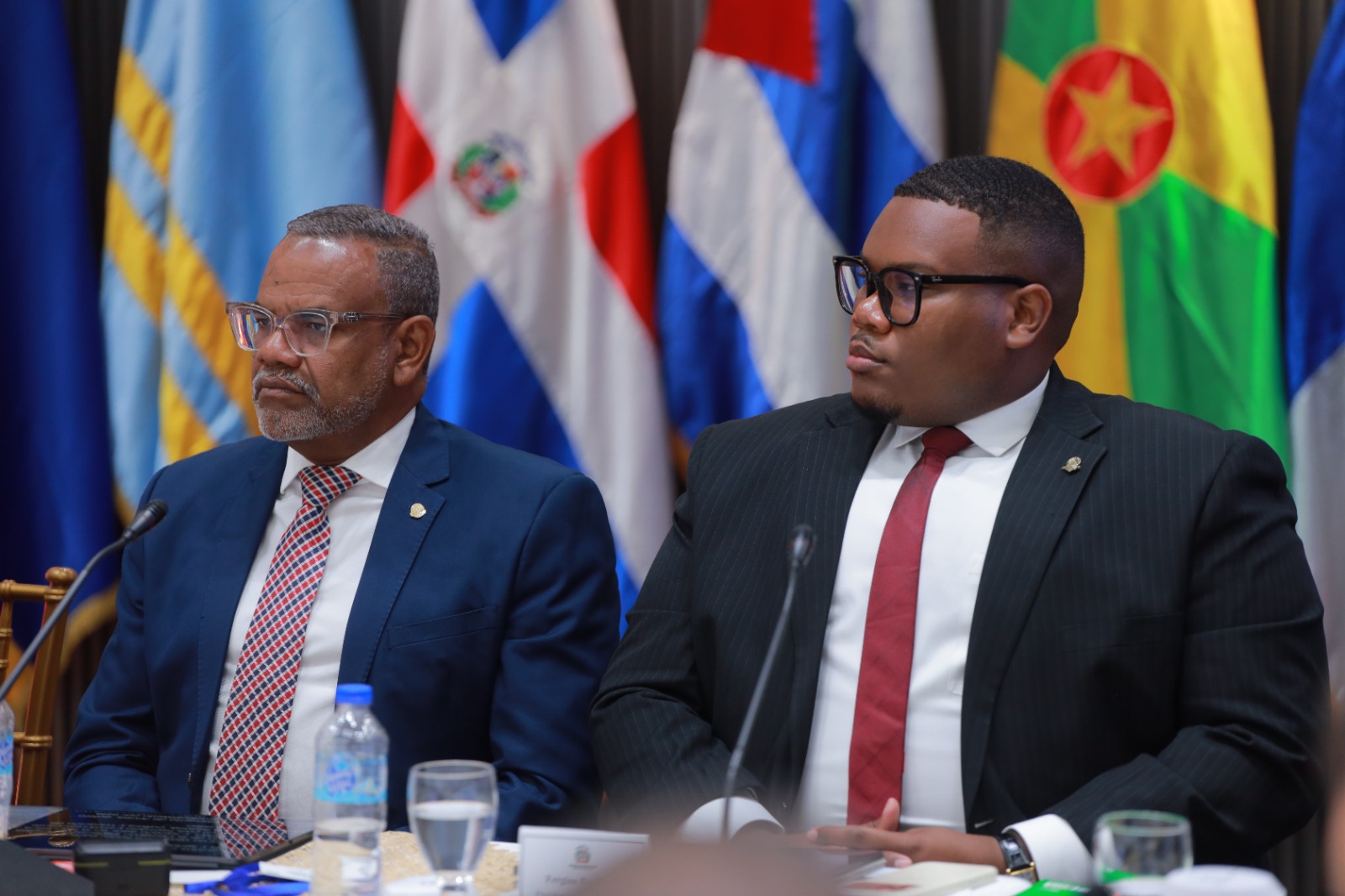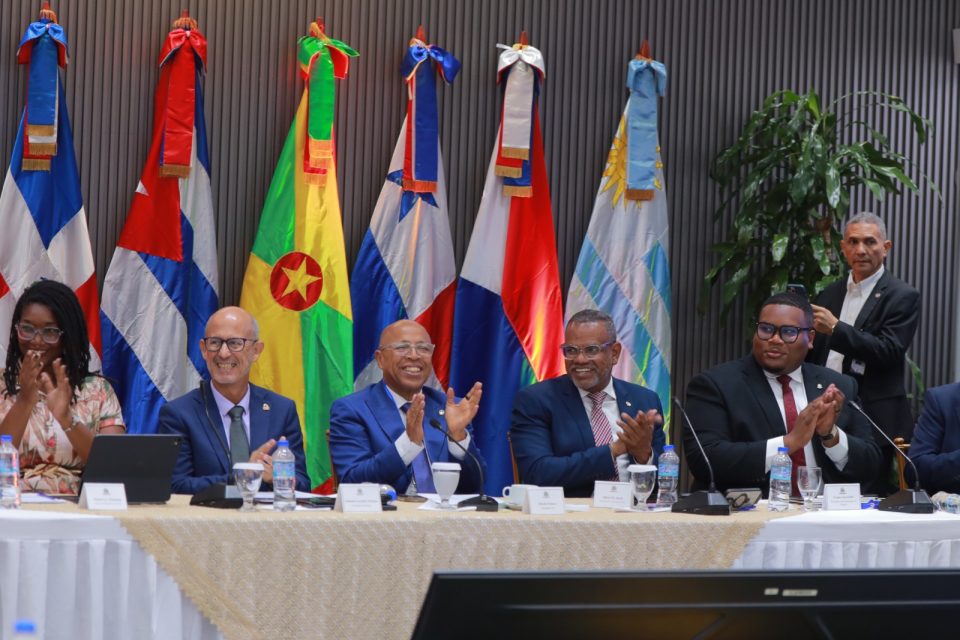
During the recent meetings of the Latin American and Caribbean Parliament (Parlatino) held in Curaçao and Santo Domingo, the Caribbean Commission was officially established as a new body created to focus exclusively on the specific challenges and needs of Caribbean nations.
The Aruban delegation was led by the President of Parliament, Marlon Sneek, accompanied by MPs Ms. Lindor and Ms. Tomasia as members of the commission. Ms. Tomasia was elected as the president of this new Caribbean Commission.
One of the primary topics was the impact of sargassum seaweed, which is severely affecting the coasts and marine ecosystems across the region.
Although Aruba is not currently experiencing a heavy impact, presentations were given by experts, including a former president of Parlatino and former president of the Mexican Chamber of Deputies.
Experts emphasized that sargassum must be intercepted at sea before reaching the coastlines. Once the seaweed washes ashore, it suffocates coral reefs, deprives fish of oxygen and sunlight, and generates a foul odor that negatively impacts the tourism sector. Proposed solutions included deploying specialized vessels—similar to seaweed harvesting ships used in China—to collect the raw material and process it into useful products.
However, leaders noted that this initiative will require maritime navigation agreements and joint legislation among countries, given that the floating seaweed drifts through the Exclusive Economic Zones (EEZs) of multiple territories.
The second major topic focused on food production and the supply chain in the Caribbean. During the sessions, it was highlighted that before launching local agricultural projects, each country must analyze two crucial factors:
• Consumption patterns: What the local community actually eats.
• Soil and climate: The country’s realistic production capacity.
A smart trade-exchange model was proposed to lower shipping costs. For instance, a vessel transporting fruit from the Dominican Republic to Aruba could make the return trip loaded with vegetables or other products produced in Aruba. This strategy not only reduces transportation expenses but also strengthens food security and the export network between islands.
Discussions also addressed the meat industry, technology transfer, and the need to establish a shared legal framework with other governments to ensure these solutions can be effectively implemented across the Caribbean region.