

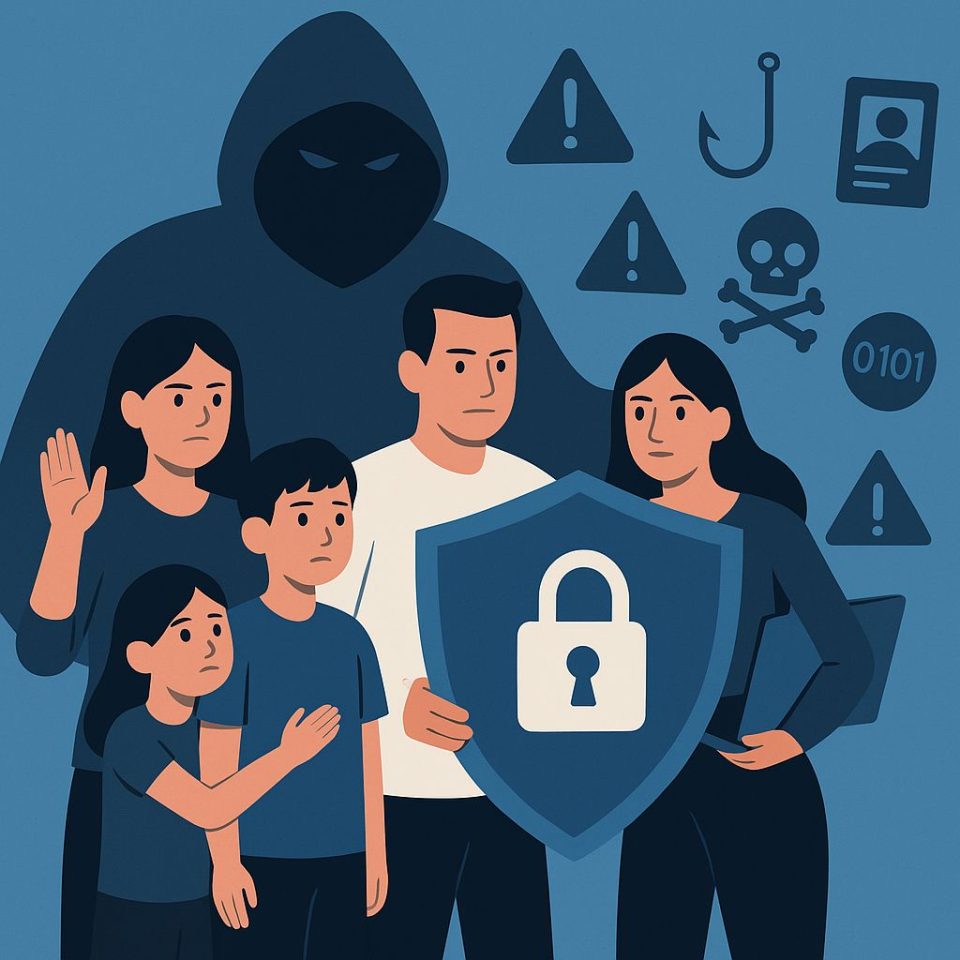
We face a major challenge in the digital age.
Today, we live in a world that is becoming increasingly digital. Social media, the internet, and modern devices open huge windows for communication, education, and work. But those same windows can become doors to danger — especially for our children, youth, adults, and seniors.
How do we deal with this?
The first step is education and awareness. We must understand that not everything that happens online is safe. In the digital world, there are malicious individuals who seek innocent victims to manipulate, steal personal data, or even commit digital crimes.
To address this, it’s important to:
– Talk regularly with your children and teenagers about online dangers.
– Set clear rules for the use of social media and digital devices.
– Keep antivirus and security software up to date.
– Never share personal information with strangers.
How to recognize dangers on social media and online?
Certain signs can indicate that something is unsafe:
– Messages or friend requests from people you don’t know.
– Offers that seem “too good to be true.”
– Emails or messages asking for your password, account number, or personal information.
– Suspicious links that say “click here” without clearly explaining why.
Hackers and cybercriminals use emotional manipulation, blackmail, financial scams, and fake news to achieve their goals.
How can Aruba protect its people?
To protect our community, Aruba can launch a National Cyber Education Campaign, including:
– Educational talks in schools and community centers.
– Informative programs on TV, podcasts, social media, and radio.
– Visual and digital materials warning about online risks.
– The creation of a help hotline to report digital abuse.
– Cooperation between government and private institutions to educate all age groups.
Cyber dangers and their consequences
The most common threats are:
1. Cyberbullying – Insults, threats, or humiliation on social media.
2. Grooming – Malicious adults gaining children’s trust for sexual abuse.
3. Phishing – Emails or messages trying to steal your banking information.
4. Financial scams – Fake offers that cause you to lose money.
5. Fake news – False information that spreads fear and division.
6. Identity theft – Illegal use of your personal data.
Recommendations for Aruba
– Create a national digital literacy program for youth, adults, and seniors.
– Promote digital responsibility in schools and workplaces.
– Strengthen collaboration between police, schools, and NGOs to prevent cybercrime.
– Educate seniors not to trust everything they see online.
Final message for children, youth, adults, and seniors
We live in an era where the “cyber world” is part of our lives, but digital safety is everyone’s responsibility.
– Children: Don’t talk to strangers online, and always tell an adult if something bothers you.
– Youth: Use social media with respect, without worrying too much about “likes” or “followers.”
– Seniors: Don’t be ashamed to ask for help if you don’t understand a message or website.
The most important thing is to maintain trust and open communication in every family. Only then can we protect our people, our identity, and our future in today’s digital world.
Be wise, and take care of yourself, your children, and our elders.
“Protect your mind, your heart, and your identity — both in real life and in the digital world.”
Press release: Stanley’s News