

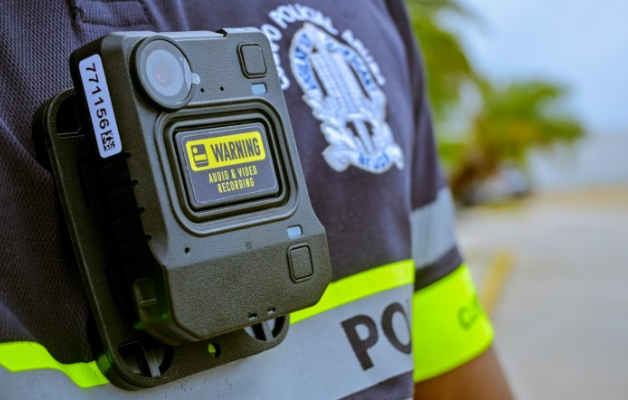
In July 2025, the Aruba Police Force (KPA) officially launched a pilot project to introduce body cameras, cameras worn on police officers’ bodies during duty. The initiative was intended to increase transparency, accountability, and professionalism within KPA, while also strengthening public trust, island security, and ensuring objective documentation of incidents during police interventions.
For the pilot project, a total of 28 body cameras were purchased through Setar. Uniformed officers in districts such as Oranjestad and San Nicolas participated in the initial phase. The pilot was planned to last between three and six months, after which an evaluation would determine whether the system would be implemented nationwide for all officers on active duty.
Bodycam recordings were intended for use in criminal investigations, judicial proceedings, evidence collection, and monitoring police conduct during interactions with the community.
Reports up to the end of August 2025 indicated that the pilot project was progressing. However, to this day, there is no public clarity regarding the results of the evaluation or whether a final decision was made to fully implement body cameras within KPA.
The question now arises,especially in light of recent serious incidents involving police interventions,whether officers were effectively equipped with body cameras during the most recent shooting incident. If so, the recordings could represent key evidence for an independent investigation and provide clarity beyond conflicting testimonies. If not, the question becomes: where are the body cameras purchased for the pilot project, and why did implementation not continue after July 2025?
Members of the community continue to ask about the current status of the pilot project, the reasons for its possible stagnation, and the role this technology could play in strengthening transparency and trust between police and the public.
As of now, KPA has not publicly communicated an official update regarding the continuation or final results of the bodycam project. Why not?
It is also important to recall that in the past, former PPA leader Otmar Oduber introduced a motion in the Parliament of Aruba that received support from 21 members of Parlament for the introduction of body cameras for police officers. Parliament approved the initiative with the goal of protecting both police officers and citizens and creating greater clarity regarding conduct during police interventions. Parliament was united on this matter.
Meanwhile, Aruba is facing yet another tragic case in which audiovisual material could have been a decisive instrument for resolution and transparency.
The question that remains unanswered is: who is responsible for the failure to fully implement body cameras to protect both police officers and citizens? Is the Parliament of Aruba exercising its supervisory role, or has this issue been left without follow-up?