

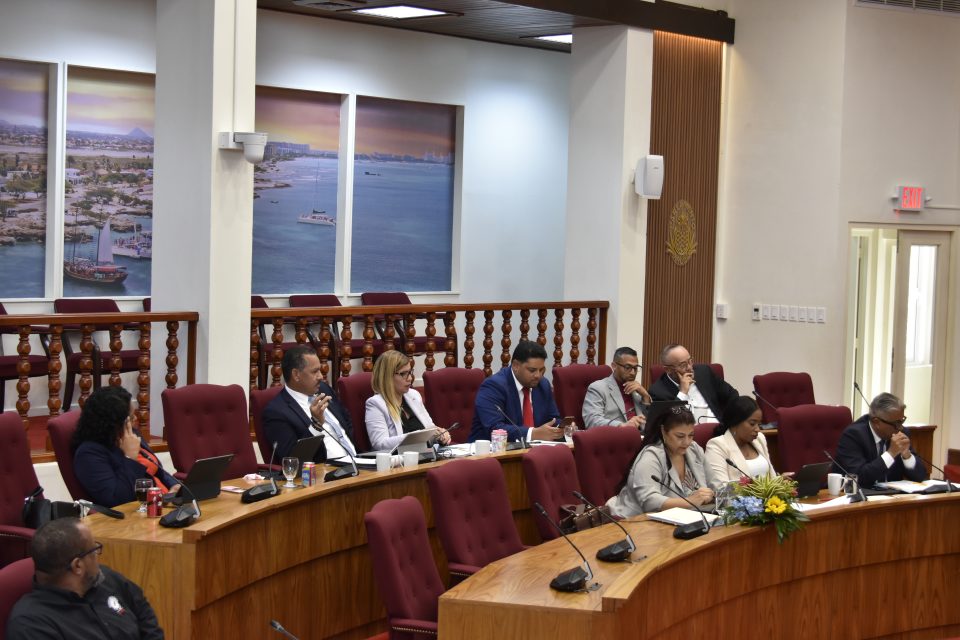
Recently, significant concern has arisen regarding the political direction Aruba is taking, where the lack of constitutional knowledge within Parliament and the influence of the Netherlands on local decisions are being questioned. According to parliamentarian Edgar Vrolijk, there is a strong call for both labor unions and the public to become more critical and to reflect on the defense of our Status Aparte.
Lack of respect for labor unions
Within the context of these developments, it has been pointed out that there appears to be a lack of respect for the requests made by local labor unions. According to Vrolijk, a letter has already been drafted to be sent to the Governor of Aruba requesting direct intervention.
“It is time for the unions to open their eyes and realize that a game is being played with them,” the source emphasized, referring to meetings where no space is given for dialogue and where union representatives are abruptly cut off while speaking.
The view of the Council of State: Dutch interests first
A fundamental point of criticism concerns the role of the Council of State. According to Vrolijk, this body, being a Dutch institution, will always place the interests of the Netherlands first. The situation surrounding the ‘dispute settlement mechanism’ (geschillenregeling) is presented as a clear example, where it is argued that even when binding advice exists, political interests often prevail.
“The Council of State will never let the Netherlands fall,” the source explained, indicating that many of its members have political backgrounds that influence their critical perspective.
Questions about Parliament and the Coalition
The article also highlights concerns about the level of preparation of some coalition parliamentarians. It is questioned whether many of them possess the minimum constitutional knowledge required for the roles they fulfill. This situation leads to a scenario where parliamentarians simply become “followers” of higher directives without analyzing the impact on local laws.
“It is a shame to see how it is being allowed for the Netherlands to override our constitution.”
Call to the People: Self-determination and Civic Action
Finally, there is a direct call to the citizens of Aruba not to remain silent. It is not only about voting every four years, but about exercising the right to self-determination for which our predecessors fought to achieve Status Aparte.
- Awareness: The public must become more outspoken and critical of decisions that affect our national heritage.
- Civic action: It is not always necessary to strike to show dissatisfaction; citizens can communicate directly with the representatives they elected to express disagreement with the current approach.
- International avenue: It is suggested that Aruba should consider bringing complaints to the United Nations, as other islands in the region have already done, to protect rights within the Kingdom.
The final message is clear: Regardless of political affiliation, defending local laws and respecting Aruba’s autonomy must remain the top priority to prevent the country’s legacy from being “sold.”