
The former president of the Slavery Platform in Curaçao, Jason Fullinck, shared a profound reflection regarding the challenge and importance of connecting different generations with the heritage of slavery. In an emphatic speech, Fullinck explained that connecting with the youth should not limit itself to historical data alone, but must focus on transmitting a living culture and identity.
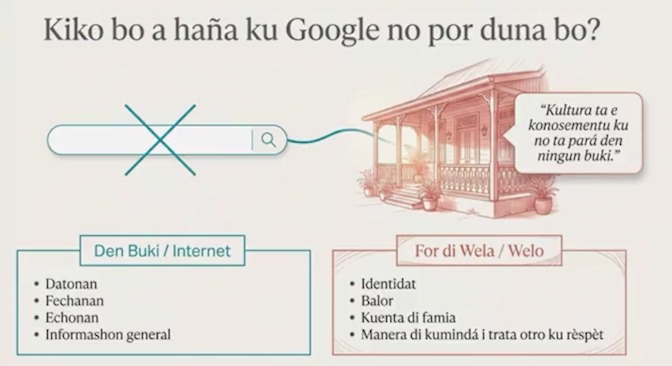
The Difference Between Information and Culture Fullinck began by distinguishing what is information from what truly constitutes culture. He explained that in this digital era, anyone can easily find structural data:
What you look up on Google or through Artificial Intelligence (AI) is general information that you can find in books or on the internet: data, dates, facts, and information in general.
However, Fullinck clarified that culture is something much deeper that does not come in books. Culture is the knowledge that comes from the lived experience of the community. This includes:
• Identity and own values.
• Family stories passed down from generation to generation.
• Traditional food.
• The treatment and respect you have for one another.
According to the former president, these elements are what is received from parents and older people in the community. For a long time, this oral and cultural transmission was crucial for the survival of the entire cultural heritage.
The Three Pillars of Generation To illustrate how this process should function, Fullinck presented the concept of generation not simply as data, but as a structural bridge supported by three fundamental pillars:
• Pillar 1: What we receive from the past: This is the foundation consisting of our language, stories, songs, values, and the respect that was passed down to us.
• Pillar 2: The Bridge (The Present): This represents our current task. It is the connection between those who have already gone, those who are present today, and those who are on their way. We have the responsibility to act as that bridge.
• Pillar 3: The Future: This is the official heritage that we prepare and leave behind properly so that the next generation can continue with it.
Concluding, Jason Fullinck made his point very clear: to ensure that the heritage of slavery and cultural identity keep living within the youth, the current generation must assume its role as the active bridge that understands the language of the youth and transfers the values of the past to the future.
Jason Fullinck: Culture is something to be lived and must be passed from generation to generation to maintain our identity