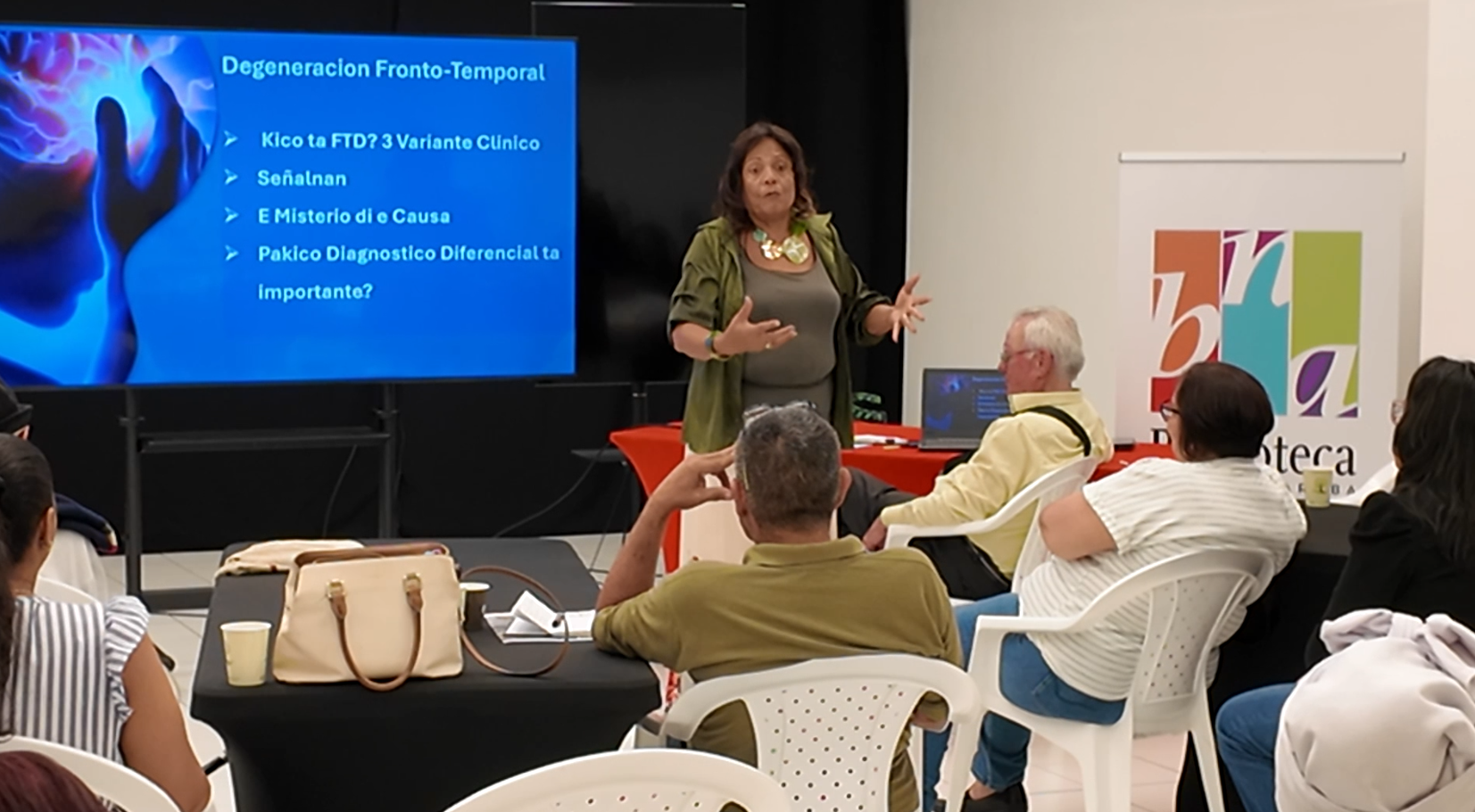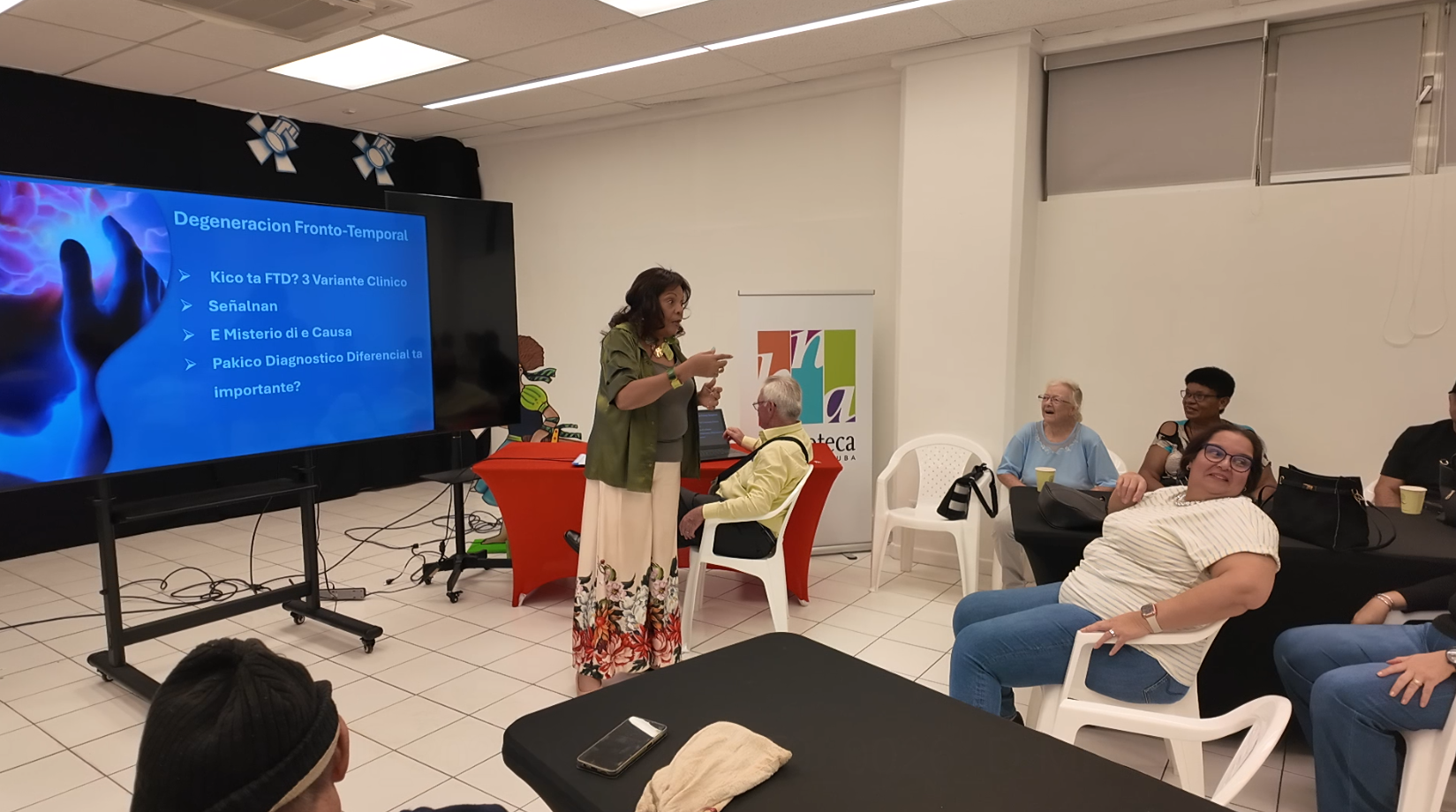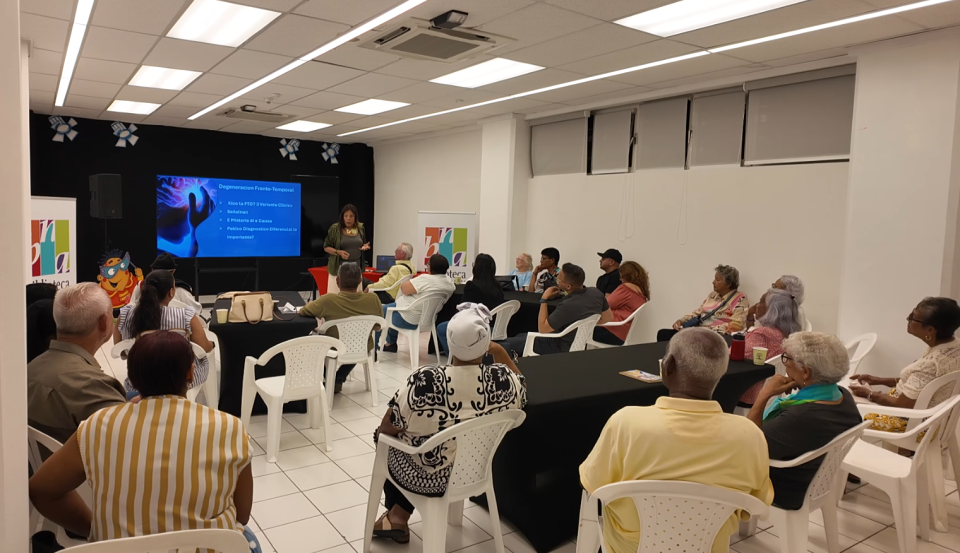
In observance of International Alzheimer’s Day (celebrated on September 21), the Alzheimer’s Foundation Aruba (FAA) hosted an event before a packed house. During the evening, the foundation’s president, neuropsychologist Melva Croes-Yánez, delivered a strong message regarding the challenges patients and families face in Aruba in obtaining an accurate diagnosis for neurocognitive disorders, particularly Frontotemporal Dementia (FTD).
Croes-Yánez clarified that the foundation does not exclusively assist Alzheimer’s patients, but rather deals with all types of neurocognitive disorders. However, global attention surrounding FTD has increased significantly since 2022, when famed actor Bruce Willis was diagnosed with the condition.
A medical ‘mystery’ leading to a lack of understanding
The FAA president explained that FTD is considered a “mystery” because it has no known cause or cure. This lack of knowledge often leads doctors to misjudge symptoms, attributing behavioral changes to other factors and even going so far as to dismiss family concerns.
In some regrettable instances in Aruba, when families sought help regarding drastic behavioral changes in a patient, doctors went as far as telling the spouse that “they were the one who needed a checkup,” not the patient. Croes-Yánez described this attitude as ignorance that fails to identify the root cause behind the plea of a family in distress.
Diagnostic confusion and barriers to a ‘second opinion’
The diagnostic situation in Aruba is deeply concerning and confusing for patients:
- Inconsistent diagnosis: Some patients initially receive an Alzheimer’s diagnosis, followed by one of mild cognitive impairment, and ultimately the overall picture fails to align (it doesn’t make sense).
- Blockade of second opinions: Without a fixed and clear diagnosis, patients are unable to request a second opinion. Furthermore, the neuropsychologist noted that certain medical professionals react with anger when a patient or family asks for a second medical opinion.
Questioning the standard of care for local citizens
The leadership of the Alzheimer’s Foundation Aruba concluded that this treatment is unacceptable and that the system cannot continue handling local patients in this manner. Croes-Yánez asserted that the same standard of healthcare provided to tourists must also be guaranteed to the citizens of Aruba when facing complex conditions such as FTD.