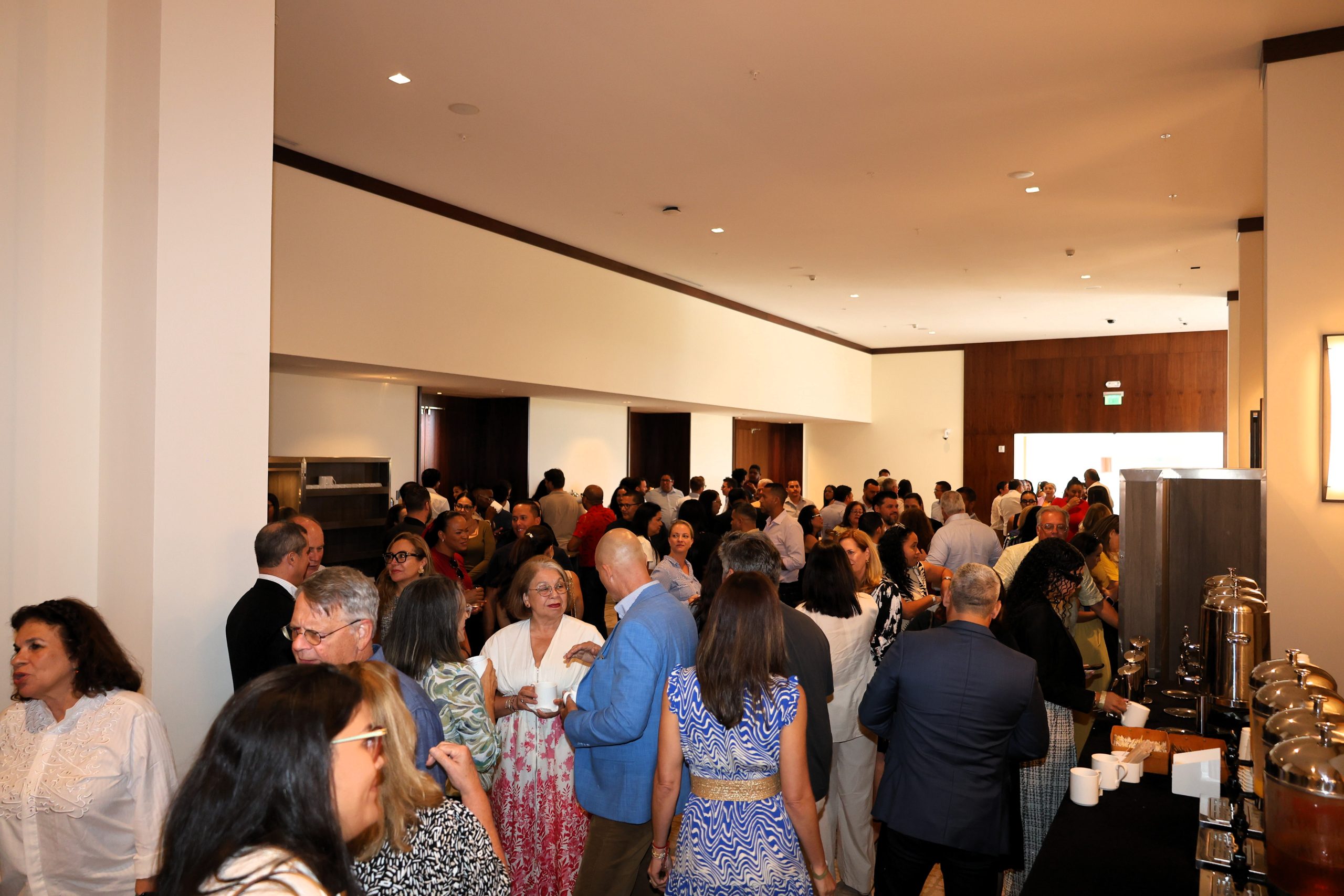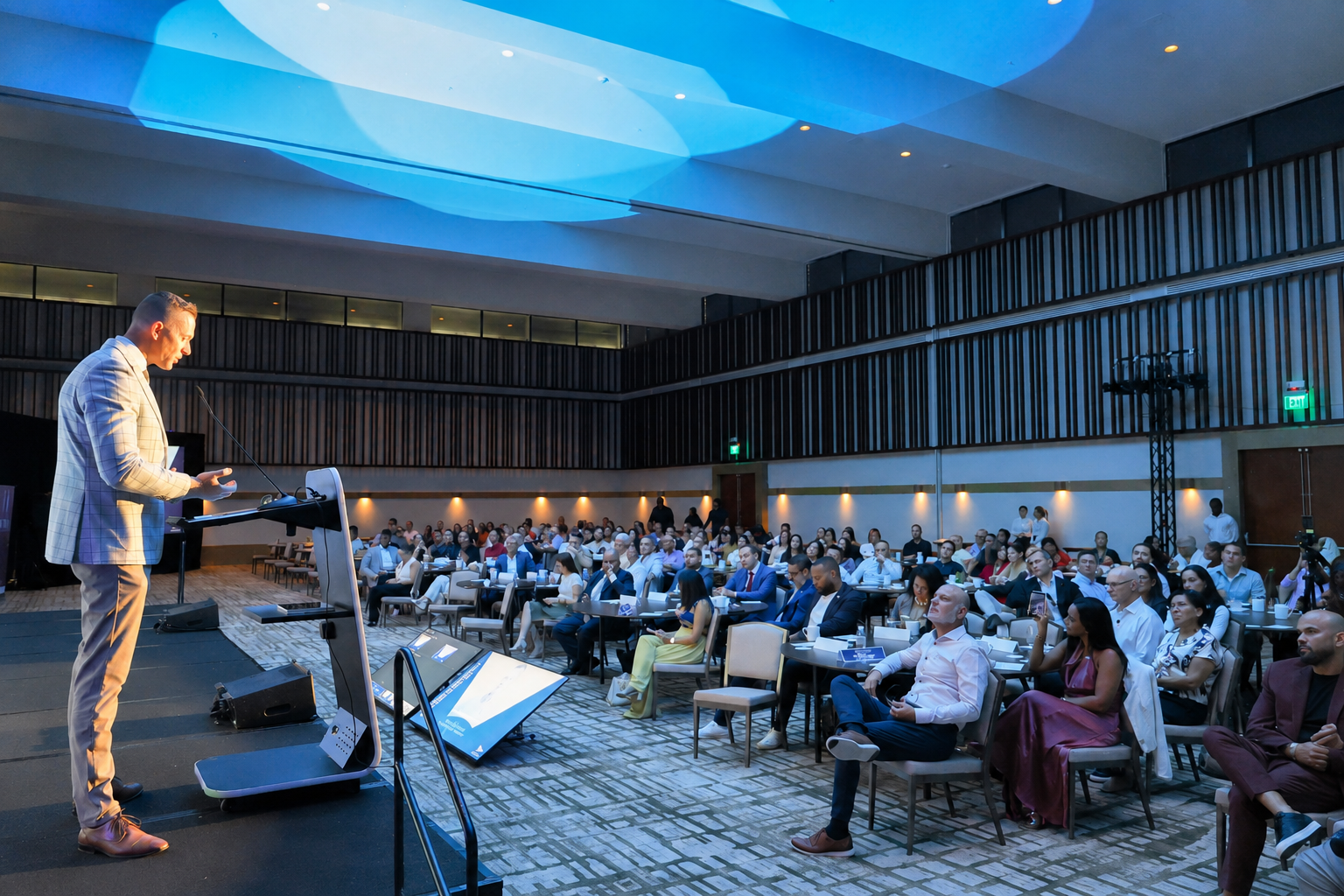
Nearly 300 entrepreneurs, government representatives, professionals, and other stakeholders gathered during the Aruba Chamber Business Event 2026, which took place last Saturday in the ballroom of The St. Regis Aruba Resort. The starting point was the fundamental challenge that Aruba faces: how can we continue to create prosperity without losing the qualities that made our island unique?
With the theme “Beyond Tourism: Building Aruba’s Next Economy – From Volume to Value. From Dependence to Diversification”, the event opened a dialogue and focused on how Aruba can increase the value that tourism creates, while protecting the quality of life, nature, and its unique character. In his opening remarks, the President of the Board of the Chamber of Commerce (KvK), Diederik Kemmerling, emphasized that Aruba has reached a decisive turning point. Tourism has contributed enormously to Aruba’s prosperity, but the next step demands difficult decisions and a shared vision regarding the development of our economy.
The two speakers were Tony van Veen, an entrepreneur who grew up in Aruba and is currently the CEO of DIY Media Group in the United States, and Miles Mercera, CEO of CINEX Curaçao. According to the speakers, Aruba has achieved extraordinary success thanks to tourism, but this very success now exerts growing pressure on infrastructure, traffic, nature, housing, and most importantly, on the unique experience that residents and visitors have always associated with Aruba. Reference was made to shifting growth based primarily on the quantity of visitors to a model that emphasizes quality, sustainability, and added value. Aruba has the opportunity to use the success of tourism as an engine to build a more resilient economy that is less dependent on a single sector.
The speakers’ recommendations included management with more control over tourism growth, limiting cruise tourism to a maximum of one ship per day, reconsidering permits for new hotels, and reviewing approved projects that have not yet started construction, as well as registering, regulating, and limiting the expansion of short-term rentals like Airbnb. At the same time, to protect the tourism product itself, it was proposed to introduce an Environmental Impact Tax for activities that have a negative impact on nature and public space, following the principle that those who cause damage should also contribute to the cost of protection.
On the topic of housing, a two-tier transfer tax system was proposed, featuring a more favorable rate for local residents and families, while non-resident buyers and commercial investors would contribute at a higher rate. The goal must be to keep housing more affordable for locals. Another proposal was to create an Aruba Future Fund, where a fixed percentage of tourism-related taxes would automatically be reserved to invest in economic diversification, housing, and local entrepreneurship. Emphasis was also placed on the importance of investing in fintech, the digital economy, and the creative and cultural industries, simplifying the process of starting a business, expanding access to micro-financing, and incorporating financial literacy, digital literacy, and artificial intelligence into the educational system. Economic success should not be measured exclusively by GDP growth, but also by indicators that reflect well-being, quality of life, and opportunities for the community. Structural collaboration among Aruba, Bonaire, and Curaçao to strengthen regional competitiveness was also highlighted.
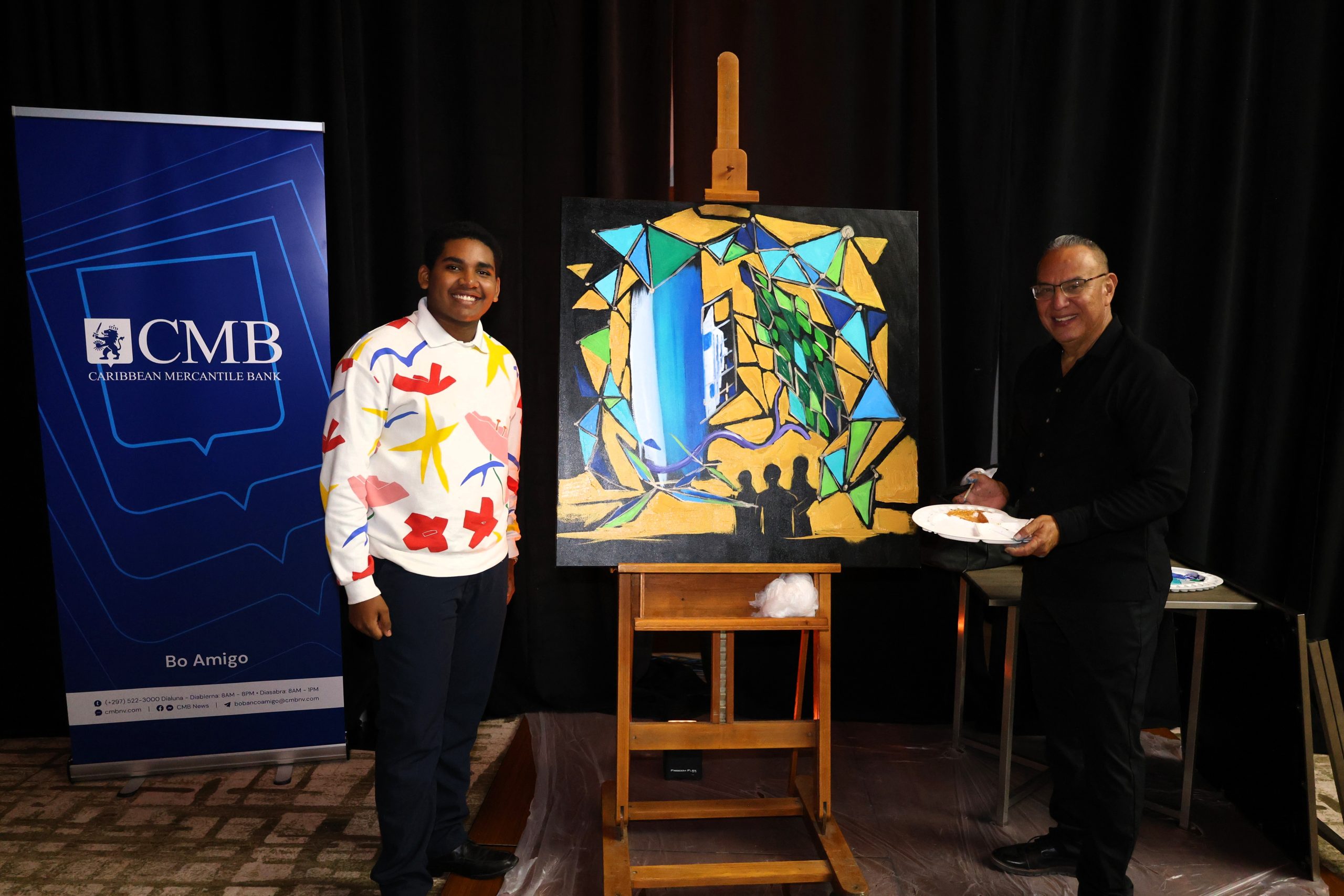
For entertainment, local artist Elvis Tromp did a live illustration on canvas depicting the Aruba of today alongside a transformation and diversification of our economy. The youth Phillip-Johnson Martinus, a student and also the Youth Minister of Culture of the Youth Parliament, provided an explanation of the painting through a poem.
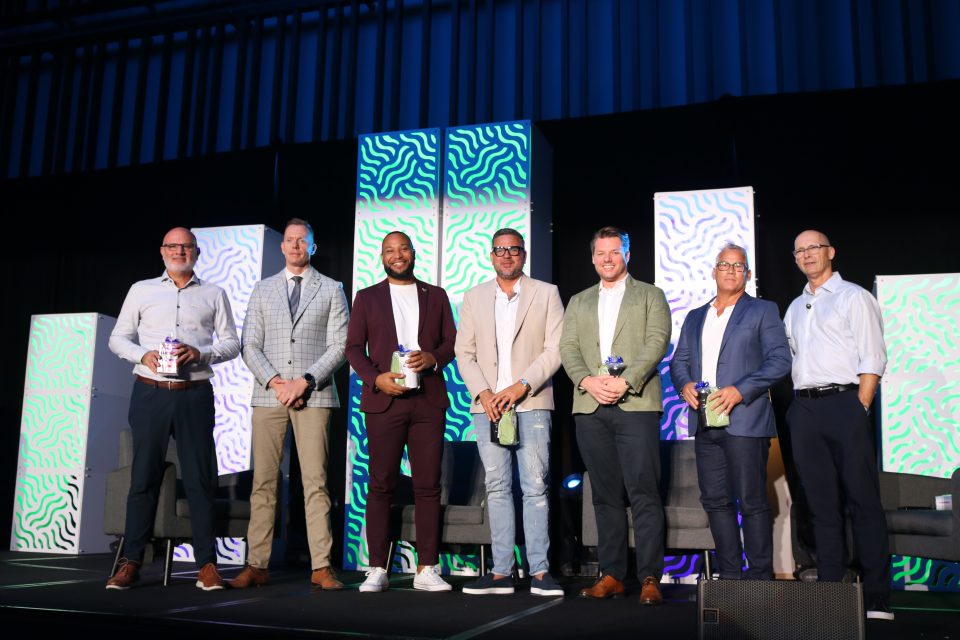
The panelists were Omar-Steve Lejuez (Privada Stays), Vincent van Rutten (Sentoo), and Humphrey “Fito” Croes (Cas Bon Group), and Gavril Mansur served as the moderator and master of ceremonies. Each of the panelists contributed a practical perspective from their own sector. During the discussion, it became clear that the transition to a more sustainable economic model is not the exclusive responsibility of the government, but also of the private sector. The focus was placed on building housing for local families, which is an investment in the economic and social stability of Aruba. International models could also be considered where hotel developers share responsibility for the impact that tourism development has on the housing market. The right to develop large projects could also be accompanied by a certain social responsibility. In any future regulation of short-term rentals, a clear distinction must be made between local property owners generating additional income and commercial operators managing multiple properties.
Although different opinions were shared, there was a broad consensus that Aruba has reached a decisive moment where tourism, housing, infrastructure, sustainability, and quality of life cannot be considered separate issues, but rather as part of a vision for the future.
The KvK thanks all speakers, panelists, the moderator/MC, other participants, the main sponsor CMB, and the co-sponsors Aruba Tourism Authority, AFAS Software, Aruba Airport Authority, Setar, and Ennia.
With this event, the Chamber of Commerce and Industry wishes to stimulate dialogue on the future of tourism and the next phase of Aruba’s economic development. The event touched on an important topic for Aruba, and the KvK expresses its desire to continue facilitating this dialogue in collaboration with the private sector, government, and the community.