

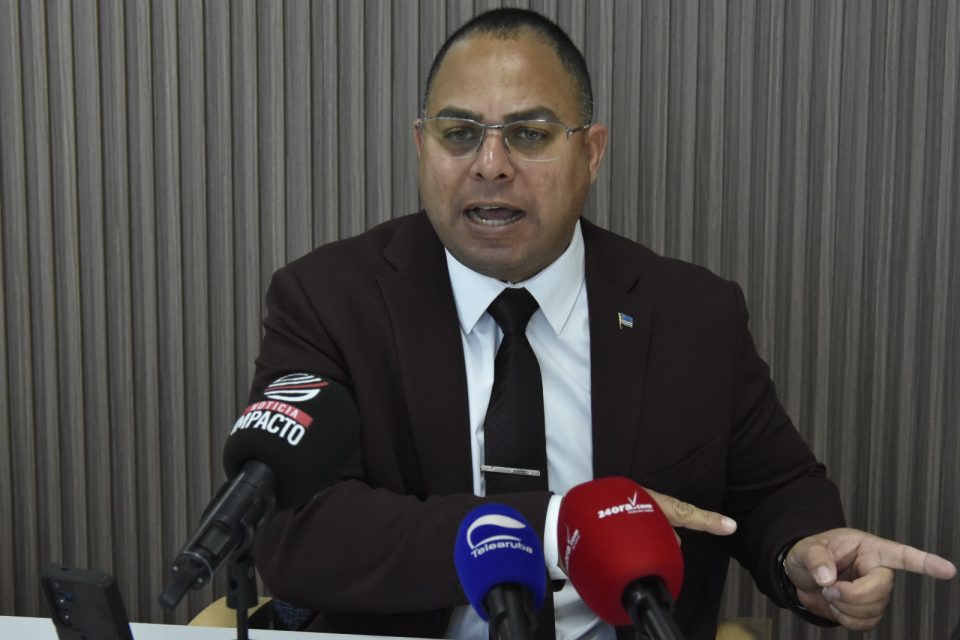
The debate on HOFA is not merely a technical discussion about public finances. According to parliamentarian Eduard Pieters, this issue touches the very essence of democracy and Aruba’s autonomy within the Kingdom of the Netherlands. For the PPA faction, the proposed changes under the so-called consensus Kingdom law HOFA raise questions about one of the most fundamental principles of an autonomous country: the budgetary right of the Parliament of Aruba.
The Budget Right: The Heart of Parliamentary Democracy
In any parliamentary democracy, Parliament holds the final authority over the national budget. It is the primary mechanism through which the people exercise control over government. However, according to Pieters, the structure proposed under HOFA would alter this balance. The process of financial supervision and decision-making would be directly connected to the Council of Ministers of the Kingdom of the Netherlands, and according to the PPA’s interpretation, could even involve influence from the House of Representatives of the Netherlands.
“This raises a fundamental question:
If crucial decisions about Aruba’s budget depend on institutions in The Hague, what is the real role of the Parliament of Aruba? How will the principle Vox Populi, vox Dei the voice of the people is the voice of God—be realized? The people of Aruba go to the polls to elect 21 members of the Aruban Parliament, not representatives to the Dutch Parliament,” Pieters questioned.
Autonomy in Practice, Not Only in Words
Aruba’s constitutional position is based on the Statuut voor het Koninkrijk der Nederlanden, in which autonomous countries are responsible for managing their own internal affairs, including public finances, in a transparent manner and according to principles of good governance.
Pieters warns that if the country’s budget becomes conditional upon decisions of the Kingdom, financial autonomy will be restricted.
“That would represent a profound change in the practice of autonomy that Aruba gained with its Status Aparte in 1986. For the PPA, this is a historic treasure that cannot be surrendered without broad debate with the people.”
Rapid Decision-Making Is Crucial in Times of Crisis
Another concern raised by Pieters is the speed and flexibility of political decision-making.
“Aruba, as a small island developing state, must be able to react quickly when a crisis arises. Recent history has shown this clearly—during the global economic crisis, during the COVID-19 pandemic, and during international situations that affect tourism and the economy. The Government of Aruba was able to make immediate decisions to protect the economy and the well-being of the people.”
However, according to Pieters, if financial processes depend on lengthy mechanisms within the Kingdom’s decision-making structures, the ability to respond quickly could be limited.
“We cannot remain with our hands tied, waiting for decisions in The Hague when local situations demand immediate action,” he emphasized.
“And the question is: What contribution will such a system make to Aruba’s ability to continue developing as a small island developing state?”
Lessons from the Caribbean: The Case of Bonaire
Pieters also referenced the experience of Bonaire, which became a special municipality of the Netherlands after 2010.
“This model created a different reality, where many administrative and financial decisions are determined directly within the Dutch system.” According to Pieters, Aruba never fought for that position.
“Our Status Aparte was precisely intended to maintain a unique and autonomous position within the Kingdom.”
The debate on HOFA, therefore, is not only legal or financial it is a fundamental question about the political future of Aruba and its people.
A Direct Question to Government
Finally, the PPA faction poses a direct question to the government:
How can Aruba claim that its autonomy remains intact if one of Parliament’s most important powers—the budgetary right is being limited?
Aruba’s autonomy was achieved through decades of political struggle and historic sacrifice by its people. The decisions made today will determine whether future generations inherit the same freedom of decision-making that the country gained in 1986.
“That is why we inserted another verse into our national anthem Aruba Dushi Tera, a national symbol that includes the phrase: May God guide and preserve its love for freedom,” Pieters stated.
For Pieters, the message is clear:
Autonomy cannot be negotiated without trust and respect for the preservation of Aruba’s democracy.