

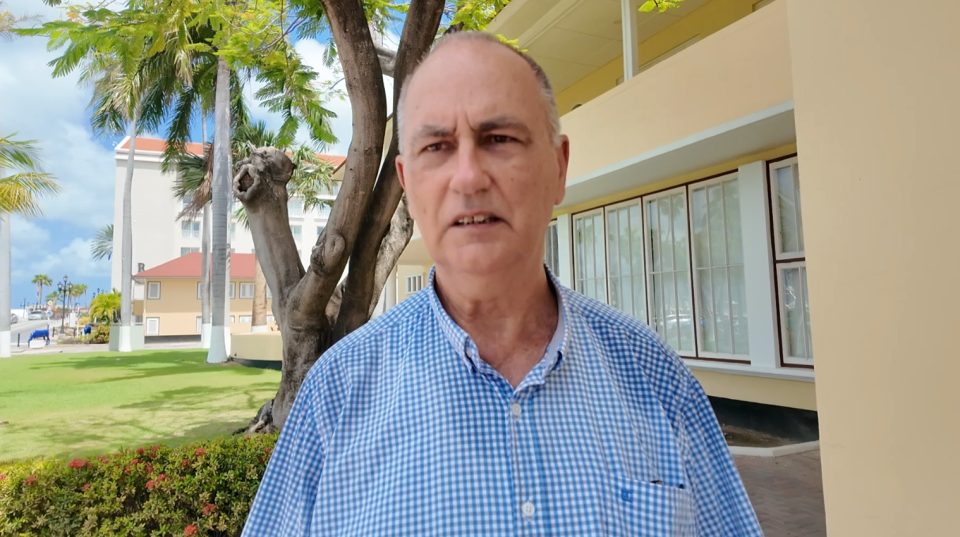
A lack of regulatory clarity and the decision to extend the Spatial Development Plan with Regulations (ROPV) until 2029 without due technical consultation is creating a worrying impasse for investments in the capital and for the balance of Aruba’s housing and tourism markets. This concern was expressed by Milton Ponson, representative of the Rainbow Warriors Foundation.
According to Ponson, a year ago a group of investors presented concrete plans to the government to inject substantial capital into the revitalization of Oranjestad, aiming to make the city center an attractive place to live, work, and spend leisure time. Although there was initial alignment between the private sector and the government, these investments have ground to a halt. The lack of precise definitions regarding what is permitted and not permitted in the urban zone has stalled projects that already secured financing and bank approval, forcing investors to reconsider their plans and hold their capital while waiting for government action. Not even the presentation of findings by a Dutch fact-finder and subsequent meetings with various ministers and legal advisors brought the necessary clarity, leaving more questions than answers.
Pressure on the housing market and lack of regulation
At the same time, the spatial planning situation and unchecked growth in the tourism sector are affecting the local population’s quality of life. With the need to import thousands of additional workers, the housing market faces a critical shortage that has driven rental prices up alarmingly. For a hospitality worker, the cost to rent a room or small studio ranges between 1,300 and 1,400 florins per month, absorbing the bulk of their income.
Ponson noted that the decision to extend the ROPV until 2029 without a thorough revision primarily benefits those dedicated to converting homes into Airbnb rentals—a phenomenon that remains unregulated to this day. While large-scale projects like hotel expansion and the reintroduction of Port City Aruba are under discussion, the accumulation of more than 10,000 Airbnb units worsens the strain on the island’s infrastructure and environment.
Consequences for nature and lack of consultation
The absence of a balanced vision between the island’s tourism needs and environmental protection has led to extreme situations, such as legal disputes over UTV and ATV usage along the North Coast. The Government was forced to temporarily close the area due to legal actions taken by environmental organizations demanding a permanent closure under threat of a substantial penalty fee (dwangsom) ranging from 750,000 to 1 million florins per day.
Ponson emphasized that these decisions stem from an administration that fails to sit down with its own internal experts or stakeholders to assess current realities. The extension of the ROPV via a National Decree (Landsbesluit), bypassing Parliament and omitting technical consultation, relies on figures and data over 17 years old. Land that was available for housing or tourism back then has already been utilized, making a realistic, updated re-evaluation of remaining land imperative to ensure sustainable development for the people of Aruba.