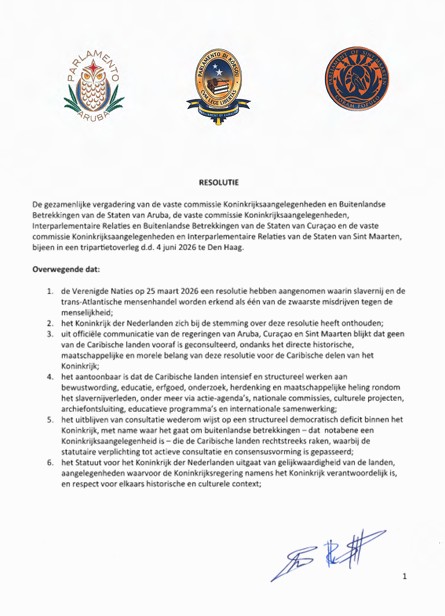
During the Tripartite meeting held in The Hague, the delegations of Aruba, Curaçao, and Sint Maarten approved a historic resolution. This step comes as a direct reaction to the Netherlands’ unilateral decision to abstain from voting on the United Nations (UN) resolution on March 25th, which recognized slavery and the transatlantic slave trade as one of the worst crimes against humanity.
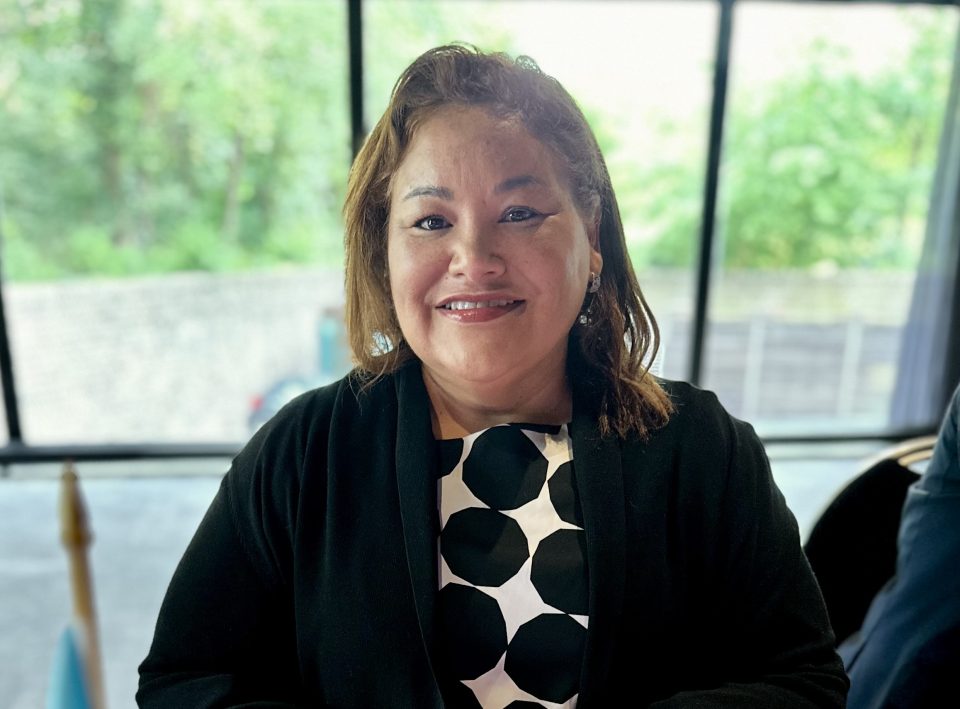
The initial proposal, introduced by Aruban Member of Parliament Shailiny Tromp-Lee and supported by her colleague Seferina from Curaçao, led to a unified stance against the Netherlands’ actions within the Kingdom.
Not an isolated mistake, and certainly not a casual omission
According to Shailiny Tromp-Lee, abstaining from the UN resolution without consulting the islands is not just any other decision. It directly affects the history, identity, and ongoing efforts of the islands regarding awareness, education, and the healing of the wounds of slavery.
“This is not an incidental mistake or a simple communication breakdown,” Tromp-Lee emphasized. “This case highlights a much deeper problem. The Netherlands still does not view Aruba, Curaçao, and Sint Maarten as equal partners within the Kingdom. Unfortunately, this fits into a broader pattern where international decisions are made without involving our countries, structurally ignoring our interests and sensitivities.”
If the apologies offered for past slavery were truly a comma and not a period, that should be reflected in the Kingdom’s actions on the international stage. In this matter, that was clearly not the case.
Concrete demands in the approved resolution
The resolution, signed by the delegation leaders of the three parliaments, outlines clear demands for the Kingdom Government (Koninkrijksregering):
Absolute rejection: The parliaments declare that the Kingdom’s position of abstention at the UN without prior consultation is completely unacceptable.
Structural consultation protocol: They demand mandatory, timely, and substantive prior consultation from the very first phase (“initiëringsfase”) on similar international positions. The Kingdom’s stance on slavery or human rights can no longer be determined unilaterally.
Equality in practice: The principle of equality within the Charter (Statuut) must be respected in practice, guaranteeing a structural role for the Caribbean countries in Foreign Relations decisions that directly affect them.
Submission via IPKO
This resolution was formally approved on June 5, 2026, in The Hague. The three Caribbean delegations commissioned the Interparliamentary Kingdom Consultation (IPKO) to officially submit this document to the delegation of the Dutch Parliament (Staten-Generaal).
The request is urgent: the Kingdom Government has a deadline of three months to provide a written response and a concrete proposal to restructure consultation procedures, firmly adhering to the principle: “Geen besluiten over ons verleden, zonder onze stem in het heden” (No decisions about our past without our voice in the present).