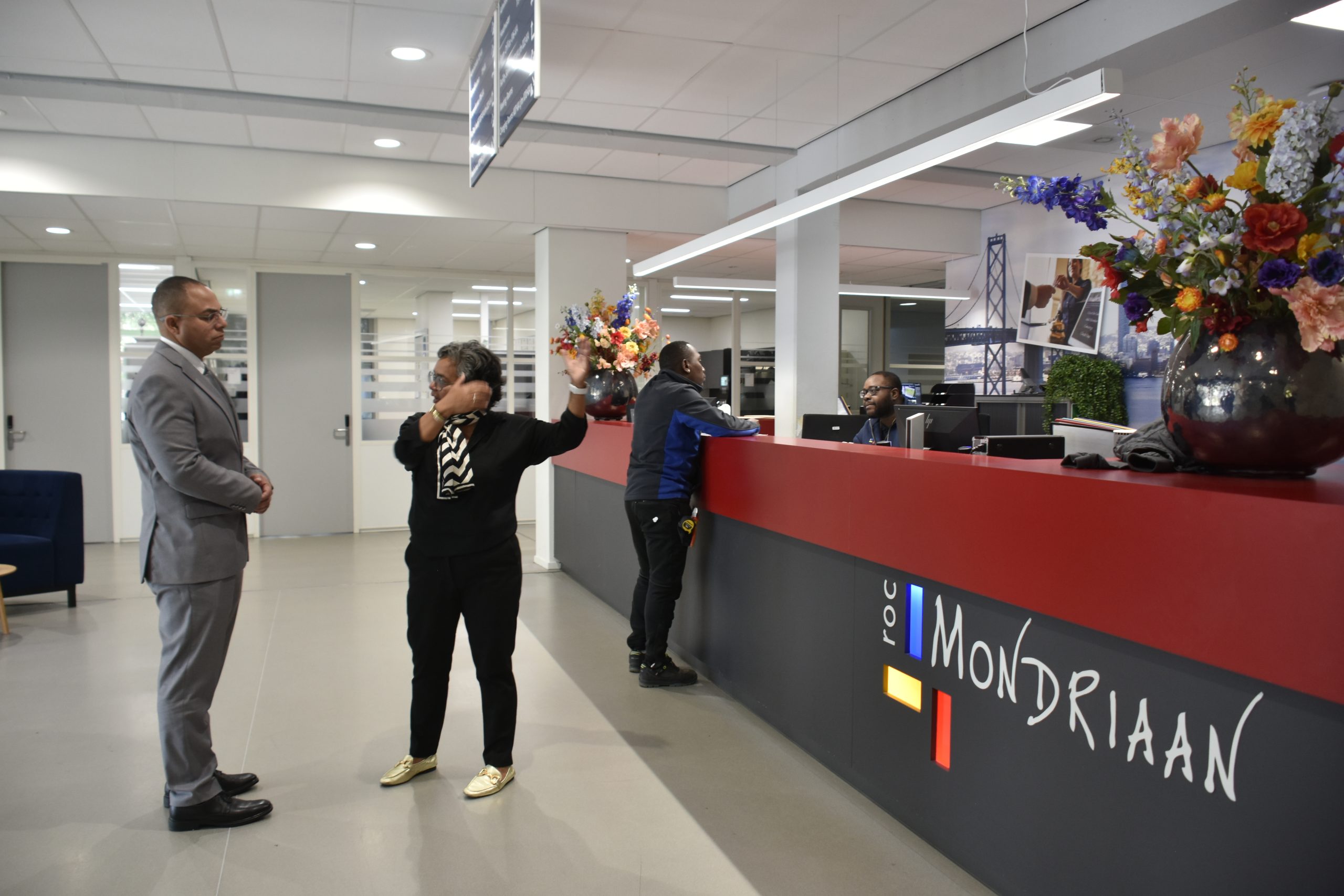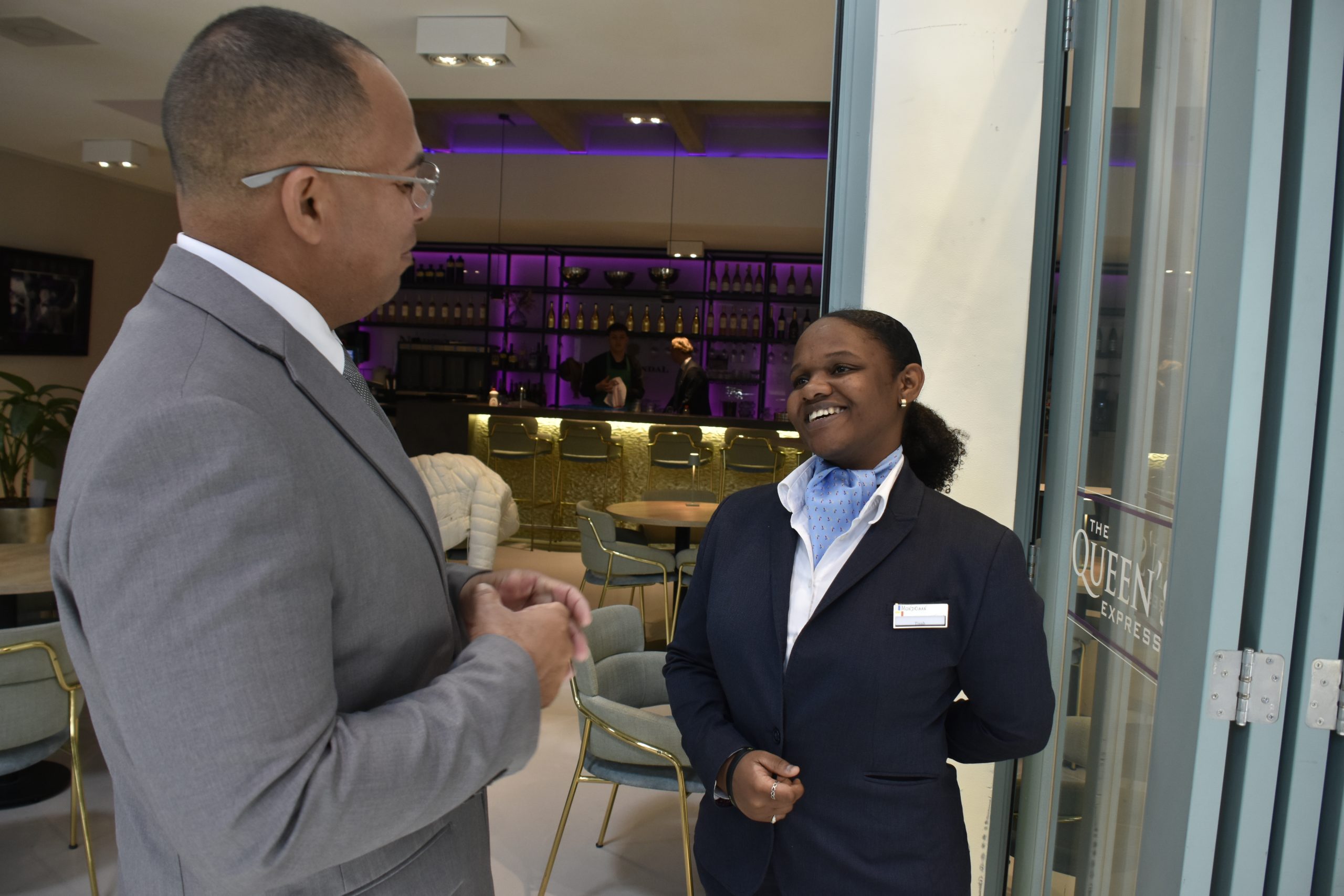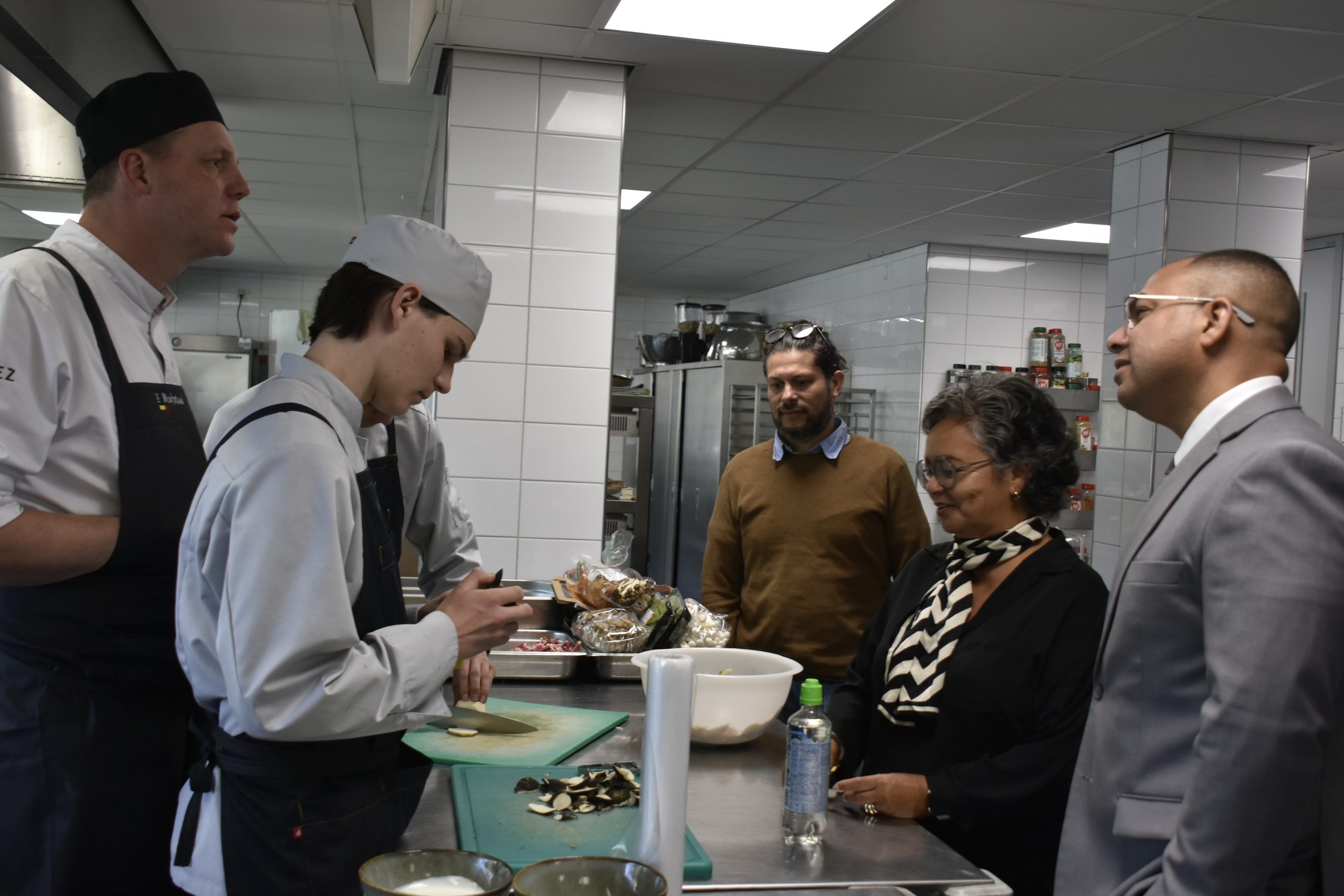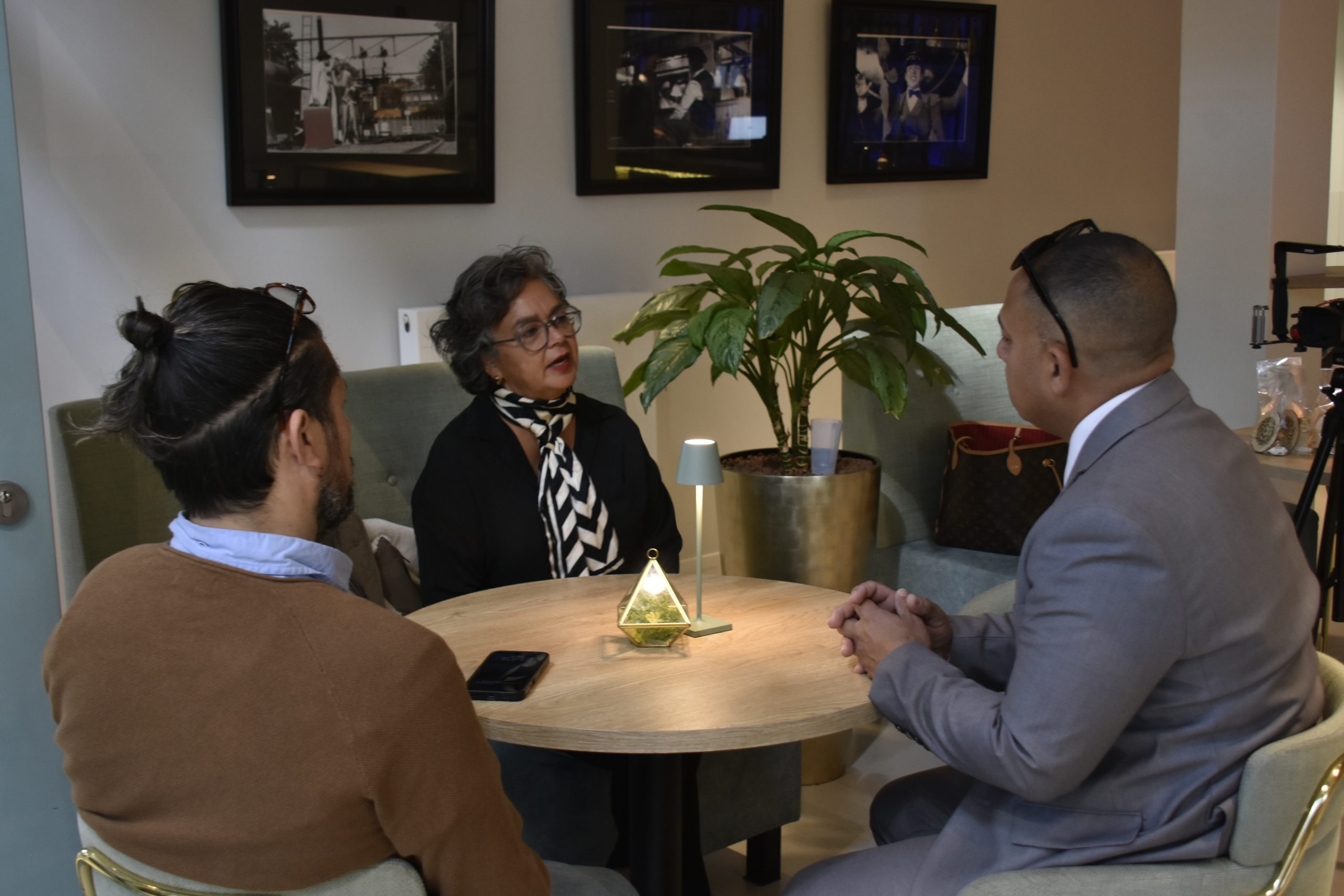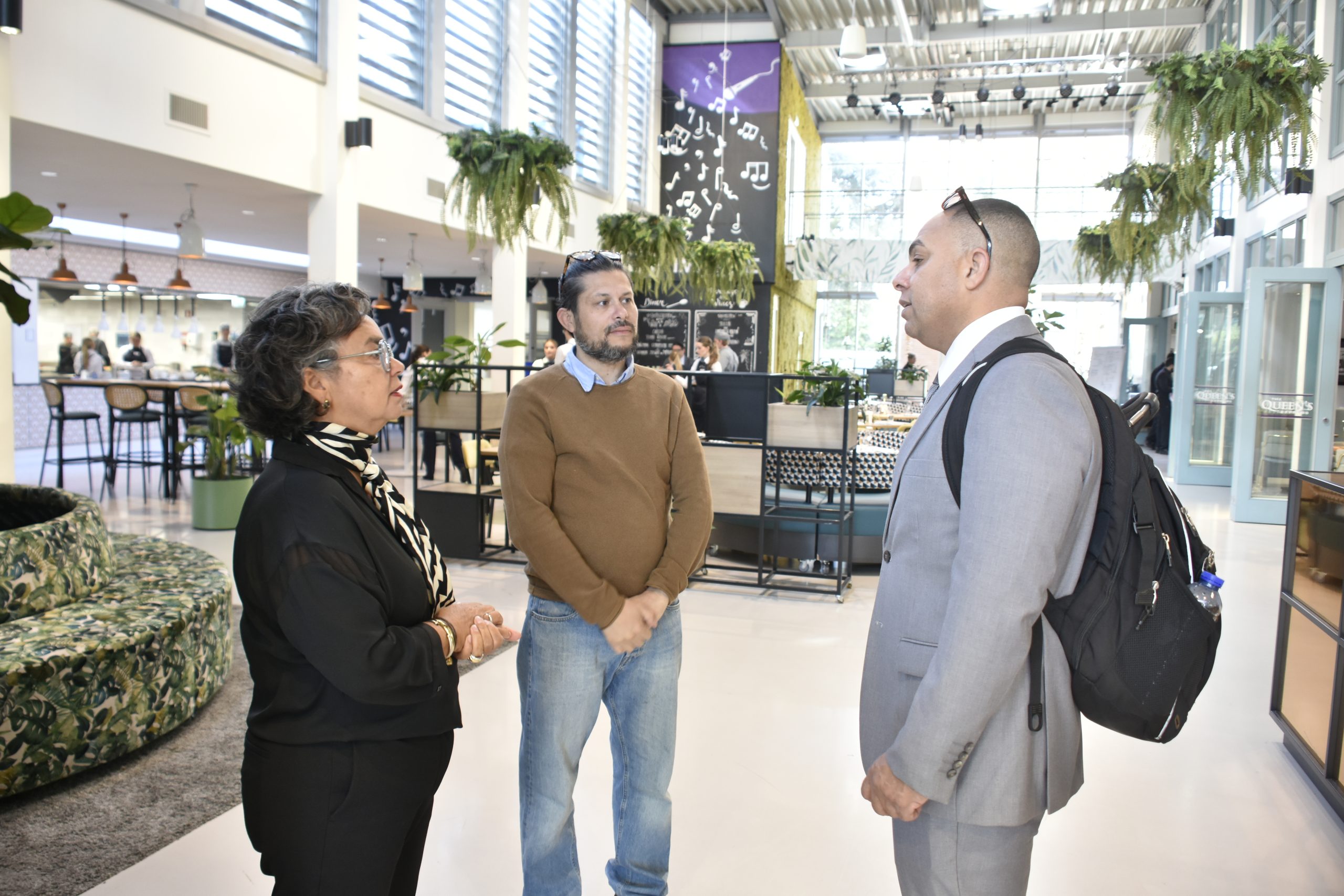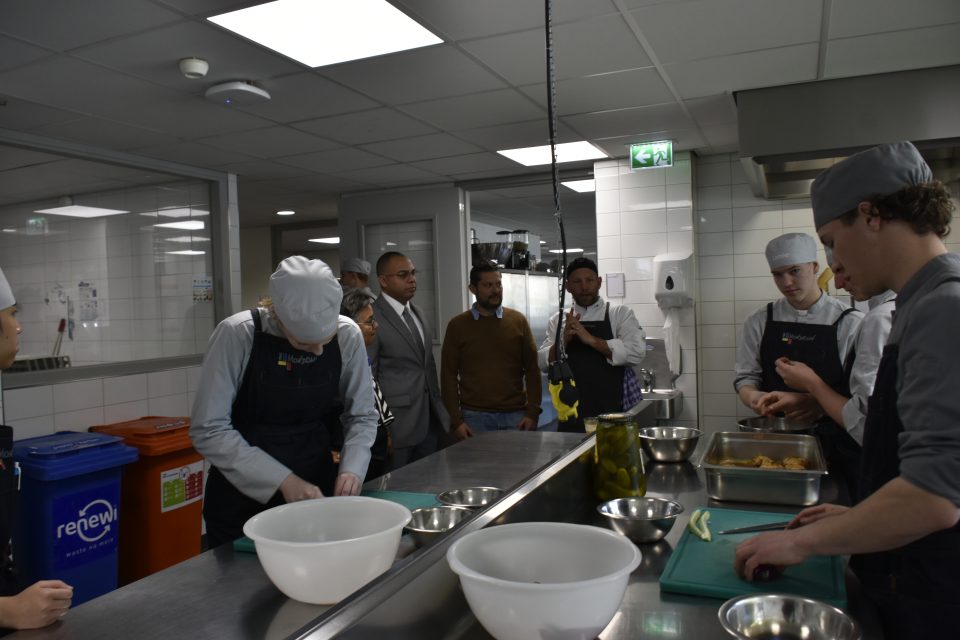
During his working visit to The Hague, parliamentarian Eduard Pieters placed a key issue on the table: the future of Aruba’s economy depends directly on how we prepare our young people today. At ROC Mondriaan, a vocational education institute (MBO), Pieters found a concrete example of what modern education should look like: integrated, inclusive, practical, and connected to the private sector.
Education Must Be Connected to Reality
Together with investor Jeroen Lente, who has more than 25 years of experience in hospitality and real estate, the picture became clear.
“It feels like you are in a real hotel. Live cooking, hotel rooms, even a bar—this is a real environment. This is how education should connect to what the private sector demands,” Lente stated.
According to Lente, the main value of Mondriaan lies in the integration between theory and practice. For Aruba, this is more than relevant, considering that the economy largely depends on tourism.
He also expressed willingness to connect students from Aruba with opportunities in the Netherlands, such as internships and international experience.
“This is certainly an extremely important step to strengthen the talent pipeline,” according to Eduard Pieters.
A Model That Prepares Students for the Real World
During Pieters’ meeting with instructor Ilja van Reewijk, this perspective was confirmed once again. Mondriaan works with different levels (MBO 2 to 4) and has a multicultural mix, where students from Aruba, Curaçao, and other countries are already participating.
“We combine theory with practice and create an environment that reflects the real world. This prepares students for the next step in their careers,” Van Reewijk explained.
In addition, Mondriaan has an international stream, something unique that offers a space for Caribbean students to integrate and grow. Van Reewijk emphasized that students from Aruba have a natural advantage: multilingualism and adaptability.
However, he also raised a challenge: education must continue to evolve.
“After COVID, the mindset of students changed. We must listen to them and adapt our system to what they express,” he said.
An Important Lesson for Aruba
For Pieters, this visit was not only inspiring, but also confronting.
In Aruba, there is constant discussion about:
- high-quality tourism
- premium experiences
- sustainability
But without an educational system that prepares local talent, these ambitions will remain just words.
“We cannot talk about high-level tourism if we are not training high-level professionals,” Pieters emphasized.
He stressed that Aruba must move beyond limited thinking: not only training waiters or cooks, but also managers, leaders, entrepreneurs, and business owners in hospitality.
Cooperation Is Key to Progress
Another important point that emerged was collaboration. There are already close relationships with Curaçao and cooperation with Aruba, but the potential is much greater. With partners in the Netherlands—and possibly in the future even countries such as Suriname—an international education network could be created that benefits the entire region.
According to Lente, the objective must be clear: connect education with industry and create real opportunities for young people.
A Political Call With a Clear Direction
For the PPA faction, the message is direct: vocational education must become a national priority, the private sector must be integrated into the system, and investment in young people can no longer be postponed or left only in policy documents and presentations.
“If we do not create this connection today, we will lose our competitive advantage as a tourism country,” Pieters concluded.
The visit to ROC Mondriaan demonstrated that solutions already exist but professional and political will is needed to implement them. The future of Aruba is not only in hotels, but also in classrooms, where the people who will manage and work in those hotels are being prepared.