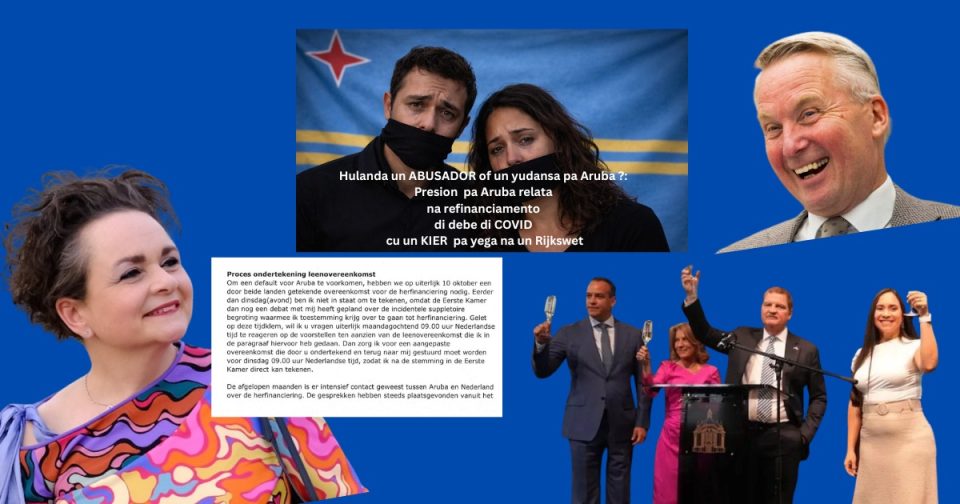
In what many consider an intimidation tactic, Aruba has faced a crucial deadline in its debt refinancing processes. The situation raises serious questions about whether the Netherlands is acting as a development partner or an abuser of power?, taking advantage of our country’s financial vulnerability during COVID.
Mike Eman, Geoffrey Wever, and Gerlien Croes are aware of these situations, but instead of standing firm for Aruba’s autonomy and rights, they are allowing the Netherlands to distort laws and exert undue pressure on the country, where Parliament loses its power. The big question for all three Aruba ministers is: At what moment have you, as Aruba’s representatives, actually stood up to defend Aruba?
The threat of an artificial “Default” used as pressure to force Aruba to sign
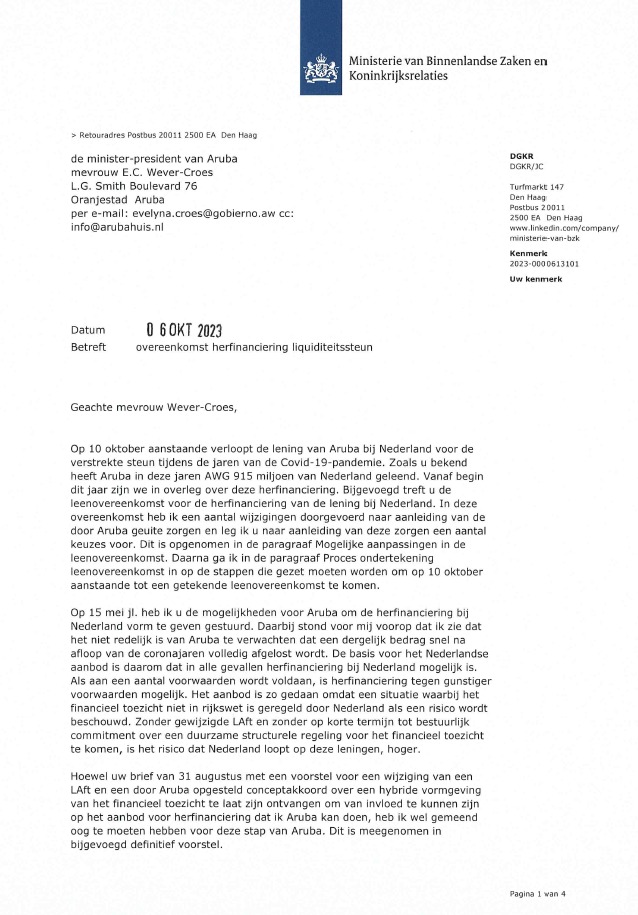
The reality is that Aruba is meeting its payment obligations. However, it has become clear that the Netherlands used its POWER with the threat of a so-called “default” as an instrument of pressure. Documents recently in the possession of EA News confirm that the Netherlands sought to manage the perception of international banks, insinuating that Aruba was not complying, with the sole purpose of forcing Aruba into a position of weakness to cede more sovereign power.
The chronology of forced pressure
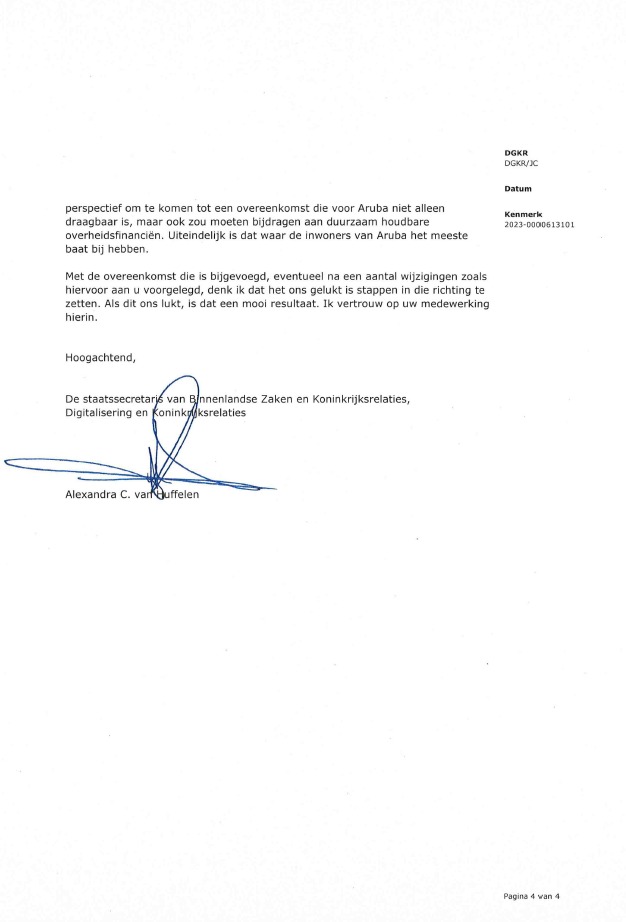
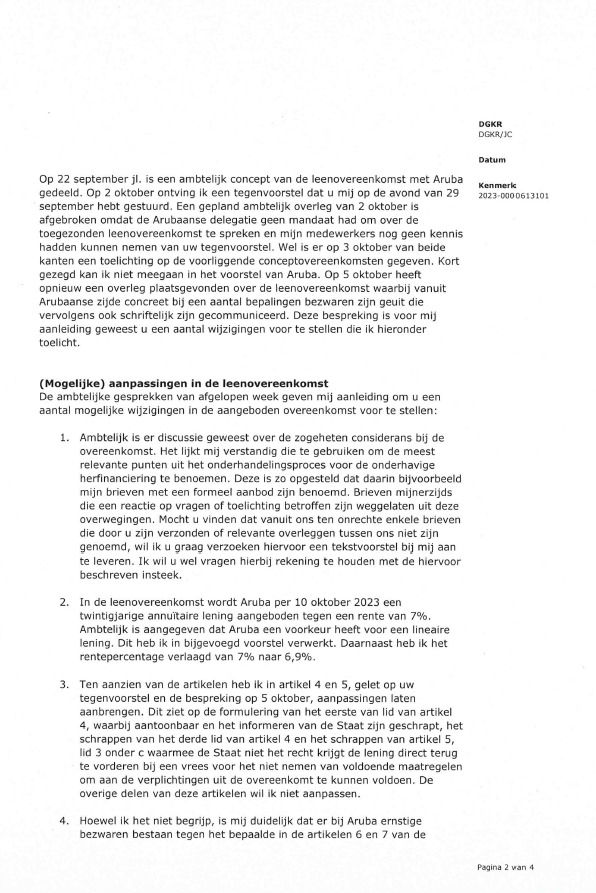
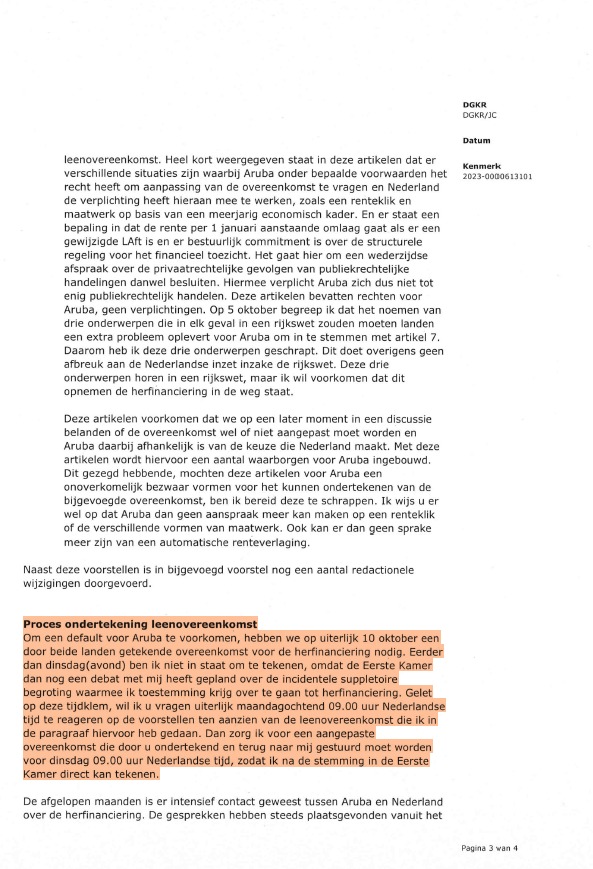
Documents signed by former Dutch minister Alexandra van Huffelen reveal the force of the “ultimatum” placed on the table. For Aruba to achieve the necessary refinancing, the country was required to sign an agreement under severe conditions before October 10. The demands were strict:
• Deadline 1: Aruba had to react to the loan agreement proposals before Monday at 09:00 (Dutch time).
• Adaptation: An adapted agreement was required, which had to be sent back before Tuesday at 09:00 (Dutch time).
• Signature: This signature was the sine qua non (indispensable) condition for the Dutch minister to proceed with the official signature immediately after the vote in the Senate (Eerste Kamer). Otherwise no mony
The “Power Game”
In the document, the Netherlands laid a letter on the table that, in essence, said: either Aruba accepts the conditions, or the Netherlands would declare the country in international “default.” This, despite the fact that Aruba had maintained intensive and constructive contact for months with the goal of reaching a satisfactory solution. But the Netherlands continued to push for more power and is gradually succeeding, if the Parliament of Aruba continues to allow the developments taking place.
The questions that now remain in the air are: To what extent can Aruba tolerate the use of the Dutch state apparatus to break its legs when negotiating? And to what extent are our own politicians complicit in the erosion of our own rights?
EA News will continue to monitor these documents and the legal impact these conditions have on the financial autonomy of the Country of Aruba. Is there still a document missing to clarify who actually signed the Rijkswet HOFA that both Aruba and the Netherlands are hiding, or do they not want to reveal the true face of the AVP-FUTURO government or the true intentions of the Netherlands regarding Aruba?