

Following the recent appointment of a Minister Plenipotentiary and the meeting in the Council of Ministers of the Kingdom of the Netherlands last week, many arguments have been circulating in the community regarding Aruba’s position in relation to the HOFA law.
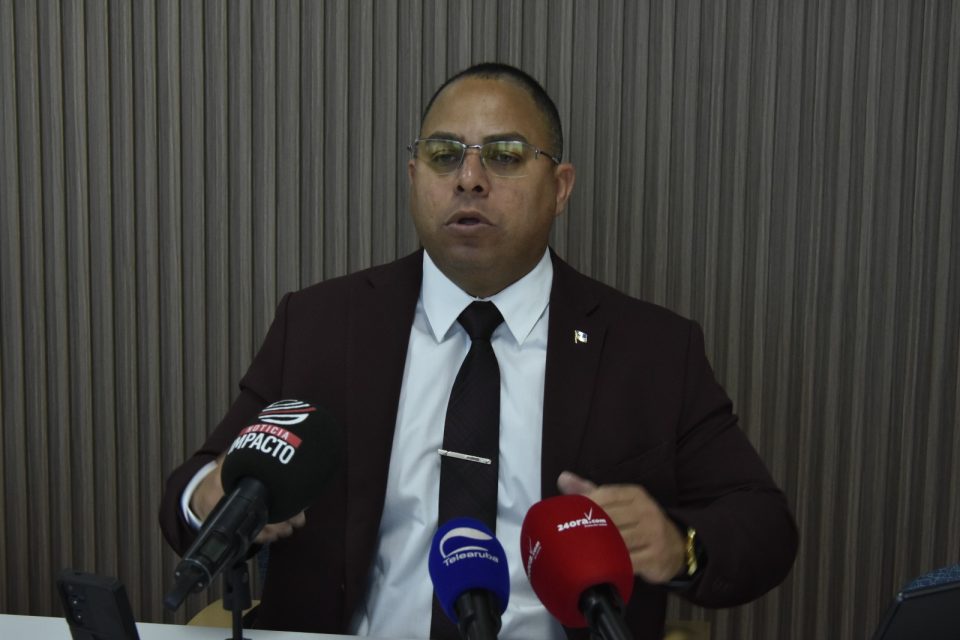
The arguments presented by the current government suggest that Aruba will receive more funding, that interest on debt will decrease, and that supervision by the Kingdom will help strengthen financial discipline. However, according to parliamentarian Eduard Pieters of the PPA faction, this discussion is being presented in an oversimplified—and even misleading—manner. Pieters emphasizes that Aruba has serious alternatives to strengthen financial control without surrendering its constitutional autonomy under a consensus Kingdom law.
Budget Chamber: A Local Solution for Financial Supervision
One of the main arguments used to justify HOFA is that Aruba requires external financial supervision. However, the PPA proposes a clear alternative: the creation of a Budget Chamber within Aruba’s constitutional system.
According to Pieters, this could be regulated either:
- in a new chapter of the Constitution of Aruba;
- or as an institution under the chapter of the Raad van Advies van Aruba.
“A Budget Chamber could exercise strict control over the national budget and fiscal discipline, but within the framework of our own laws, maintaining democratic accountability in our own Parliament. During a transitional period, the College financieel toezicht (CAFT) could continue its current supervisory role, while Aruba gradually moves toward its own constitutional mechanism of control. Supervision is necessary, and Aruba can organize this without a Consensus Kingdom Act,” Pieters emphasized.
Lower Interest and “More Money”
Pieters also addressed another argument used by the government—that HOFA will lead to lower interest rates and greater access to financing—and stated that this is not entirely accurate.
“The official communication from the Dutch Council of Ministers indicated that interest rate reductions depend on compliance with requirements, not simply on signing HOFA. In other words, interest rates will decrease if countries comply with fiscal discipline and financial standards. Money does not automatically come because of the law.”
Pieters also drew an important comparison that he believes deserves careful attention.
Curaçao currently pays interest of approximately 3.1%, while Aruba faces significantly higher interest—around 6.9% on loans related to the COVID-19 pandemic. According to Pieters, this is an issue that must be negotiated firmly.
Lessons from 10-10-10: Permanent Supervision
“The experience of the constitutional reform of Dissolution of the Netherlands Antilles in Curaçao and Sint Maarten should serve as a warning. In 2010, these countries entered into a ‘final agreement’ with financial supervision by CAFT. The expectation was that supervision would be temporary. But after more than 16 years, financial supervision is still present. According to several politicians in those countries, exiting the control system is extremely difficult—if not impossible,” Pieters stated.
For completeness, he added that:
- public debt continued to rise;
- economic performance did not always improve;
- budgets did not consistently achieve surpluses.
“For the PPA, this clearly demonstrates that external supervision does not automatically solve economic and financial problems.”
Status Aparte and Parliamentary Responsibility
“Aruba’s Status Aparte in 1986 was built on a fundamental principle: the Parliament of Aruba must control and supervise the government. Institutions such as the Raad van Advies are already part of the system of checks and supervision. The PPA proposes strengthening this structure with an additional Budget Chamber.”
According to Pieters, Aruba has no constitutional, legal, financial, or economic reason to transfer more budgetary control to The Hague.
“For the PPA faction, the debate on HOFA is not merely technical. It is a matter of principle: how Aruba wishes to manage its finances and its autonomy within the Kingdom of the Netherlands,” Pieters continued.
Conclusion
Finally, Pieters concluded that Aruba has the capacity to demonstrate fiscal responsibility, noting that Aruba has already achieved:
- budget surpluses
- reductions in public debt
- continued economic growth after the pandemic
The PPA’s message is clear:
Financial discipline must come from Aruba itself.
Because autonomy is not only a historic right—
it is a political responsibility that must be protected with determination.