

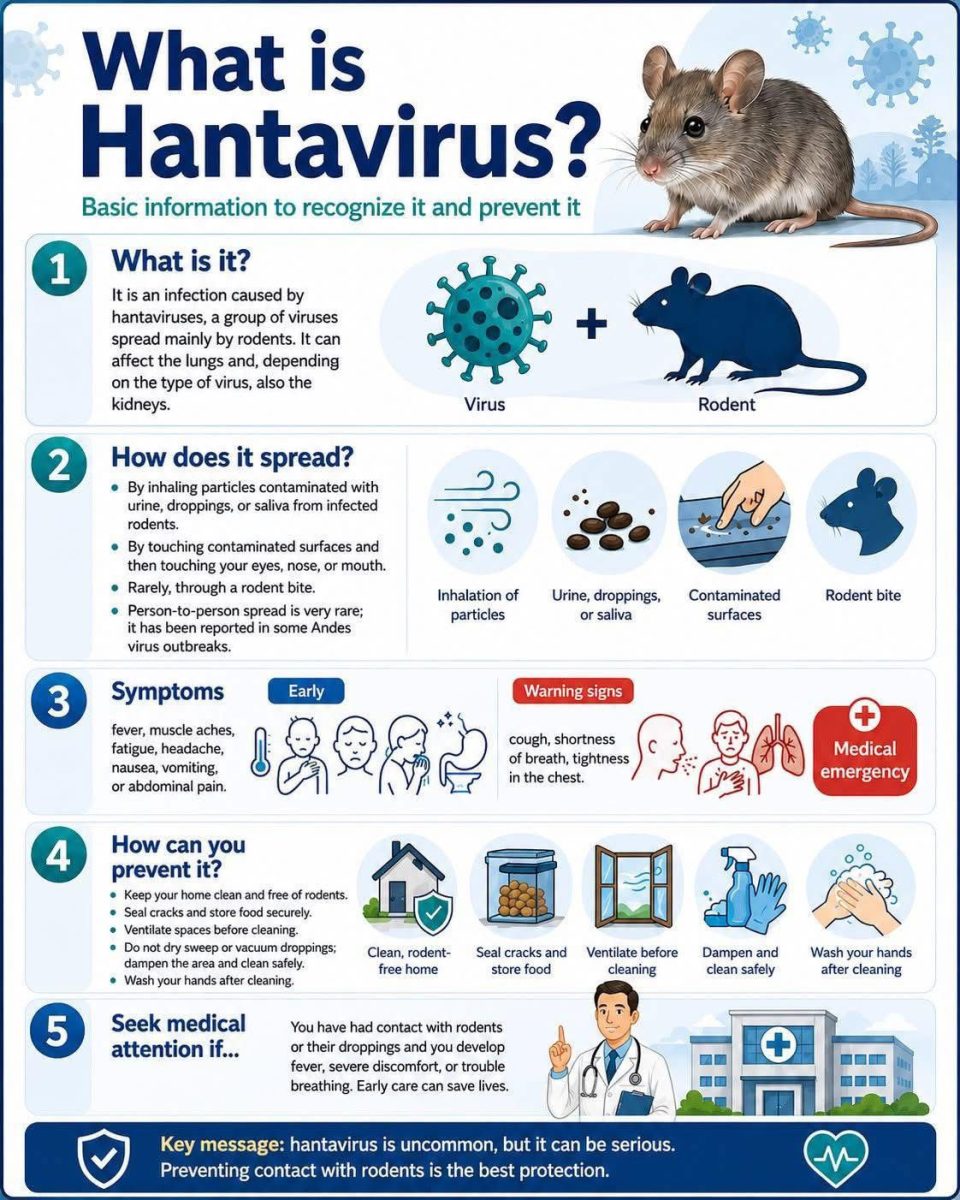
Hantavirus is a serious illness that, although not very common, can have grave consequences for health if not treated in time. To protect yourself and your family, it is fundamental to understand what it is, how it spreads, and how you can prevent an infection.
What is Hantavirus?
Hantavirus is a group of viruses that are transmitted mainly by rodents (such as mice and field mice). This virus primarily affects the respiratory system (lungs) and, in certain specific cases, can also affect the kidneys.
How does it spread?
Transmission of the virus does not require direct contact with the animal. The most common forms of contagion are:
- Inhalation: This is the primary route. When the urine, droppings, or saliva of an infected rodent dries up, the virus particles can mix with the dust in the air. When a person breathes this air in, they can become infected.
- Direct contact: Touching contaminated surfaces and then touching your eyes, nose, or mouth.
- Bites: Although infrequent, the virus can be transmitted through the bite of an infected rodent.
- Person-to-person: This is extremely rare and generally has only been documented in specific outbreaks of the “Andes” virus.
Symptoms to Watch For
The virus has two phases of symptoms. It is vital to identify them early:
Initial symptoms:
These can feel like a severe flu and include:
- Fever and headache.
- Muscle aches and fatigue.
- Nausea, vomiting, or stomach pain.
Warning signs (Emergency):
If the illness progresses, it can quickly become critical:
- Dry cough.
- Shortness of breath.
- A feeling of tightness in the chest.
Important Note: If you have had contact with rodents and present any of these symptoms, seek medical attention immediately. Early preventive care can save lives.
How to prevent Hantavirus?
Prevention is the best protection. Follow these tips to keep your home virus-free:
- Keep your home clean: Ensure your home is free of rodents.
- Seal the entrances: Cover all openings or cracks where rodents could enter, and store bulk food in airtight containers.
- Ventilation: Before cleaning areas that have been closed for a long time (such as storage rooms or basements), open windows and doors to minimize the concentration of particles in the air.
- Do not sweep dry debris: Never sweep or use a vacuum cleaner to clean rodent droppings, as this lifts the virus into the air. Wet the area first with a disinfectant before cleaning to avoid dust.
Personal hygiene: Always wash your hands very well after any cleaning activity.