

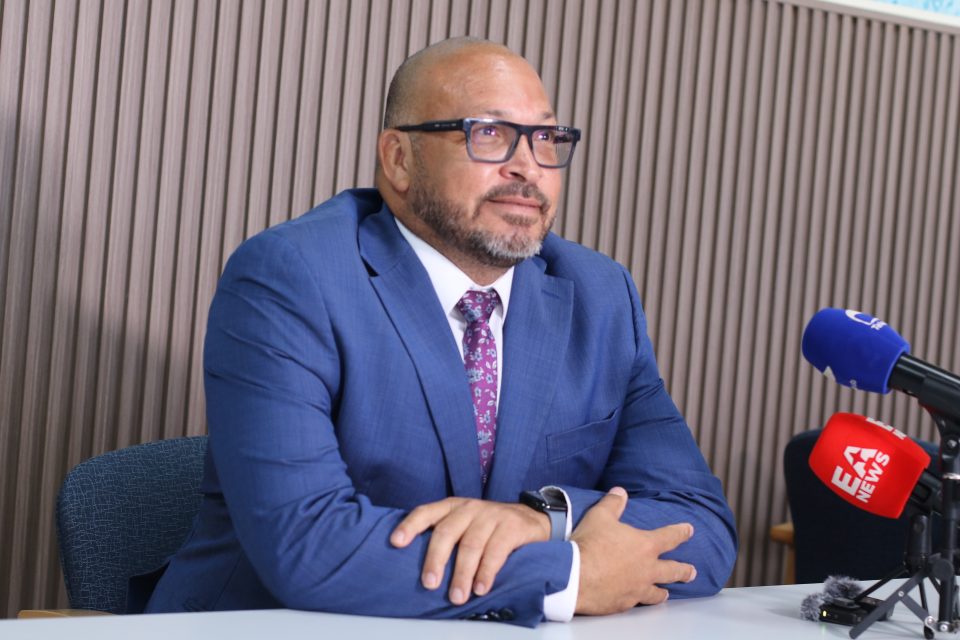
The LAR Commission issued a formal advice instructing Minister Gerlien Croes to hand over the proof of payment related to the use of a private jet. Four weeks have passed and the Minister still has not responded. This is not only a lack of transparency, but a direct denial of a legal obligation.
A promise made by the Government itself
On page 12, point 8 of their own governing agreement, the AVP-Futuro Cabinet committed to reinforcing the functioning of the LAR Commission to guarantee that advice is issued and respected within the timeframe stipulated by law. The goal was clear: avoid harm to the citizen, prevent unnecessary lawyer expenses, and avoid the Government itself wasting taxpayer money on lawyers to cover its own negligence. Today, the Government is doing exactly what it promised to avoid.
What happened?
Minister Croes initially stated that she paid for the private jet flight herself, only to later change her version and say she shared the expense. For this reason, two parliamentarians requested the proof of payment in accordance with Article 59 of the Rules of Order, but the Minister did not respond. Consequently, a request followed via the Government Information Public Access Act (Ley di Openbaarheid van Bestuur – LOB), which legally obligates the Minister to give a response, but she ignored this as well.
Following this silence, the parliamentarians went to the LAR. The Commission evaluated the case and issued its advice on July 10, 2026: the Minister has a duty to provide the information. Four weeks later, the Minister remains silent.
Two options remain
Minister Croes has two paths:
Option 1: Deliver the proof: Clarify whether she paid for the flight herself or with whom she shared the cost. According to a legal opinion from an advisor specialized in aviation, a shared cost (share cost) without the proper permit could result in serious legal consequences for the aviation company involved. And if it turns out that an agency of the Minister’s own office arranged or financed the flight, the situation becomes significantly more serious, because this would mean the Minister lied to both Parliament and the people.
Option 2: Remain without responding: If the Minister does not respond within six weeks, the parliamentarians will turn to the Court of Justice (Corte di Husticia).
The question for the people
It is regrettable that, after nearly nine months of waiting, one has to resort to legal authorities for a routine request that in the rest of the Dutch Kingdom is completely normal.
However, the most alarming point is not the silence itself, but the money. The people’s money is being spent on lawyers to defend this lack of response—resources that could have been used for sports, education, and the real needs of our community.
This Cabinet boasted about transparency and good governance in its own program, and now Minister Croes is in the position to demonstrate whether this is more than simply words on paper.