Following the Tripartite meeting in Curaçao, PPA sees progress on the dispute settlement mechanism (‘geschillenregeling’): “When Aruba has a conflict with the Kingdom, it cannot be that the largest country automatically has the final say.”
What happens when Aruba and the Kingdom of the Netherlands disagree? Who has the final say: the law or the party with more power?
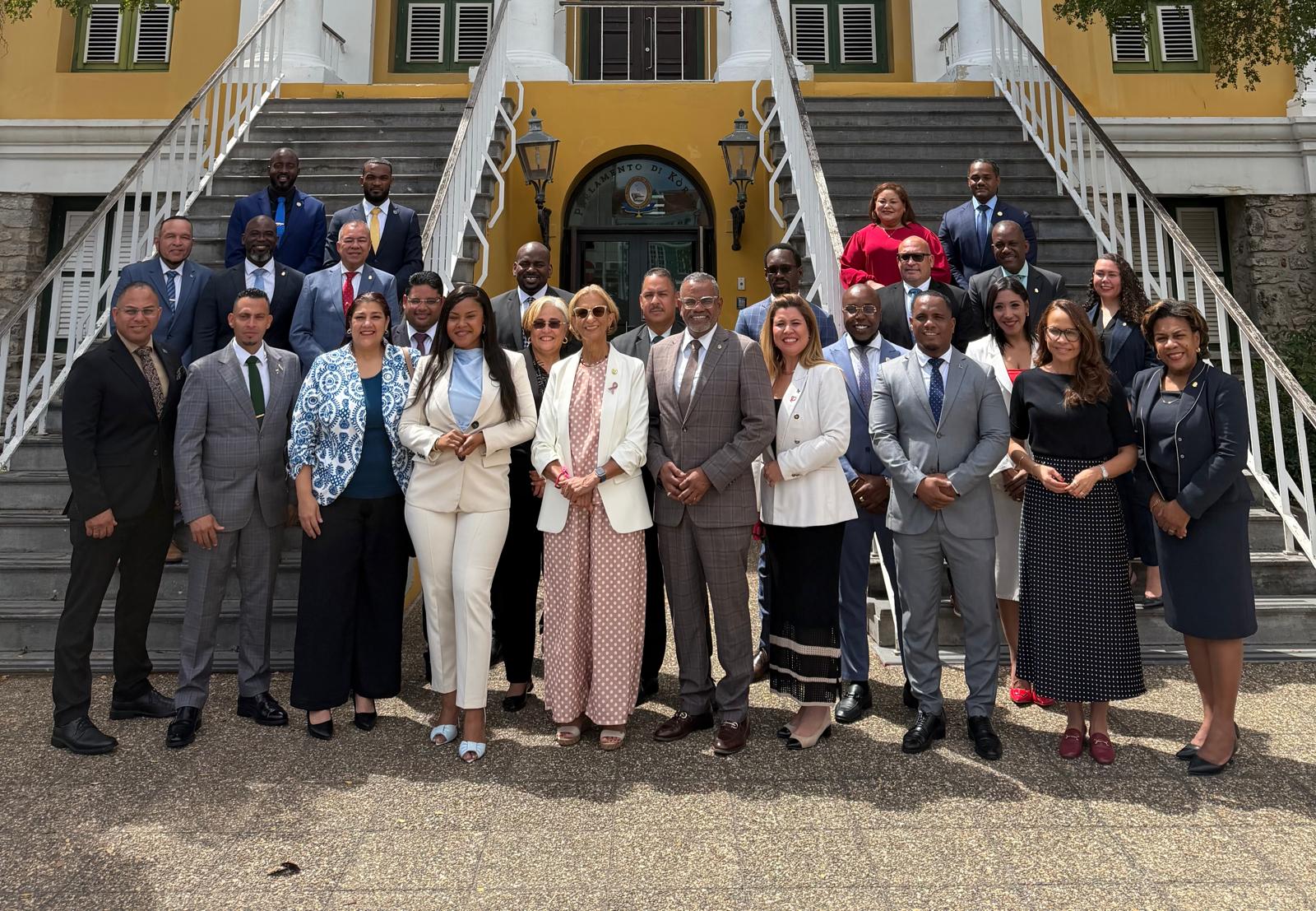
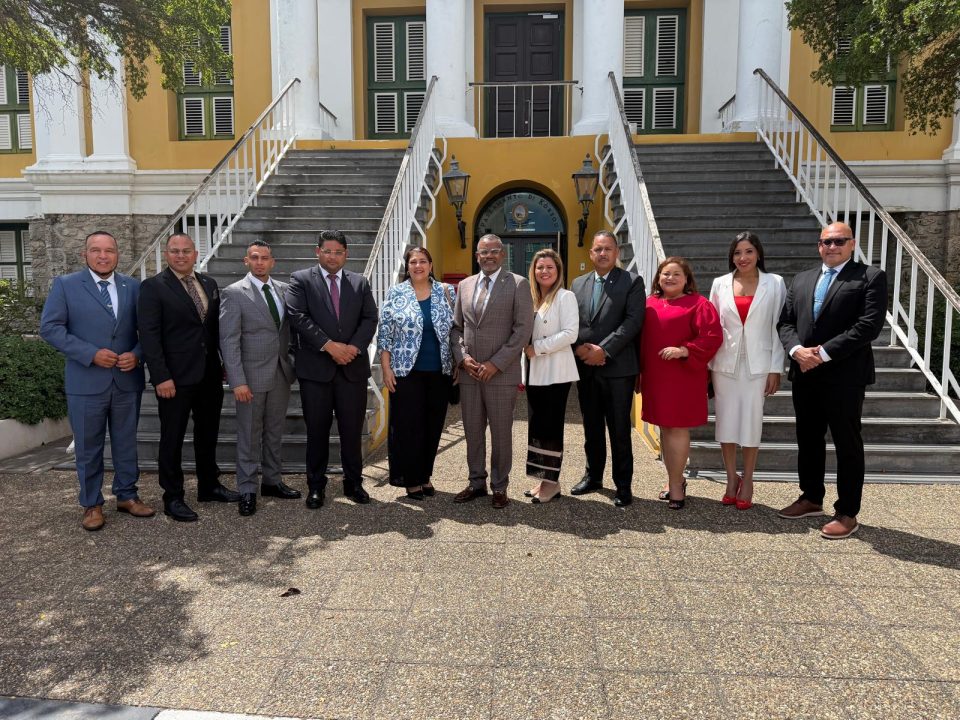
This question was one of the key topics during the recent Tripartite meeting in Curaçao, where the Parliaments of Aruba, Curaçao, and Sint Maarten gathered to address common issues and explore ways to support one another.
For Member of Parliament Eduard Pieters (PPA), one of the most significant developments concerns a file that has been pending for over 15 years: the geschillenregeling (dispute settlement mechanism)—a framework to resolve disputes within the Kingdom when political dialogue fails.
Aruba must also be able to defend its rights
A dispute within the Kingdom can impact the interpretation of the Charter (Statuut), autonomy, or the boundaries of authority between the Kingdom and an individual country. Since 2010, Article 12a of the Charter provides for a settlement mechanism established by Kingdom Law (Rijkswet) to handle certain disputes. However, over the years, an acceptable model for all countries in the Kingdom could not be reached. For Pieters, this touches the very core of equality within the Kingdom.
When Aruba, or any other country in the Kingdom, has a conflict with the Kingdom Council of Ministers, the outcome cannot simply depend on the fact that the Netherlands is larger due to having 18 ministers in the Council. The question must be: who is right according to the Charter?
Three countries, a stronger position
A previous proposal failed to receive a favorable advisory opinion from, among others, the Council of State (Raad van State). Subsequently, the three Caribbean countries continued working together on an alternative. For Pieters, these are precisely the political lessons to be learned: Aruba, Curaçao, and Sint Maarten are stronger when they do not face each constitutional challenge individually, but rather share knowledge and defend their common interests together.
Contributions came not only from politicians; legal experts from all three countries participated in the technical work, incorporating the observations of the Council of State into the process. According to Pieters, a final version was presented during the Tripartite in Curaçao, which must now follow its democratic course.
A ruling (oordeel) must carry weight
The current proposal envisions an important role for the Kingdom Council of State (Raad van State van het Koninkrijk) when a dispute cannot be resolved politically. However, for Pieters, a dispute settlement mechanism only makes sense if the ruling actually carries consequences.
A mechanism cannot be created to determine who is right, only for the more powerful party to simply ignore the ruling. This is precisely why the debate extends far beyond a legal procedure: it is about the balance of power within the Kingdom.
Over 15 years: now Parliament must move
Pieters emphasizes that the geschillenregeling is not yet an active law. The democratic and legislative process must continue, and the Parliaments must handle the outcome achieved.
Nevertheless, after more than 15 years, according to Pieters, there is finally a prospect for progress. For the PPA, the Tripartite meeting in Curaçao demonstrated something more: cooperation among the three Caribbean countries can produce concrete results.
The geschillenregeling is not an instrument Aruba intends to use constantly; ideally, the countries resolve differences through dialogue, as autonomy is not tested when everyone agrees. The true test comes when Aruba says “no” and the Kingdom Council of Ministers says “yes.” On that day, Aruba must not rely on political favors or on who holds more power.
“In a Kingdom of four countries, law must weigh more than power. That is the protection Aruba, Curaçao, and Sint Maarten must have,” Eduard Pieters concluded.