

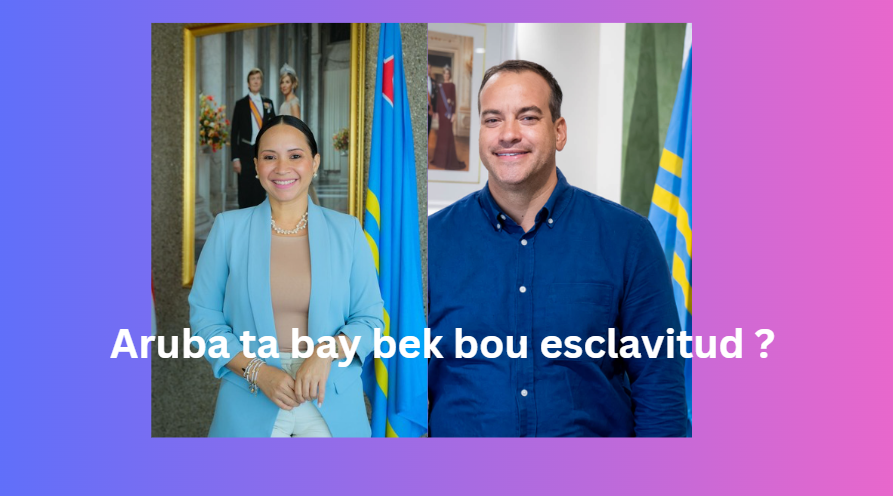
Amid a tense political climate, Minister Geoffrey Wever and Minister Gerlien Croes are facing strong criticism and serious accusations of betraying the interests of the country of Aruba. Various opinions within the political community are questioning whether recent decisions were truly made for the well-being of Aruba or whether they were motivated by personal interests.
According to criticism circulating within political and social circles, it is no secret that the two ministers have been accused of not placing Aruba’s interests first or consistently working for the benefit of the people. The central question that arises is whether they entered politics to serve the community or for personal gain.
Silence on HOFA and ROFA
One of the issues causing the greatest concern is the situation surrounding HOFA and ROFA. According to information that has become public, CAFT indicated that ROFA is moving forward quietly both in the Netherlands and in Aruba. However, critics are demanding clarity about what is really happening behind the political decisions being made to implement this system.
Minister Geoffrey Wever is being identified as one of the architects of the handling of HOFA and ROFA. Critics claim that he acted against the Statute of Aruba and against Aruba’s traditional political approach.
The main question being raised is whether the minister consulted the Parliament of Aruba and the people of Aruba — whom critics describe as his “employers” — before taking these important decisions.
Passage of the Rijkswet HOFA
It is no secret that Minister Geoffrey Wever moved forward with the Kingdom Act (Rijkswet) HOFA without consultation with the Parliament of Aruba and without achieving national consensus before going to the Netherlands.
It is a fact that Minister Geoffrey Wever claims he sought consensus from the Parliament of Aruba and communicated this to the Netherlands. However, critics argue that this does not correspond with the truth, and therefore claim that the minister misled the Netherlands.
Some political observers describe this step as an act of betrayal against the people of Aruba. The question now being raised is why the Netherlands would accept such a step if there was no consensus in Aruba, and whether financial interests are behind these decisions.
Is the Netherlands acting correctly? Is the Netherlands operating according to the rules of the Statute?
Aruba is moving toward a financial surplus, yet it is being asked to accept arrangements that increase external supervision. Why such surrender? What rules or conditions are hidden behind the supposed financial support for Aruba?
Role of Minister Gerlien Croes
At the same time, Minister Gerlien Croes is also facing strong criticism. Political observers indicate that since her entry into politics she has generated conflicts with political colleagues and with Aruba’s institutional system.
According to political observations, Croes has caused damage to Aruba’s political relations within the Kingdom of the Netherlands and to the respect for the Statute, laws, and regulations that govern the conduct of political leaders.
One of the main accusations is that for an extended period no Minister Plenipotentiary was appointed to represent Aruba in the Netherlands. Observers argue that this created a gap in diplomatic contact and in the decision-making processes affecting Aruba.
Debate on the Cost of a Minister Plenipotentiary
Previously, according to public information, Minister Croes expressed concerns about the cost of maintaining a permanent Minister Plenipotentiary in the Netherlands. However, critics point out that the trips she herself made to the Netherlands to deal with similar matters cost more than maintaining a permanent representative there.
This debate forms part of a broader discussion about how Aruba should manage its international representation and its relationship with the Netherlands.
Internal Crisis within the Government
Information received by the editorial team indicates that the Government of Aruba has faced serious internal pressure regarding the position of the current Minister Plenipotentiary.
According to the information, tensions arose between the political parties FUTURO and AVP yesterday regarding the appointment of the Minister Plenipotentiary.
According to political sources, AVP applied strong pressure, indicating that if the appointment was not accepted, the government could face the risk of collapsing.
Ultimately, according to the information, Minister Croes accepted the existing position after the political pressure.
Concerns about the Future of Autonomy
Amid all these developments, major concerns are arising about the future of Aruba’s autonomy. Political observers indicate that decisions related to financial control and international supervision could affect the degree of independence in local decision-making.
One of the main questions dominating the public debate is whether Aruba will maintain full control over its own economic and political management, or whether important decisions will eventually be determined from The Hague.
The Public Is Closely Following the Situation
As political tensions increase, citizens of Aruba are watching the situation closely. The community is calling for greater transparency, communication with Parliament, and respect for democratic institutions.
The debate surrounding the role of political leaders, financial governance, and the relationship with the Netherlands continues to dominate public discussions as Aruba faces important decisions about its political and economic future.
However, attention is also focused on the Minister Plenipotentiary — whether this position will truly stand for Aruba and work together with the Netherlands as has been done for many years, or whether it will follow the direction of Ministers Geoffrey Wever and Gerlien Croes to hand Aruba over to the Netherlands for financial arrangements that critics say Aruba does not need.