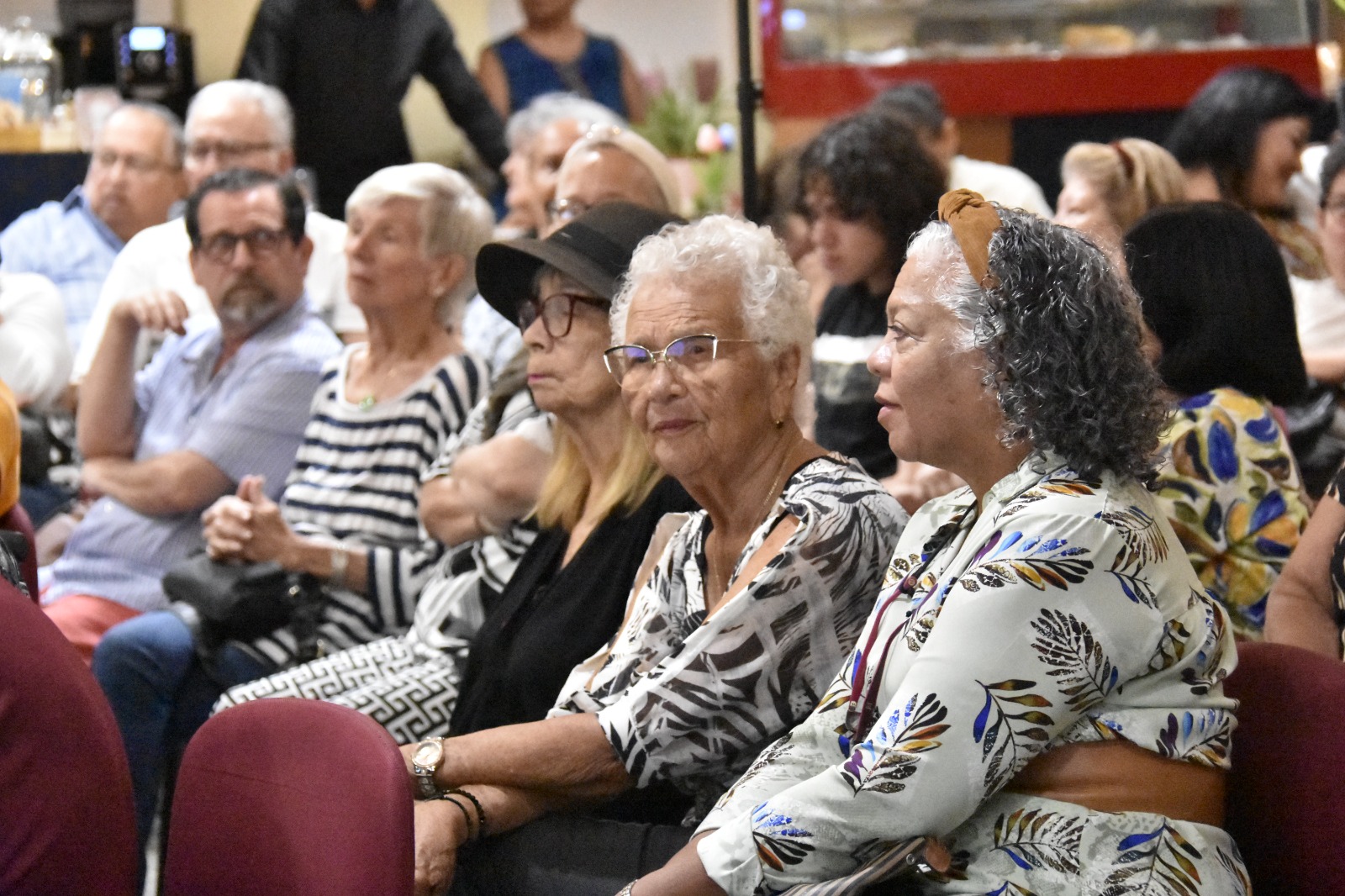
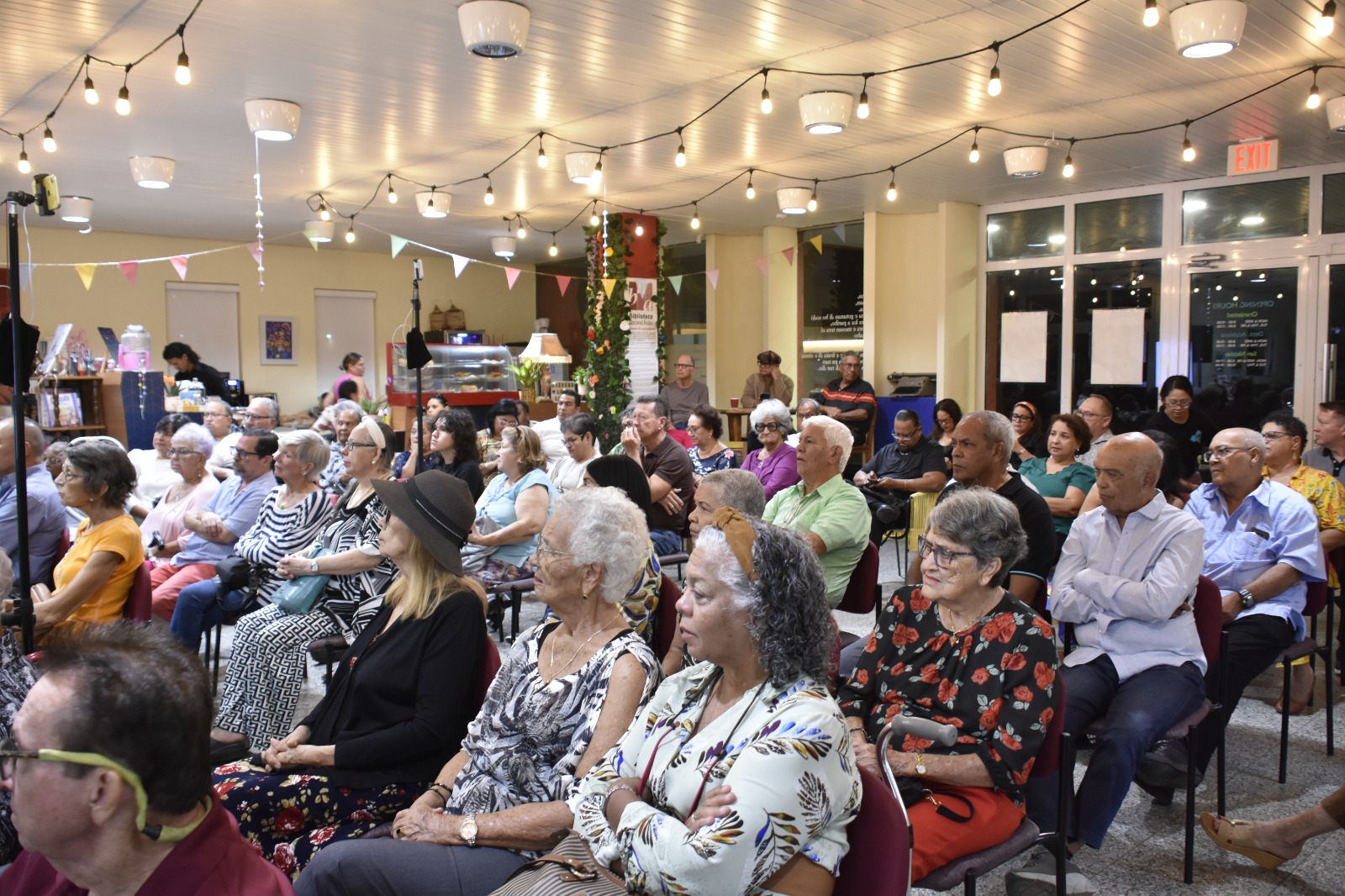
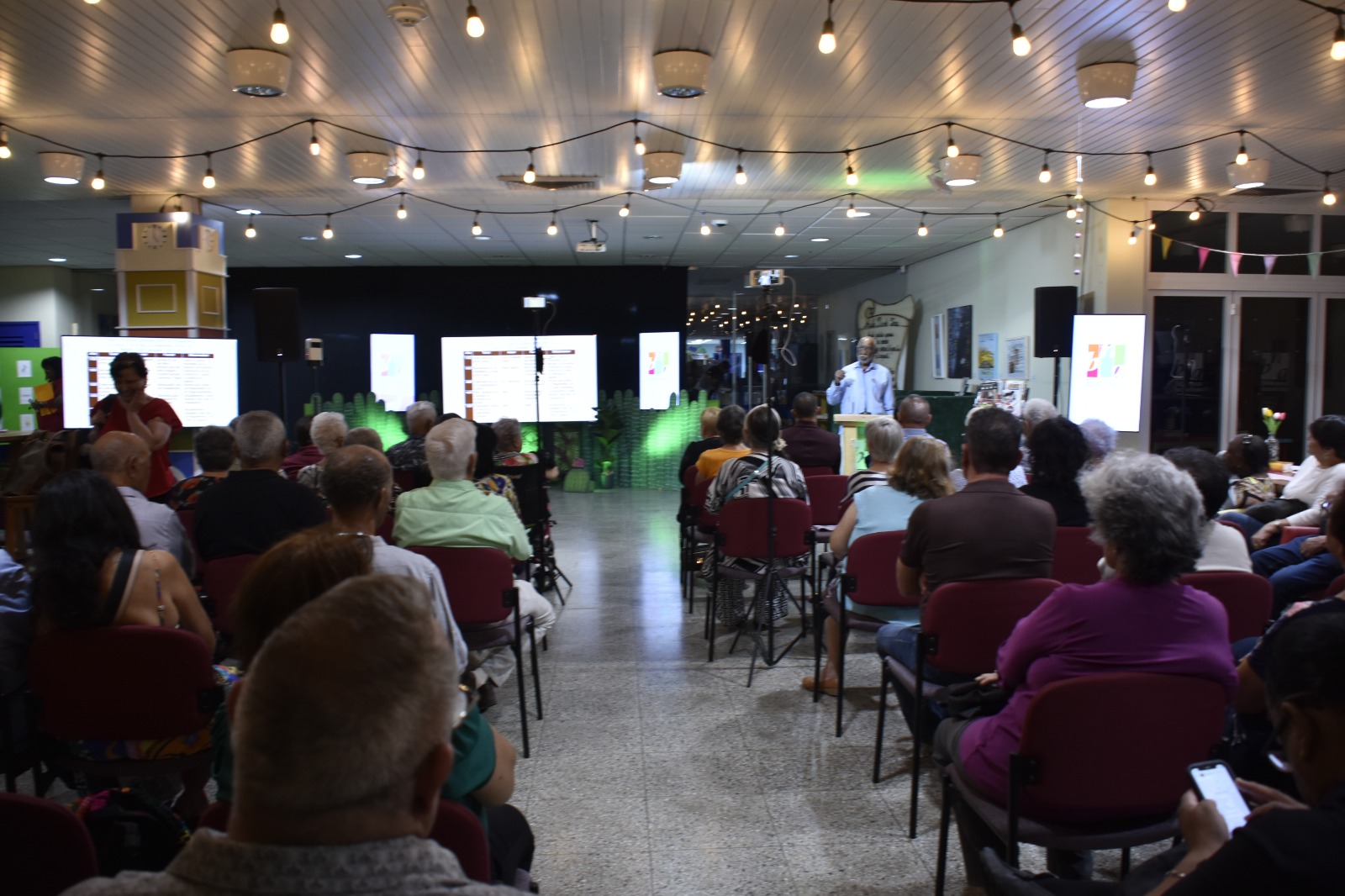
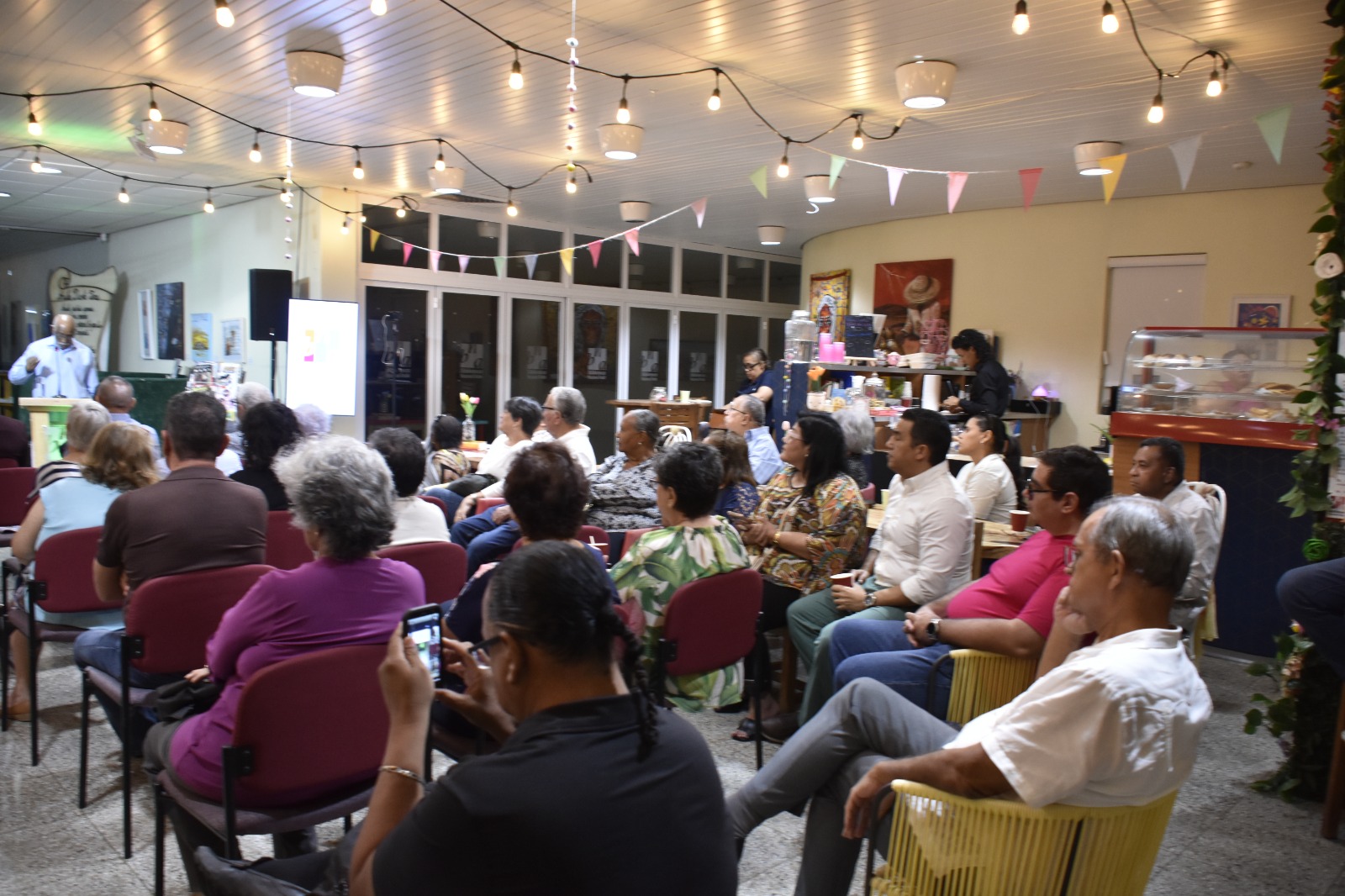
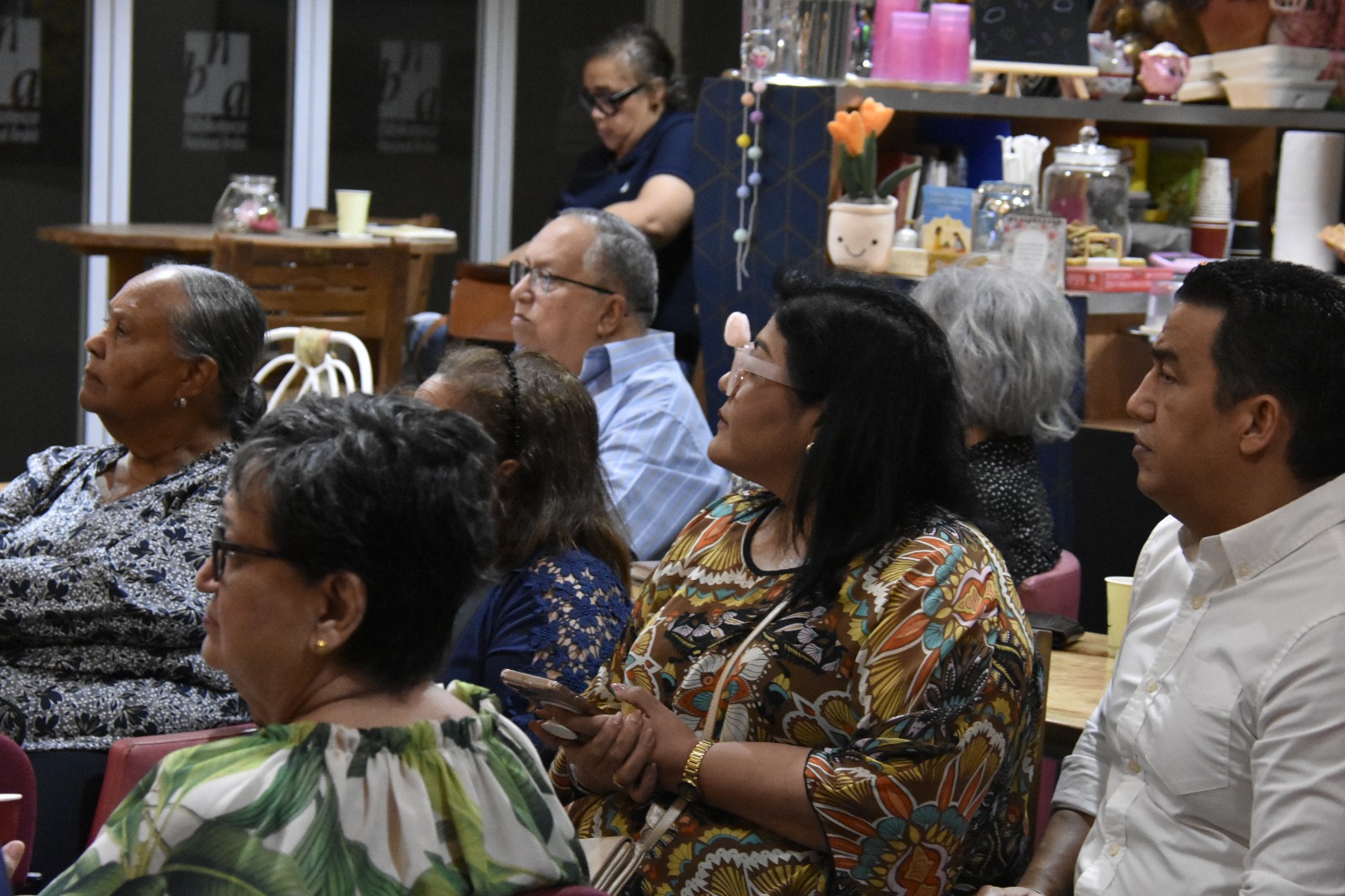
At the National Library, an evening was held dedicated entirely to the richness and age of our Papiamento language. The event attracted many attendees and brought renewed focus to Aruba’s linguistic heritage. During the evening, author and researcher Ramon Todd Dandaré presented documents more than 300 years old, clearly demonstrating the deep historical roots of Papiamento.
Joyce Perreira, president of Fundacion Lanta Papiamento, expressed great satisfaction with the community’s attendance. According to Perreira, many people are still unaware of the long history of Papiamento, particularly because the language was not part of the school curriculum for many years and was viewed as unimportant.
Perreira explained that in the past, schools taught little to nothing about Aruba itself, its culture, its environment, and its own history. Papiamento was even prohibited in schools. Nevertheless, several linguistic studies took place, although it took many years before the results became available to the public. These investigations provide a clear view of the development and evolution of Papiamento.
A common myth — still repeated today — is that Papiamento was not a written language. The documents presented prove this is not true. While Papiamento has been spoken for more than 300 years on Aruba, Bonaire and Curaçao, there is evidence of over 250 years of written Papiamento, demonstrating that the language was alive and developing just like any other official language.
The ability to study old texts allows researchers to compare the ways of speaking and writing in earlier times with modern Papiamento. This makes it possible to identify the linguistic changes and influences that shaped our language. Dandaré’s presentation showed how deeply one can delve into the structures and origins of Papiamento.
Perreira believes that presenting these historical documents brings new cultural awareness and motivates more Arubans to value and appreciate their mother tongue. She rejects the old idea that Papiamento lacked value. When the Dutch arrived in Aruba, they referred to the language as a “turkey language,” a sound without worth, and considered Papiamento unsuitable for education. This discriminatory mindset dominated schools for many years, although modern research has proven it unfounded.
According to Perreira, one’s mother tongue forms the basis of intellectual and social development. Research shows that children learn and understand far better in their own language. This allows them to think critically, read with comprehension, write clearly, and participate actively in discussions.
Perreira added that informational evenings like this are essential to increase knowledge and appreciation for Papiamento. Sharing research findings with the community strengthens pride and love for our native language.