

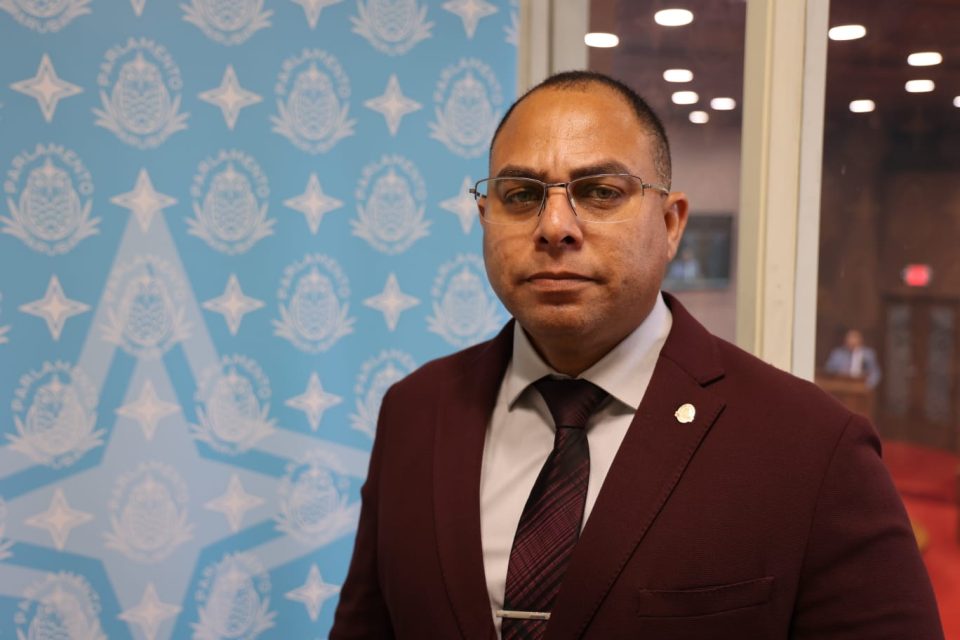
In Aruba, there are police officers, doctors, psychologists, health professionals, foundations, and volunteers who work daily to save lives. But according to parliamentarian Eduard Pieters, they cannot continue doing the work alone, without the essential participation and involvement of the government.
The leader of the PPA faction highlighted the people on the front lines of the fight against addiction, while the Government itself remains without direction or a national policy.
The burden falls on professionals Pieters expressed his appreciation for all professionals working with individuals dependent on alcohol, drugs, and other types of addiction. According to Pieters, they do extraordinary work, often with limited resources and support. But precisely because they make so many sacrifices, the government cannot continue to let them struggle alone. “We have people who give their soul to help others. But the question is: where is the government?”
Addiction affects the entire society According to Pieters, addiction is never a problem that affects only an individual. It affects families, children, neighborhoods, security, and public health. Therefore, according to the PPA, the solution cannot come from just one ministry. “Addiction must be treated as a national challenge.”
Prevention is the cheapest investment Pieters argued that Aruba continues to spend resources treating symptoms or consequences, while prevention remains underestimated. Every person who falls into dependency represents a human, social, and financial cost far higher than any investment in prevention. “The smartest investment a country can make is to prevent a citizen from ever reaching that state of addiction.”
The government must stop the rhetoric and start taking action For the PPA faction, it is no longer enough to acknowledge that addiction is a problem. The government must present a national plan that integrates public health, mental health, education, social welfare, justice, and community. Without coordination, Aruba will continue to move from crisis to crisis. Without leadership, professionals will continue to bear a burden that is not solely theirs.
“We cannot continue asking for more sacrifices from the police, doctors, foundations, and volunteers while politics lags behind.” For Eduard Pieters, the main question is not whether Aruba has people willing to help. The question is whether the government will finally assume the leadership that this urgent situation demands.