

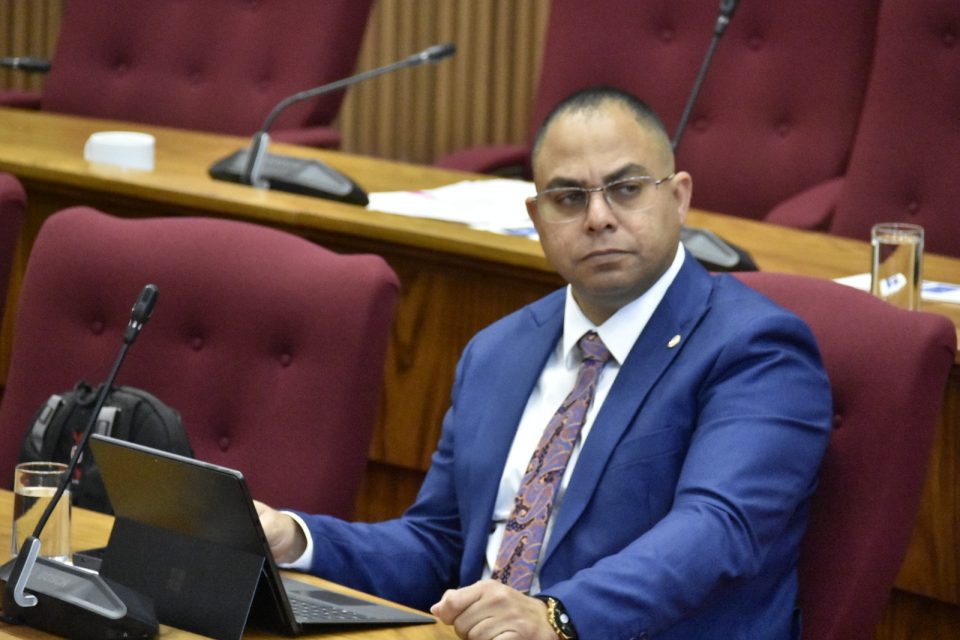
According to parliamentarian Eduard Pieters, in Aruba we like to say that “children are the future of our country.” But if we pause and look clearly, we must ask a deeper question: what kind of future are we actually giving them? Children’s rights are not a list of beautiful ideas on paper. They must be a moral, legal and human obligation. They form a social contract between the government, schools, the community and — most importantly — parents. The problem is that in practice, many of these fundamental rights are not guaranteed for all children in Aruba, and that should concern us all.
Children’s rights: what do they really mean for Aruba?
The rights of the child — equality, protection, education, expression and well-being — are the foundation of building a strong generation. But in Aruba, implementation often stalls halfway.
– Education that doesn’t match children’s needs: Children receive lessons in a language that is not their mother tongue, which leads to demotivation, inequality and insecurity. Theory shows: if you don’t understand, you don’t get motivated. Our system fails at the most basic motivational level.
– Protection is inconsistent: Cases of neglect, abuse and domestic violence exist, but the signalling and intervention system is fragmented. Some children go to school without food, without hygiene, without uniforms, without emotional stability or parental involvement.
– Participation? On paper yes, in practice not always. The Youth Parliament is a positive example, but beyond that, we do not listen enough to the voices of young people in decisions that affect their lives.
Are Aruba, the government and the system meeting their responsibilities?
Children’s rights are a state obligation — international law that Aruba has committed to. But the reality is that our mechanisms fall short; we lack a robust national protection framework. This raises the question: how can we protect children if we do not have a unified system in place?
Sectors are not aligned: education, health care, police, social workers — each institution works on its own island. This lack of coordination places children at risk, and the absence of committed leadership to structurally promote and defend children’s rights is a major concern.
And what about our role as adults?
Children’s rights are not only a government responsibility; they are a responsibility shared by the entire community. This is why Eduard believes we must reflect on the real situation:
– Parents are trying, but face many challenges: Financial stress, working 2–3 shifts, lack of support and social pressure lead to situations where children lack supervision, affection or guidance.
– Discipline is not protection: Some adults still confuse physical punishment with education. This is not a child’s right; it is a violation of dignity.
– A culture of silence: We raise children not to speak up, not to contradict adults, not to “bring shame to the family.” But you cannot protect a child with silence — only with truth.
Eduard Pieters states the reflection clearly:
“If Aruba believes in the future, we must believe in our children. And we cannot believe in them if we do not protect their rights. The question is not whether children’s rights matter; the question is whether we as a nation have the courage to change what is not working!”
In a country that often talks about progress, the rights of all children are still not guaranteed. That should bother us. It should alarm us. And most importantly: it should move us to take action.
Press release: PPA