

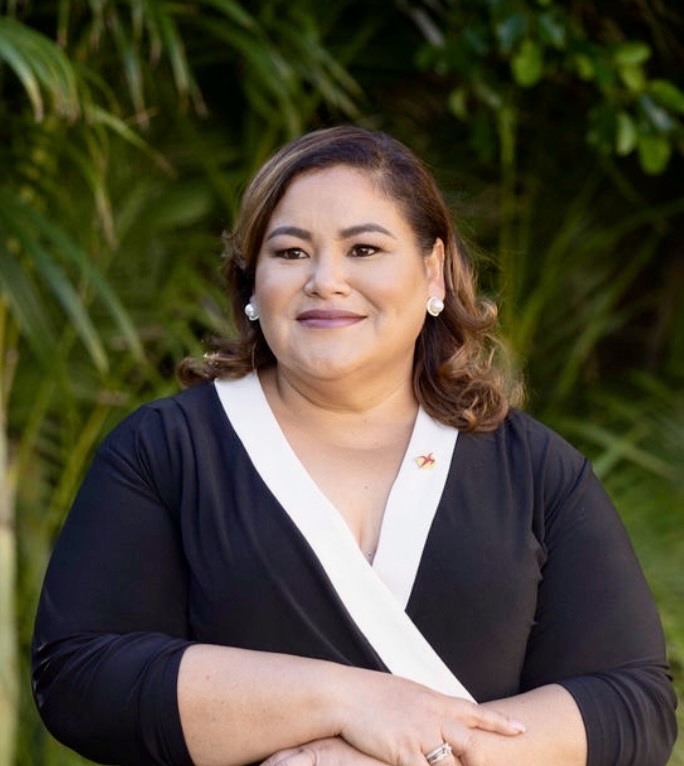
Parliamentarian for the MEP faction, drs. Shailiny Tromp-Lee, has submitted a series of official questions to Prime Minister Mike Eman regarding the weekly activities known as “Accion den Bario” (Neighborhood Action).
The questions focus on the legal and administrative basis of the activities, the criteria for selecting neighborhoods and homes, the use of government staff and resources, the costs involved, and the manner in which equal treatment for citizens is guaranteed. Tromp-Lee considers it important that a public initiative of this nature be executed in a transparent, verifiable manner and based on objective criteria, precisely because public resources and personnel of the Country of Aruba are involved.
Objective criteria and equal opportunities for citizens
In recent months, it has been observed that every Thursday the Prime Minister, along with personnel and vehicles from various government departments such as DOW, Serlimar, and Bureau City Inspector, visits various neighborhoods and private homes to carry out cleaning, trash collection, and painting work.
A clean and well-maintained neighborhood is clearly in the interest of the community. However, the central question is: on what basis is it determined which neighborhood and which house are included in these activities?
“When public resources are mobilized to provide services to private homes or neighborhoods, the public has a right to know the criteria, who makes the decision, and how a citizen with the same need can apply for the service,” Tromp-Lee stated. According to the parliamentarian, the absence of a public and clearly documented procedure could create a risk of unequal treatment or favoritism if there are no objective and verifiable criteria to determine who benefits from the activities.
Use of State resources
Another key point in the questions is the mobilization of personnel, materials, vehicles, and other government resources for the weekly activities. Tromp-Lee requests clarity regarding the impact of these activities on the regular duties of the involved departments.
“The public must know how many public staff hours are dedicated to these activities, how much it costs, which vehicles and materials are used, and from which budget these expenses are covered. Financial and administrative transparency is not optional when using the people’s resources,” expressed the parliamentarian.
Separation between government activity and party-political activity
Tromp-Lee also questions the participation of parliamentarians from the AVP faction in the activities. This participation, combined with the presence of the Prime Minister and government resources, makes it necessary to clarify how government activities are separated from party-political activities, to prevent public resources or personnel of the Country of Aruba from being used for political promotion.
“I am not questioning whether a government can have initiatives to improve neighborhoods. I am questioning the lack of clarity regarding the criteria, the procedure, the cost, and the separation of roles. If it is a government program, it must be possible to demonstrate that it is a government program with clear rules, objective criteria, and equal opportunity,” emphasized Tromp-Lee.
Questions asking for transparency and accountability
In her official letter, Tromp-Lee requested clarity regarding, among other things:
Criteria and selection: What are the objective criteria to select neighborhoods and houses, and where are these decisions documented?
Equal access: What is the possibility for a citizen who does not have direct access to the Prime Minister or a government member to request the same type of service?
Legal basis: What is the legal and administrative basis for the activities?
Personnel use: How many public employees are mobilized, and how many working hours are dedicated to these activities?
Total cost: How much have these activities cost the Country of Aruba to date, including regular and overtime hours, rentals, fuel, paint, materials, and other expenses?
Budget: Under which budget line item are these expenses registered?
Procurement and tendering: For the contracts, services, and purchases involved, which public procurement and tendering rules apply and are being applied?
Separation of roles: What measures have been taken to guarantee that government resources, personnel, and infrastructure are not used for party-political benefit?
Documentation: Where are the decisions, expenses, work orders, and authorizations related to the activities recorded and accessible for review?
“Transparency is more than a video or a photo”
“Transparency is not just showing in a video or photo what is being done. Transparency is showing for whom, on what basis, with what criteria, with what authorization, and with how many of the people’s resources it is being done.
As an opposition parliamentarian, I am asking these questions precisely to get clarity. The public has the right to know the answers and to know that public resources are managed with responsibility, transparency, and equal treatment,” concluded Shailiny Tromp-Lee.