

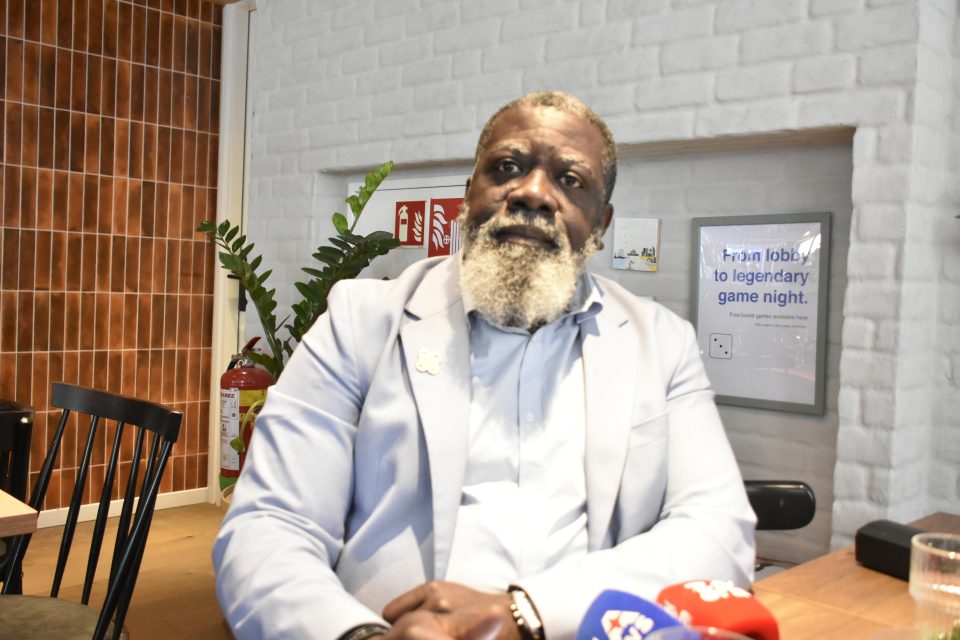
Former Member of Parliament Raoul White has launched a scathing critique regarding the state of infrastructure and the lack of structural investment in Dutch Caribbean schools. According to White, high-quality education remains unattainable as long as basic conditions—such as school buildings and digital environments—are not up to standard for the 2025-2026 academic year.
White, who recently visited several schools across Aruba and other islands, shared his concerns over the daily realities faced by both teachers and students. His focus extends beyond the curriculum, highlighting the importance of the overall environment in which learning and development occur.
Dilapidated Infrastructure One of the most pressing issues for White is the physical state of school facilities. “When I enter a classroom, it must be a pleasant environment for the child to learn and for the teacher to instruct,” White emphasized. He pointed out that many buildings are in poor condition, citing specific examples of gymnasiums that have remained unfinished or incomplete for years.
The former MP argued that a child’s physical development is just as vital as the content of their textbooks, and the lack of proper sports facilities hinders this integral formation.
Digitalization and Connectivity In light of the modern era, White underlined that investment in education must go hand-in-hand with technology. For the 2025-2026 school year, he considers the digital environment and connectivity within schools to be a top priority. Without these digital tools, the gap between the islands and the European Netherlands will only continue to widen.
A Call for a Master Plan White has formally called upon the State Secretary and the Minister of Education to abandon the “piecemeal” (mondjesmaat) approach to problem-solving. Instead, he demands a structural Master Plan to eliminate the educational backlog in the Caribbean.
“Small investments here and there will not solve these structural problems,” White declared. The goal of this Master Plan must be to guarantee that the level of education in the Caribbean part of the Kingdom is equal to that of the European part, starting with well-equipped, safe, and technologically advanced schools.