

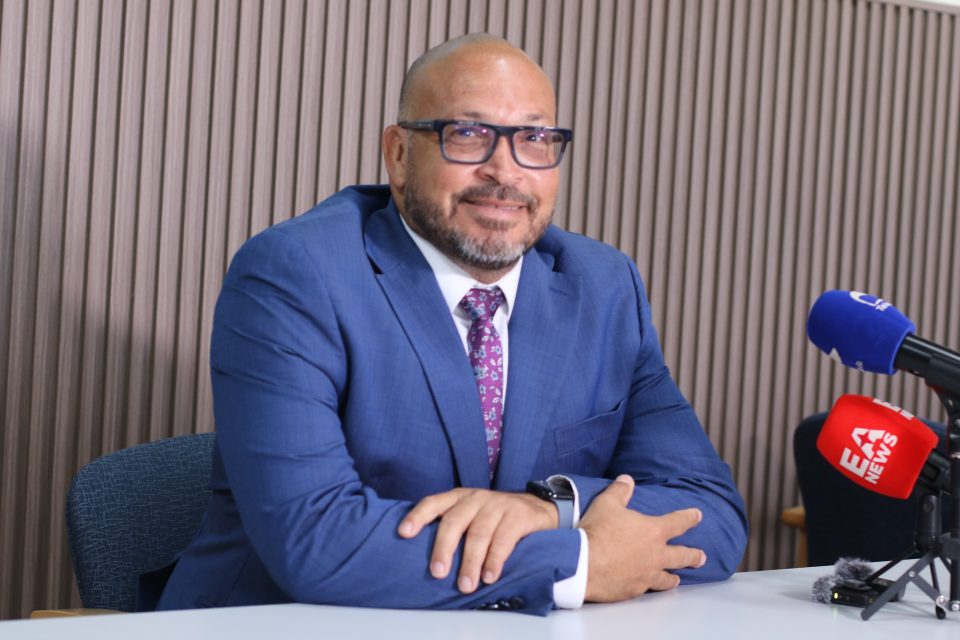
Four months have passed and Prime Minister Mike Eman has still not provided any response regarding the proposed changes to incorporate the Ombudsman Institute into our Constitution. Since February 26, 2026, his official opinion (zienswijze) on the constitutional changes and the amendment to the National Ordinance on the Ombudsman has been requested. The Ombudsman itself already submitted its response back on April 10. Eman has not. This delay is causing an unnecessary slowdown in a process that was already well advanced.
Incorporation of the Ombudsman into the Constitution of Aruba
In accordance with the advice of the Advisory Council (Raad van Advies), anchoring the Ombudsman Institute in our Constitution as a High Council of State is a positive and important development. This will provide the institution with the constitutional clarity and structural independence it needs to fulfill its two main tasks: (1) to protect the citizen against maladministration and (2) to actively contribute to the protection of their fundamental rights.
The Ombudsman supports the idea of recognizing the institute as an independent body on the same level as the Advisory Council and the General Audit Chamber (Algemene Rekenkamer). In the Netherlands, Curaçao, and Sint Maarten, the institute already has its constitutional foundation. For Aruba, the Curaçao model in particular can serve as a point of reference, and our current laws have already taken this into account.
The proposal aligns with international standards, including the Venice Principles, which emphasize the importance of true independence, transparency in the appointment procedure, a clear legal basis, and the necessary resources to operate. The Ombudsman believes that the constitutional definition should remain general, focusing on promoting good governance and investigating the conduct of government bodies, while leaving the details regarding powers and organization to a national ordinance (landsverordening).
Regarding the procedure for appointing the Ombudsman, they view the requirement of a two-thirds majority in Parliament (Staten) as an instrument that can strengthen cooperation, independence, and trust in the function. However, they warn that such a high threshold could stall the process if an agreement is not reached quickly, running the risk of the vacancy remaining open for too long.
Delay in the process
MP Vrolijk emphasized that the Prime Minister’s lack of response is causing an unnecessary delay and that this raises serious questions about the commitment of the AVP-Futuro Government toward strengthening our democratic institutions. For this reason, a second reminder (rappel) will be sent to the Prime Minister this week in order to obtain his opinion.
Final phase of the process
Once Prime Minister Eman’s opinion is received, MP Vrolijk will immediately present it to Parliament for the members to study. The next step is to go to the Central Committee to evaluate if there is the minimum support of 14 members necessary to proceed.
If the threshold of 14 votes is unattainable, the process will stop there. But if the support is there, the law will be sent once more to the Advisory Council along with the structural changes to the national ordinance. Vrolijk concluded that he hopes to receive the Prime Minister’s opinion soon so that the process can continue and Parliament can make its decision.