

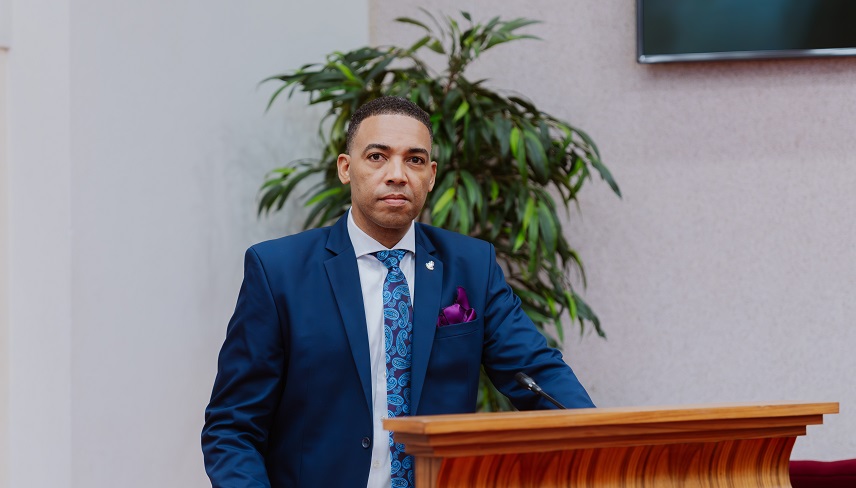
While the discussion continues regarding route closures and nature protection, Member of Parliament Hendrik Tevreden points out that the current standstill directly affects around 800 workers and their families who depend on the tourist excursion sector.
The need for regulation, dialogue, and law enforcement During the meeting with tour operators held on August 27, it became clear that the current challenge goes far beyond a disagreement over a specific route. This situation reflects a deeper problem: a sector that has operated for a long time without proper regulation, identification, or control, and without a governmental intermediary assuming responsibility for facilitating structured dialogue among all parties.
Tour operators working within the legal framework emphasize that they are not against the preservation of our nature. On the contrary, they are aware that Aruba’s natural resources must be protected. However, they emphasize that an effective protection policy must go hand in hand with regulation, dialogue, and law enforcement.
Lack of T-permit (T-vergunning) control and the reality of legal operators The current T-permit system is deficient: without mandatory visible identification on the vehicles, authorities cannot distinguish between a legal and an illegal operator, causing companies with their paperwork in order to pay the consequences for others.
Moreover, public debate is unfair when all tour operators are presented as if they practice “off-road” driving without any form of control. Legal companies emphasize that their activities consist of guided sightseeing along existing and structured routes, using GPS to guarantee order.
Economic and environmental balance Nature protection must not become synonymous with the elimination of economic activity. The challenge is precisely to determine where driving is allowed, where it is not, and under what conditions. This is where the government’s role is crucial.
The sector questions the abrupt closure of routes without prior consultation with an industry that has organized its operations, staff, and reservations around this product. They point out that one of the questioned routes is a public dirt road (openbare zandweg) regularly maintained by the Department of Public Works (DOW). Furthermore, the situation becomes more delicate due to the legal case initiated by Aruba Birdlife Conservation against Land Aruba and the tour operators.
The government cannot hide behind a legal process Tevreden notes that the existence of an ongoing legal process does not remove the government’s responsibility to govern. According to information shared by the sector itself, they have been waiting for more than three months for a concrete reaction. Although Minister Wendrick Cicilia previously committed to coordinating a working meeting with Minister Dowers, Minister Herdé, and Prime Minister Eman, this meeting never materialized. The only response the sector received from Minister Dowers and the Department of Transportation (DTP) is that the matter is in the hands of a judge.
“This legal process cannot become an excuse for inaction or political paralysis,” Tevreden emphasized. While the government waits, business owners must continue to pay salaries, workers must pay for their homes, and families must put food on the table.
Economic impact and the need for a solution This uncertainty seriously affects Aruba’s economic chain. UTV, ATV, and Jeep tours are part of the excursion offerings purchased by thousands of visitors, and the lack of a structured alternative could bring serious consequences for tour operators, taxi drivers, guides, mechanics, suppliers, and the relationship with the cruise market.
The solution is not to leave nature unprotected, nor to let a sector operate without rules. The solution is regulation.
The MEP faction makes an urgent call to the Government to assume its role and bring DNM, DTP, DOW, relevant authorities, environmental organizations, and legal tour operators to the same table to:
*Identify all legally authorized vehicles and combat illegal operators.
*Establish official routes and determine absolute protection zones.
*Implement clear rules, effective sanctions, and a strict control system.
Aruba can protect its nature and at the same time protect jobs. But to achieve this, the government must break the impasse and start governing. Because while the silence continues, it is not only companies in uncertainty that suffer, but also those who depend on them.
There are around 800 workers who ask themselves every morning: Will I still have a job tomorrow?