

The essence of a healthy democracy lies in the balance of powers and, fundamentally, in the mutual respect between the officials executing policy and the representatives chosen by the people to monitor that execution. Recent news regarding a meeting between Minister Geoffrey Wever and several labor unions concerning the Kingdom Law HOFA (Aruba Financial Supervision) raises serious questions and deep concerns within the community.
According to circulating information, Minister Wever demanded that Members of Parliament Rocco Tjon, Dangui Oduber, and Evelyne Wever-Croes leave the room before he could begin his presentation. If this account is true, we are facing an unacceptable act that deals a direct blow to the highest institution of our country: Parliament.
The Constitutional Mandate Is Not a Casual Invitation
An MP is neither a casual visitor nor a guest who can be so easily brushed aside. Each member of Parliament carries a direct, sacred, and constitutional mandate given by the vote of the people. Their primary job is to control the government, ask structural questions, and demand clear accountability.
When a Minister—whose very power derives from the confidence of Parliament—sets conditions on who can or cannot be present in such a crucial meeting, he breaks the line of democratic respect. Since when does a member of the executive branch have the authority to determine the limitations on the movement of the people’s representatives?
The fundamental principle: Democracy is not a favor that a minister does for the people; it is a duty to be accountable, especially when there is questioning, criticism, and oversight. If an official has nothing to hide, they should have no reason to feel uncomfortable with the presence of the people’s watchdogs.
The Silence of the Labor Unions
One of the most concerning aspects of this situation is the lack of a firm reaction from the unions present. Unions, by their very definition, are the voice of the worker, the voice of a large part of the population.
If the topic of the meeting was the Kingdom Law HOFA—a matter that has a direct impact on the financial future of the country and its inhabitants—the exclusion of duly elected parliamentarians should have been questioned immediately. This silence raises an unavoidable question: who are the unions representing at that moment if they allow the voices of oversight to be removed from the room? If a parliamentarian is not welcome, it means the people who voted for them are not welcome either.
Aruba Is Not a Dictatorship
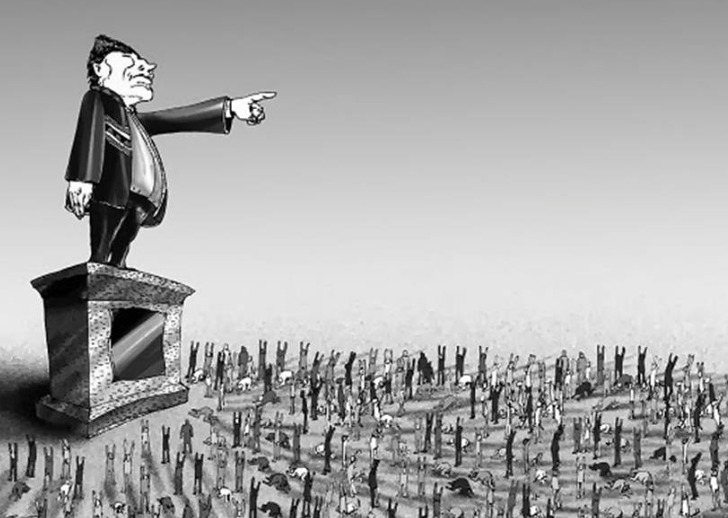
This type of behavior, where there is an attempt to silence or push aside oversight bodies, brings a very dangerous sentiment into the community. Aruba has a solid democratic foundation that must be protected at all costs. No minister, no matter how large their portfolio or their ego may be, can act in an authoritarian style that reminds people of a dictatorial regimen.
The people did not vote for their parliamentarians to remain quiet or to ask permission from a minister to do their job. That mandate comes from the ballot box, not from a ministerial office.
This chapter must serve as a severe wake-up call: respect for Parliament is non-negotiable, because in a democracy, respecting Parliament is the only way to respect the people themselves.