

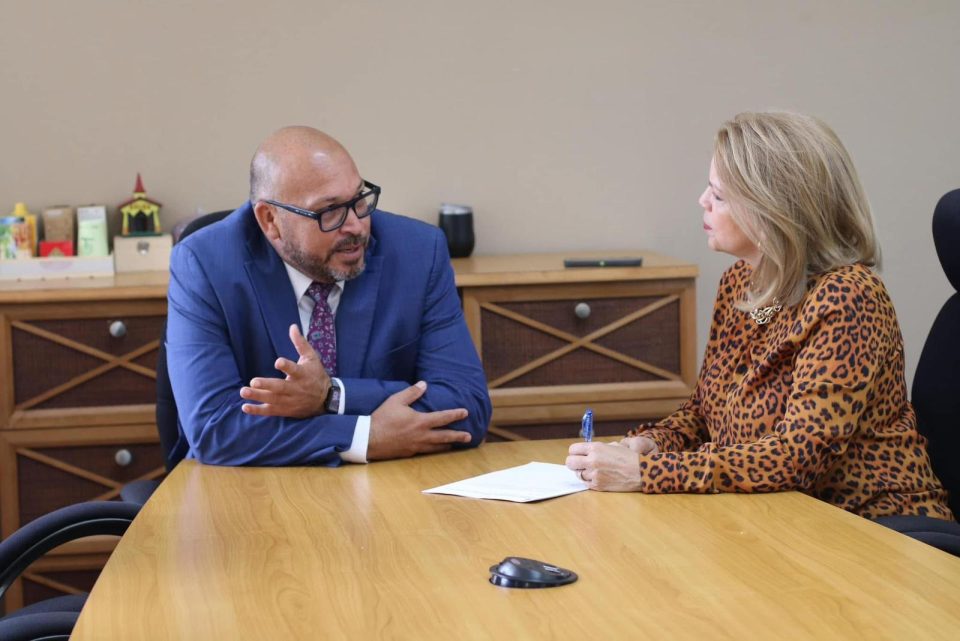
As a former teacher and Member of Parliament for the MEP party, Edgard Vrolijk submitted a legislative initiative (National Ordinance on Student Loans) to the Parliament of Aruba. The law modernizes the student loan system and opens a concrete path toward debt forgiveness (kwijtschelding) for graduates who contribute to the development of Aruba.
The initiative law Landsverordening studieleningen (National Ordinance on Student Loans), which MEP Member of Parliament Edgard Vrolijk submitted this week to the Parliament of Aruba, is born directly from his experience in education. Vrolijk expressed: “During my years in education, I stood before different classrooms and experienced firsthand how talented students gave up on continuing their studies because they lacked the financial means. I also saw how others, after many sacrifices, returned to Aruba burdened with a student debt so large that it made it almost impossible for them to remain living on their island. This is not a problem of statistics, but a real problem for our future as a country.”
What does the law change?
The current student loan system is based on an article in the 2006 budget, a legal foundation that has fallen behind today’s reality. The new law unifies all crucial aspects, such as the loan, payment conditions, and the possibility of debt forgiveness, under a single modern and transparent legal framework. This proposal introduces several major changes.
First, the law allows a student loan to have a period longer than five years, which is necessary in the case of long-duration higher education and requires a more realistic payment plan. Second, the debt forgiveness consists of 50% of the open debt for graduates who have finished their studies and are working in Aruba, or who return to live here within 5 years after completing their studies abroad and who meet the conditions of the law. Additionally, the law stipulates an extra 30% discount for those who settle their debt in a single payment, and 100% forgiveness in special cases, such as death, permanent disability, or chronic illness.
The numbers speak clearly
According to data from the Ministry of Finance, out of nearly 395 million florins granted in student loans, barely around 5 million florins are paid back per year. This reality demonstrates that the issue is not a lack of willingness to comply, but rather that the financial burden is too great and the conditions for debt forgiveness are too restrictive—a situation that this new law comes to address directly.
For Aruba, not just for the student
“A country that invests in the education of its youth and then does not create the conditions for them to return is losing on both sides,” Vrolijk reiterated. This law is an instrument to connect public investment with the actual needs of our labor market. The main focus of this proposal is to create a double benefit. For graduates, it means a direct reduction of their financial pressure after their studies, motivating our young professionals to return or stay to contribute locally. For Aruba, the gain is strategic: the knowledge that the country helped finance remains within our community, especially in sectors experiencing severe staff shortages, such as education, healthcare, infrastructure, tourism, and technology.
Conditions for 50% debt forgiveness
To qualify, a graduate must have finished their studies on or after October 30, 2015, completing them within the nominal duration or the authorized period of the loan. The graduate must be working in Aruba, under the condition that if the studies took place outside of the country, the person must have officially returned to live in Aruba within five years after graduating.
Required documentation: This application must be accompanied by a legalized copy of the official diploma or certificate, proof of registration in the civil registry, and an official employer statement.
Next step
The Law (Landsverordening studieleningen) still needs to be debated in Parliament. “I hope from the bottom of my heart that my colleagues in parliament support this law, because this is not for a political party, but for our youth.”