

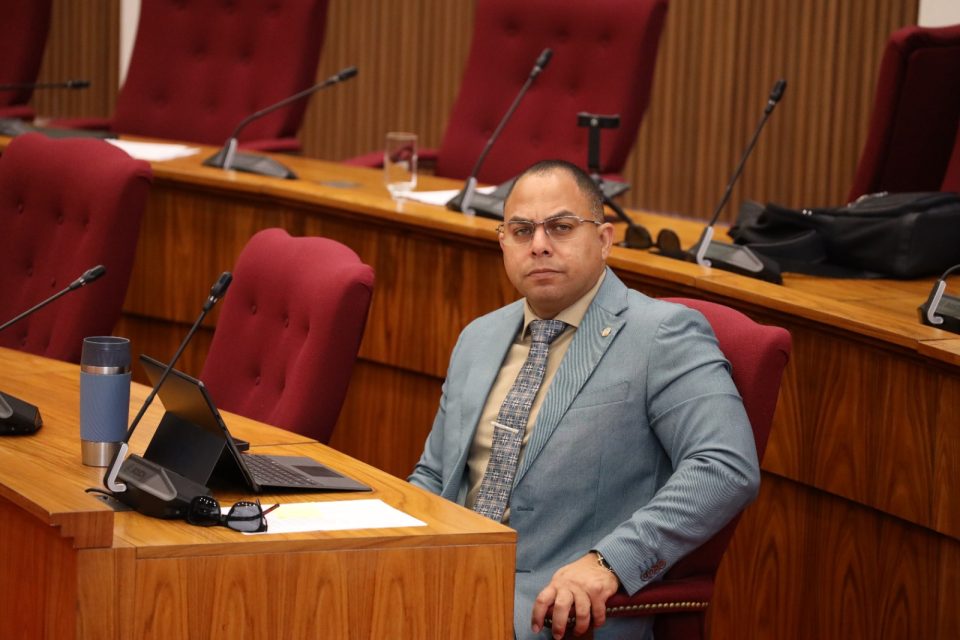
Every person who manages to overcome addiction is a victory for a family, for a community, and for Aruba. But for parliamentarian Eduard Pieters, the real question is different: Why do we keep allowing more people to fall into the same cycle?
During the debate on addiction and mental health policy, the leader of the PPA faction raised a sharp criticism regarding what he called a lack of structural government leadership. According to Pieters, Aruba has reached a point where addiction cannot be seen solely as an individual problem. It is a national challenge that touches public health, security, social welfare, and the future of many families.
Justice cannot carry the problem alone Pieters emphasized that Aruba has police, professionals, various organizations, and volunteers who fight daily to help people with alcohol, drug, and other dependencies. However, according to Pieters, the current system invests—even if only a little—much more in reaction than in prevention.
“Addiction is not a problem that should start at the Ministry of Justice. Above all else, it is a public health issue.” According to the parliamentarian, the role of justice is important, but it cannot replace a national policy led by public health.
Political silence due to lack of leadership One of the points that concerns Pieters the most is the lack of political leadership on this issue. According to Pieters, Aruba cannot face a growing mental health and addiction crisis while the responsible minister remains practically absent from the national discussion. “A country cannot leave a problem of this magnitude solely in the hands of the police, foundations, and professionals. It is the Government that must lead.”
Pieters questions the lack of a comprehensive national policy, coordination between ministries, and the government’s vision to prevent more citizens from ending up dependent on addictive substances.
When will preventive work begin? According to Pieters, Aruba continues to react only when the problem has already exploded—that is, when a person has already entered the justice system, when a family has broken apart, or when an addict can no longer function in society. The fundamental question is: what is the government doing before the tragedy happens? Pieters advocates for an integral policy that connects health, social welfare, education, community, and justice, with serious investment in prevention, treatment, rehabilitation, and reintegration.
Governing means preventing, not just reacting when it is too late Pieters concluded that a responsible government cannot limit its policy to attacking the consequences of a crisis. “A strong country does not measure its success by how many people it processes or treats afterward. It measures its success by how many people never had to end up on those lists.” For the PPA faction, the fight against addiction is not just a debate about mental health; it is a reflection of national leadership.